


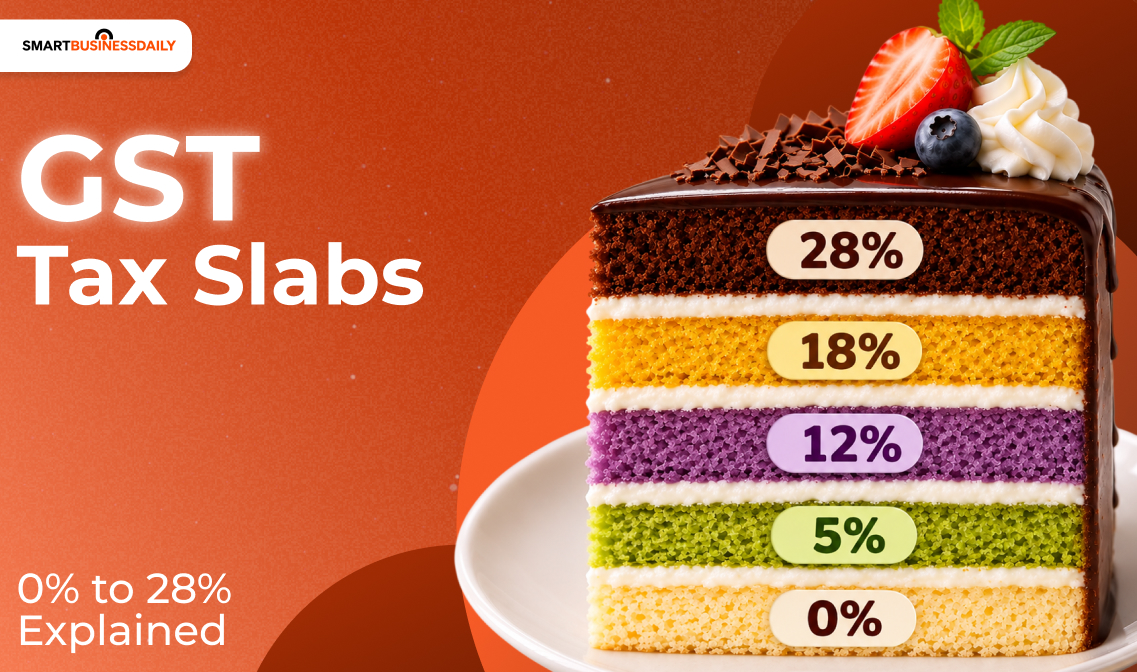





Imagine entering a large marketplace. You had to pay different taxes in every single kingdom you entered.
They had different rules, money, and records. For years, small businesses in India had to pay a variety of indirect taxes such as Value Added Tax (VAT), Service Tax, Central Excise, and Luxury Tax.
As a result, business owners spent more time managing paperwork than building strong customer relationships.
Thankfully, a unified tax system changed everything. The government simplified its complicated system by introducing the Goods and Services Tax (GST).
Think of it as a digital highway that connects every state. You will no longer have to pay at many different toll stations.
You can just use your one pass. This quick guide will show you how to fully utilise this digital highway and which lane to use with the new GST rates!
Why Does India Use A Multi-Tiered Tax Structure?
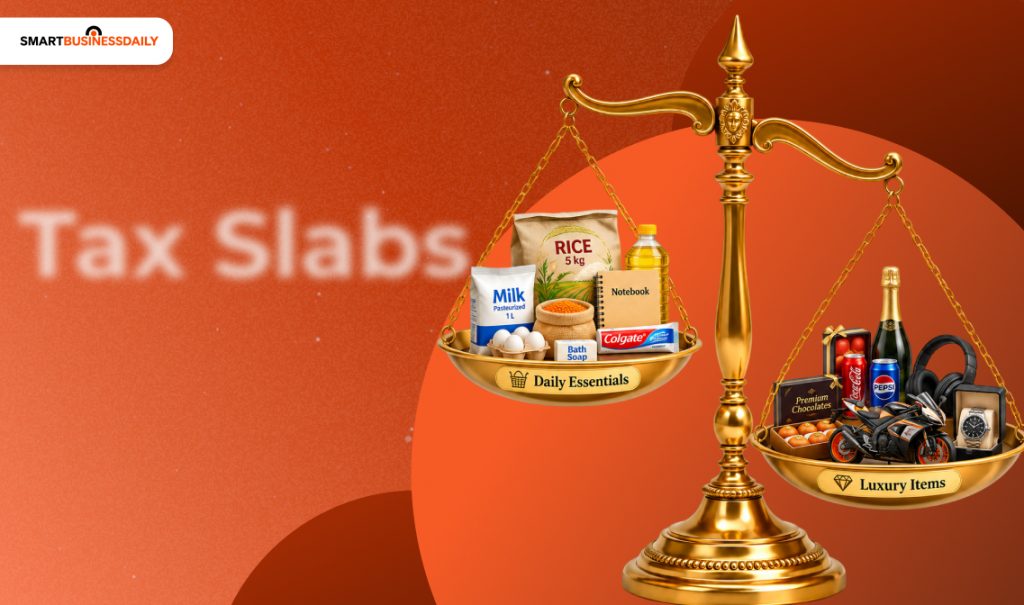
You may be wondering why the new unified tax system has 5 different tax rates. Because a single tax rate would unfairly affect low-income people.
If everyday items such as milk and rice were taxed at the same rate as Luxury Sports cars, IT would make everyday life much more expensive for the average person.
Therefore, to allow fair taxation while ensuring the government raises enough revenue, the GST Council has set up a tiered system.
All necessary items will have 0% tax, everyday items will have a medium tax rate, and luxury/demerit items will have the highest tax rate.
Moreover, this will ensure customers pay only what they can afford. However, small businesses need to know exactly which products fall into which tax bracket to avoid major pricing mistakes.
The Five Main Slabs: New GST Rates Made Easy
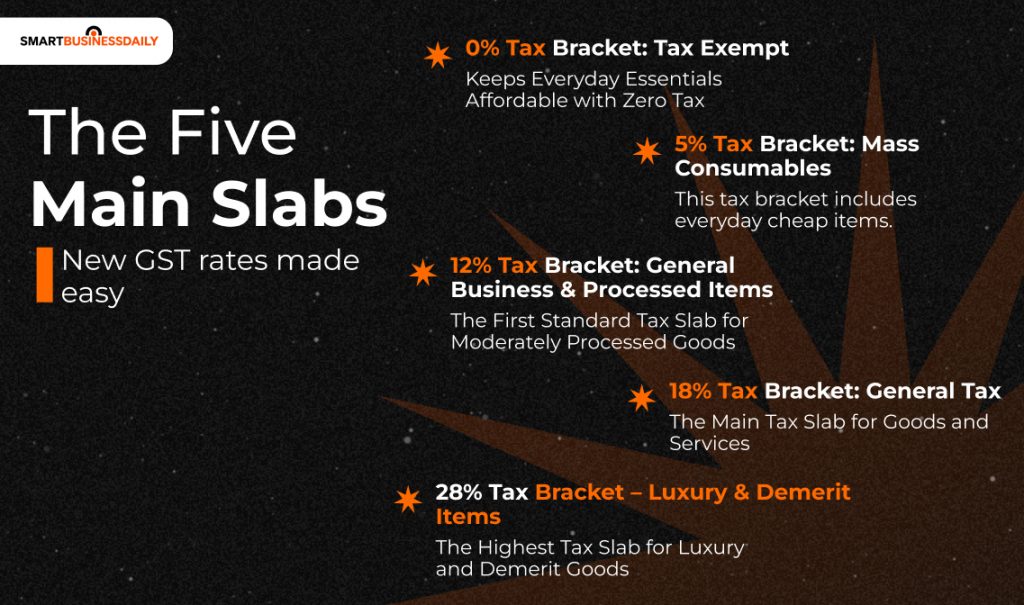
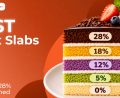
Millions of different products fall into 5 different tax brackets. Knowing the new GST rates will help you price your products correctly. Let’s look at each tax bracket below, with examples of how they apply to small businesses.
0% Tax Bracket: Tax Exempt
This tax bracket keeps everyday essentials extremely cheap. No tax applies to these items.
- Fresh Produce: Unpackaged grains, Vegetables, Fruits, Raw Milk, Curd, Organic Eggs.
- Health & Education: General Public Education, Handloom items, Life-saving Drugs.
- Everyday Items: Books, Newspapers, Raw Jute, Unbranded Pots.
Small Business Example:
Let’s say you run a local organic grocery store. You source fresh raw milk from local farms.
Because this falls into the 0% tax bracket, you wouldn’t charge GST to your customers. As a result, you can keep prices low.
5% Tax Bracket: Mass Consumables
This tax bracket includes everyday cheap items.
- Packaged & Branded Food: Branded Paneer, Packaged Tea Leaves, Roasted Coffee Beans, Skimmed Milk Powder, Cooking Oil.
- Cheap Clothing & Footwear: Readymade clothing and footwear costing below ₹1,000.
- General Medicine: Generic Medicine, General Diagnostic Kits, General Orthopedic Appliances.
Small Business Example:
Let’s say you start a shoe company. You produce Cork Sandals costing ₹800. As you are producing an item costing below ₹1,000, you will apply 5% tax to your products.
So, when someone buys a pair of shoes, you will show the customer a 2.5% CGST and 2.5% SGST split.
12% Tax Bracket: General Business & Processed Items
Moving on, this tax bracket is the first general tax. It covers moderately processed items.
- Processed Dairy & Food Items: Clarified Butter (Ghee), Processed Cheese, Frozen Animal Meats, Fruit Juices, Packaged Dried Fruits.
- General Items: General Biological Path Labs, Writing Ink, Sewing Machine, Water Meter.
- Business Items: Affordable Smartphones, Science Exercise Books, General Agricultural Pumps.
Small Business Example:
Let’s say you run a gourmet cheese platter company. Because your items are highly processed and packaged, they move from the 5% tax bracket to the 12% tax bracket.
As a result, this means you need to charge 12% GST on your invoices.
18% Tax Bracket: General Tax
Now, this is the most used tax bracket. This bracket drives the economy and covers most items produced by industry and services provided by companies.
- Personal Care: General Hair Oils, Toothpaste, Soap, Detergent & Cosmetics.
- Industrial Items: Safety Glass, Iron/Steel Sheets, transformers, and digital circuitry.
- Professional Services: IT Consultancy, Software, Banking Fees, fine dining, and digital marketing.
Small Business Example:
Let’s say you run a digital marketing agency. You create e-commerce websites for businesses.
As you are providing a business service, you will need to apply 18% tax to all of your clients’ retainer fees. For example, if a project costs ₹1,00,000 you will charge an extra ₹18,000 in tax on your invoice.
28% Tax Bracket – Luxury & Demerit Items
Finally, this is the highest tax bracket. The government has placed this tax on luxury items and demerit items.
- Luxury Vehicles & Parts: Luxury Sports Cars, Aircraft, Motorbikes & Engine Spare Parts.
- Luxury Home Items: Air Conditioning, Dishwashers, digital televisions, and washing machines.
- Sin & Demerit Items: Sugared Fizzy Drinks, Tobacco, Cigarettes & Race Track Tickets.
Small Business Example:
Let’s say you open a luxury electronics store selling Split Air Conditioners. As AC’s are considered luxury comfort items, you will need to charge 28% GST on your items.
Additionally, some demerit items in this tax bracket also include a Compensation Cess.
You Can Also Check: The Ultimate Small Business Guide to CGST, SGST, And IGST
Step-By-Step Guide: How To Determine Your Correct Tax Slab
Getting the wrong tax bracket for your products can cause serious issues and reduce your profits. Follow this step-by-step guide to find the tax you need to pay.
| Sequence | Operational Phase | Key Objectives & Actionable Tasks |
| 01 | Code Discovery | Locate the exact 8-digit HSN code for physical products or the SAC code for services via the official government portal. |
| 02 | Rate Cross-Reference | Check the latest GST Council updates to see whether recent notifications have changed the rates for your specific codes. |
| 03 | Composition & Price Audit | Analyse your raw materials and end-user pricing. Ensure a slight price hike doesn’t push you into a higher-tax tier. |
Step 1 – Find Tax Code
Every physical product has an 8 digit code called the Harmonised System of Nomenclature (HSN). Similarly, services have a Service Accounting Code (SAC).
You can easily find these codes on the government’s tax website. This removes confusion because everything has a number.
Step 2 – Check Latest Government Updates
The GST Council meets regularly to update tax rates to help local manufacturing.
Therefore, check the latest GST rates on the official website. Don’t rely on old blog posts or market gossip.
Step 3 – Check Product Composition & Pricing
Some tax brackets depend on what your products are made of or what you sell them for (such as shoes and clothing).
For this reason, regularly check your pricing to ensure you aren’t increasing the price slightly and pushing your product into a higher tax bracket.
Common Small Business Risks: Pitfalls And How To Dodge Them
You need to stay vigilant when using the digital highway. Below are the 3 most common mistakes small business owners make and how to avoid them.
1. Incorrect Tax Bracket
If you incorrectly put an 18% item into the 5% tax bracket to make it look cheaper, the tax authorities will catch you. Consequently, you will then have to pay the full tax amount out of pocket and pay heavy interest charges.
How To Avoid
Ask a Chartered Accountant (CA) or tax professional to review your catalogue before launching a new product range.
2. Not Using Input Tax Credit (ITC)
This means that you can claim back tax you have paid on products used in your business.
If you buy raw plastic at 18% GST to create water bottles, you can claim this back from the tax you charge your customers. If you don’t claim this, you are losing you free money!
How To Avoid
Make sure your raw material suppliers input your company GSTIN number correctly when they file their monthly returns.
3. Ignoring Tax Updates
The financial world is moving fast. If the government reduces the tax on an item you sell from 18% to 12%, but you still charge your customer for the higher rate, you will be breaking anti-profiteering laws.
How To Avoid
Add a monthly reminder to your phone to check the official central board notifications on the 1st of every month.
Advanced GST Traps: What Other Blogs Don’t Tell You
Understanding the basic rates of tax from 0% to 28% is only part of the story. If you have a growing business in India, it can be very difficult to understand how these rates interact in practice.
If you fall foul of these traps, you may lose all your profit margins!
Here are some of the key rules and traps to know about:
1. Combo Pack Trap
When you sell combinations of products/services as part of a promotion, Christmas gift basket, or corporate gift, you can’t just guess what the tax rate will be.
The GST Council breaks down gift baskets into two categories. If you get it wrong, you will trigger a tax investigation:
- Composite Supply – Naturally Bundled
This will occur when you’re selling items that are Naturally Bundled together. One item will be the ‘main supply’.
Example: If you sell smartphones (12%) and they come with a charger and basic case in the box, the charger can’t be used without the phone. Therefore, you will charge tax on the entire bundle at the main item rate (12%).
- Mixed Supply – Unnaturally Bundled
This will occur when you’re deliberately bundling items together which could be sold alone.
Example: If you create a Christmas corporate gift bundle including a wallet (18%), luxury chocolate box (18%), and a sugared fizzy juice can (28%).
In accordance with the strict GST rules, you will charge tax on the entire gift bundle at the highest rate in the basket. This means you’ll pay 28% tax on the entire box.
How to Avoid: If you’re mixing high-tax items with low-tax items, check whether they are truly irreplaceable. If they aren’t, invoice them separately.
2. Hidden Leak: 180 Day ITC Rule
Most business blogs will tell you that claiming Input Tax Credit is free money, but they won’t tell you about section 16(4) of the GST Act.
This includes a strict time limit which can catch small businesses with tight cash flow.
If you claim Input Tax Credit on a supplier’s invoice but haven’t paid them in full for the goods/services within 180 days of the invoice date, then your credit will disappear.
Moreover, you will be legally required to reverse the tax amount you claimed in your next GSTR-3B.
You will have to pay this to the Government and pay a hefty interest charge of 18% per annum from the date you claimed it.
How to Avoid: Create a rule within your accounting package to notify you of any invoices from your vendors reaching 120 days. Ensure your accounts payable team prioritizes clearing these.
3. GSTR-2B vs GSTR-2A
When you log in to your GST portal, you’ll notice two statements showing how much tax credit you can claim for the month.
If you use the wrong one, you’ll get a tax notice from the system (DRC-01B):
- GSTR-2A: This changes constantly depending on when your suppliers upload their overdue invoices. It is inaccurate.
- GSTR-2B: This is created on the 14th of each month and is static. This is the true, legal statement the tax authorities use to confirm your credit.
How to Avoid: Always ensure you don’t claim more ITC than what’s shown in your GSTR-2B.
If your supplier says they’ve filed their return, but it isn’t showing on your GSTR-2B each month, don’t claim it! Wait until next month, when it will show up so you don’t get flagged for overclaiming.