







How To Find A Legitimate NFT Marketplace: 7 Things To Check Before Buying
7 Mins Read
Published on: 15 July 2022
Last Updated on: 17 August 2026
- 1. Check The Marketplace's Security:
- Protect Your Wallet, Too
- 2. Research The Marketplace's Reputation:
- 3. Look At The Marketplace And NFT Data:
- Verify The Collection, Not Just The Image:
- 4. Make Sure Your Wallet And Blockchain Are Supported:
- 5. Understand Gas Fees And Other Costs:
- What Are Gas Fees?
- 6. Look At The Marketplace's Community And Support:
- 7. Evaluate The Website Before Connecting Your Wallet
- What Makes An NFT Marketplace Legitimate?
- Red Flags Of A Potentially Fake NFT Marketplace:
- 1. The Website URL Looks Wrong:
- 2. The Platform Promises Guaranteed Returns:
- 3. You Are Asked For Your Seed Phrase:
- 4. You Are Pressured To Act Immediately:
- 5. Important Information Is Missing:
- 6. Support Contacts You First:
- 7. The NFT Collection Cannot Be Verified:
- How To Verify An NFT Before Buying?
- 1. The Creator:
- 2. The Contract Address:
- 3. Ownership History:
- 4. Collection Activity:
- 5. The Exact NFT:
- Are Popular NFT Marketplaces Automatically Legitimate?
Buying your first NFT can be confusing, and finding a legitimate NFT marketplace is even more difficult.
There are hundreds of marketplaces, different blockchains, unfamiliar crypto wallets, changing transaction fees, and plenty of opportunities to make an expensive mistake.
A marketplace may look professional and still require careful research before you connect your wallet or make a purchase.
So, how do you know whether an NFT marketplace is legitimate?
Start by checking its security practices, reputation, supported wallets and blockchains, transaction costs, NFT information, and community presence. Also, you should verify the marketplace’s official website and make sure you understand exactly what you are buying.
Popular NFT marketplaces include platforms such as OpenSea and Magic Eden, but popularity alone does not make a marketplace right for you.
Before buying an NFT, work through these seven checks.
1. Check The Marketplace’s Security:
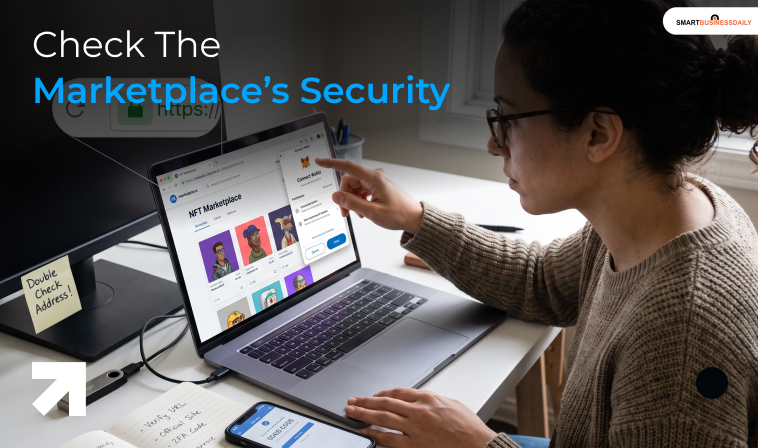
Security should be your first consideration.
An NFT marketplace may require you to connect a crypto wallet, sign transactions, or create an account. That means you need to understand what access you are giving the platform and what security measures it provides.
Look for features such as:
- HTTPS-secured connections
- Two-factor authentication where accounts support it
- Clear wallet-connection procedures
- Transaction confirmations
- Security documentation
- Clearly identified company or development team
- A transparent process for reporting suspicious activity
You should also verify the website address before connecting your wallet.
Fake NFT marketplaces and phishing websites can closely imitate legitimate platforms. A search result, social media advertisement, or message containing a marketplace link should not automatically be trusted.
Instead, find the platform’s official website through a reliable source and bookmark the correct address.
Protect Your Wallet, Too
Marketplace security is only one part of the equation. Also, your wallet is your responsibility – never give anyone your seed phrase, private key, wallet recovery phrase, or password.
A legitimate marketplace will not need your secret recovery phrase to connect your wallet.
For valuable NFT holdings, some users also choose hardware wallets because they keep private keys isolated from an internet-connected device.
The basic rule is simple: if someone asks for your recovery phrase, stop.
2. Research The Marketplace’s Reputation:
Before depositing funds or connecting a wallet, find out what other users say about the platform. Also, look beyond the marketplace’s own testimonials.
Search for independent discussions and reviews covering:
- Account problems
- Failed transactions
- Customer support
- Withdrawal experiences
- Scam reports
- Security incidents
- Unexpected fees
- Wallet-connection issues
Community platforms can also provide useful information, particularly when you want to understand how a marketplace handles problems. However, do not treat every online review as fact.
A few negative comments do not automatically make a marketplace fraudulent. Likewise, hundreds of positive comments do not guarantee that a platform is safe.
Look for patterns. If multiple independent users report the same problem, investigate further before using the platform.
3. Look At The Marketplace And NFT Data:
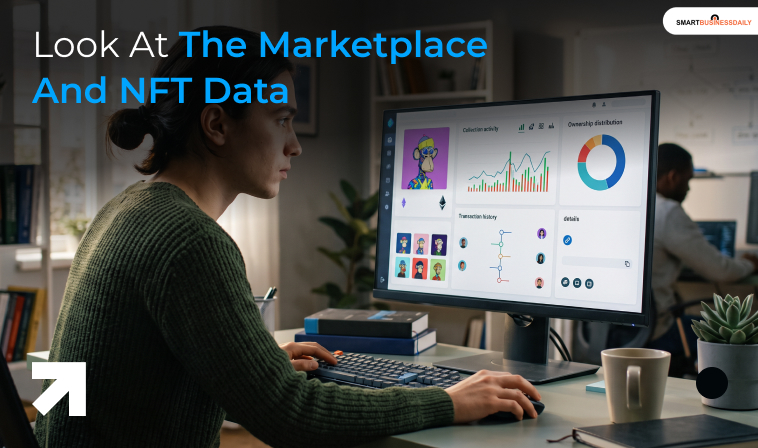
A legitimate marketplace should give you enough information to evaluate an NFT before you buy it. Depending on the platform and blockchain, you may be able to see information such as:
- NFT price
- Collection name
- Creator
- Ownership history
- Transaction history
- Number of sales
- Current listings
- Collection activity
- Blockchain
- Token ID
- Contract address
This information can help you determine whether you are looking at the real collection or an imitation.
Verify The Collection, Not Just The Image:
One of the easiest mistakes for a new NFT buyer is assuming that an NFT is legitimate because the artwork looks familiar. An image can be copied. A collection name can be copied.
Even an entire marketplace listing can be designed to look convincing.
As a result, wherever possible, verify the NFT’s contract address and compare it with information published by the project’s official channels.
Do not rely solely on the collection name or artwork.
Analytics platforms and blockchain explorers can also help you investigate transaction activity and ownership history.
4. Make Sure Your Wallet And Blockchain Are Supported:
Before choosing a marketplace, check which blockchain it uses and which wallets it supports. Different marketplaces support different blockchain networks and wallet options.
For example, you may encounter marketplaces or collections operating on networks such as:
- Ethereum
- Solana
- Polygon
- Base
- Bitcoin
- Other supported networks
Also, the wallet you use must be compatible with the relevant blockchain and marketplace. As a result, before connecting anything, check:
- Which blockchain the NFT uses.
- Which wallet the marketplace supports.
- Whether the marketplace supports your preferred payment method.
- Which currency you need for the purchase.
- Whether you need additional funds to cover transaction fees.
Do not assume that one wallet works everywhere. Additionally, remember that connecting a wallet does not mean you should automatically approve every transaction presented to you.
Read the transaction carefully before signing it.
5. Understand Gas Fees And Other Costs:
The price displayed on an NFT listing may not be the total amount you spend.
Depending on the blockchain and transaction, you may encounter network fees, marketplace fees, creator royalties, wallet costs, or other charges.
What Are Gas Fees?
Gas fees are transaction fees paid to a blockchain network for processing certain transactions. They are generally determined by factors such as the blockchain being used and network activity.
This means the cost can change over time. A marketplace does not necessarily control the underlying network fee. As a result, before purchasing an NFT, check:
- NFT sale price
- Marketplace fees
- Creator royalties, where applicable
- Blockchain transaction fees
- Withdrawal or transfer fees, if applicable
- Currency conversion costs, if applicable
Do not assume that a marketplace with a low listing price is automatically the cheapest option. Calculate the approximate total cost before confirming the transaction.
6. Look At The Marketplace’s Community And Support:
NFT marketplaces operate within communities.
A healthy community can give you useful insight into how a platform operates, how quickly problems are addressed, and whether users are actively trading on it.
As a result, you need to look for official channels such as:
- Discord
- X
- Community forums
- Help centers
- Support pages
- Official announcements
Moreover, pay attention to how the marketplace communicates – Does it explain outages? Does it publish security updates? Also, does it provide clear instructions when something goes wrong?
An active community does not prove that a marketplace is legitimate, but a complete absence of meaningful information should make you cautious.
So, be particularly careful with unsolicited direct messages.
Scammers often impersonate marketplace employees, collection creators, or support representatives. Never assume that someone contacting you privately is an official representative.
7. Evaluate The Website Before Connecting Your Wallet
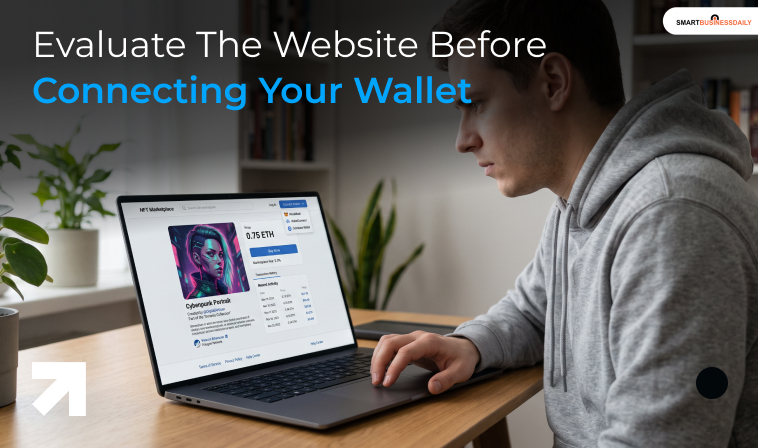
A legitimate NFT marketplace should make it reasonably easy to understand what you are doing. The website should clearly display important information rather than forcing you to guess.
As a result, you need to look for:
- Clear NFT prices
- Seller information
- Collection information
- Transaction history
- Blockchain details
- Marketplace fees
- Wallet options
- Terms and policies
- Help and support information
Poor website design does not automatically mean a marketplace is fraudulent. However, be cautious when a platform hides important information or pressures you to make a purchase immediately.
Urgency is a common warning sign.
Moreover, messages such as “Buy now before it disappears,” “Connect your wallet to claim,” or “Send crypto to unlock your NFT” deserve particular caution.
So, take your time and verify the transaction independently.
What Makes An NFT Marketplace Legitimate?
There is no single feature that proves an NFT marketplace is legitimate. Instead, look at the overall picture. Frankly, a marketplace deserves more confidence when it has:
- Clear ownership and company information
- A verifiable website
- Transparent fees
- Established security practices
- Clear wallet and blockchain support
- Accessible customer support
- Verifiable NFT information
- Active users and community discussion
- Transparent transaction data
- No obvious pressure tactics or unrealistic promises
Even then, you should verify the individual NFT before buying. The marketplace can be legitimate while a particular NFT listing is fraudulent.
Red Flags Of A Potentially Fake NFT Marketplace:
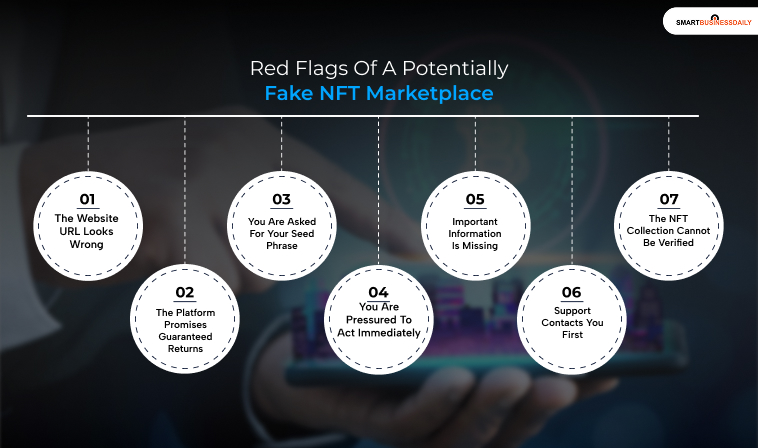
Knowing what to look for can be just as important as knowing what a legitimate platform should provide. So, be cautious if you notice several of these warning signs:
1. The Website URL Looks Wrong:
Scammers often use domains that resemble legitimate marketplace names. So, it’s best to check the spelling carefully.
2. The Platform Promises Guaranteed Returns:
NFTs are speculative assets. A marketplace should not need to promise guaranteed profits to attract buyers.
3. You Are Asked For Your Seed Phrase:
This is one of the biggest red flags. Never give your wallet recovery phrase to a marketplace, support representative, or another user.
4. You Are Pressured To Act Immediately:
Legitimate platforms do not need to pressure you into making an irreversible transaction.
5. Important Information Is Missing:
Be cautious if you cannot find basic information about the NFT, seller, fees, blockchain, or marketplace.
6. Support Contacts You First:
Treat unsolicited support messages with suspicion. Instead of clicking a link sent through a direct message, open the marketplace’s official website yourself and use its published support channels.
7. The NFT Collection Cannot Be Verified:
If you cannot confirm the creator, contract address, ownership information, or official collection details, investigate before buying.
How To Verify An NFT Before Buying?
Finding a legitimate marketplace is only half the process. You also need to verify the NFT itself. As a result, before purchasing, check:
1. The Creator:
Find the creator’s official website or social account and confirm that the collection is actually associated with them.
2. The Contract Address:
Compare the contract address displayed on the marketplace with the address published through the project’s official channels.
3. Ownership History:
Look at the blockchain transaction history when available. A legitimate-looking marketplace listing does not automatically mean that the NFT has a legitimate history.
4. Collection Activity:
Look at sales, owners, listings, and transaction activity. An NFT collection with unusual activity deserves additional research.
5. The Exact NFT:
Make sure you are buying the specific NFT you intended to purchase. Moreover, copied collections and counterfeit listings can use identical or nearly identical artwork.
Are Popular NFT Marketplaces Automatically Legitimate?
Popularity is useful, but it should not be your only criterion.
A large marketplace may have more established infrastructure, a larger user base, and better-known security practices. However, you should still check the specific NFT, transaction, fees, and wallet permissions before buying.
The same applies to smaller marketplaces.
A newer platform is not automatically a scam simply because it has fewer users. But it may require more research because there is less history available to evaluate.
Think of marketplace reputation as one part of your due diligence rather than a guarantee.
Additional Reading:
- Complete Guide on Security Tokens



Related Articles

Comments Are Closed For This Article