








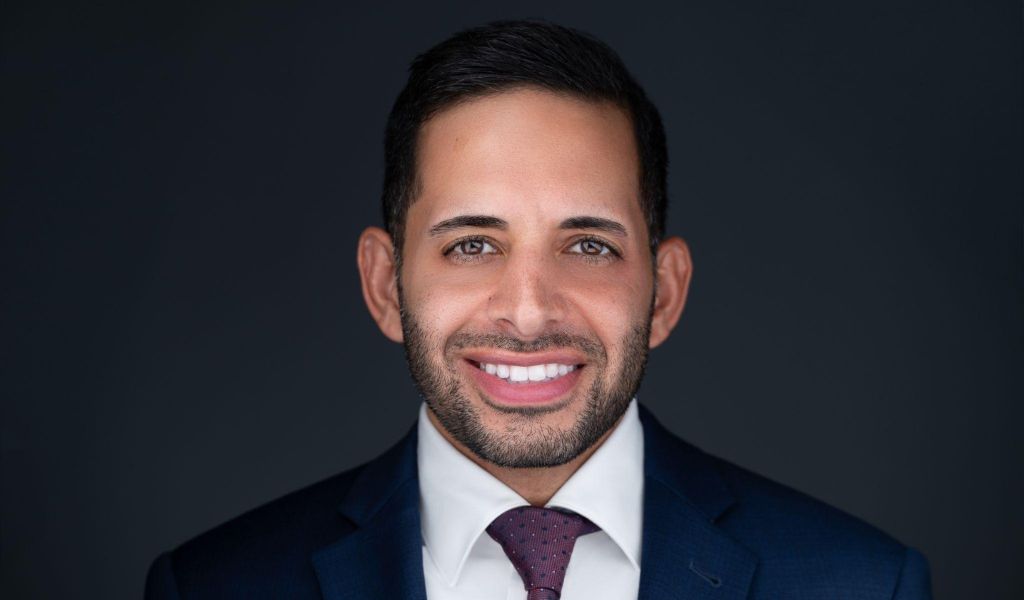
The Marketing Mistake Nicholas Mukhtar Sees In Nearly Every Professional-Services Firm
5 Mins Read
Published on: 13 August 2026
Last Updated on: 14 August 2026
Most consultants, lawyers, accountants, and wealth advisers believe their work speaks for itself. Do excellent work, the thinking goes, and the referrals will follow. Data says the first half of that belief is right and the second half is quietly failing them.
Buyers of professional services marketing do rely on word of mouth.
Hinge Research Institute’s study of how buyers choose firms found that 71% of the time, clients find a provider by asking another person, while only about 11% go looking online, and cost decides the winner just 8% of the time.
Reputation, that study concluded, is the single most important trait buyers weigh.
Nicholas Mukhtar, who runs the consulting firm Tera Strategies out of Fort Lauderdale, has built his own practice on precisely that currency.
The mistake he watches firms make is assuming reputation takes care of itself.
The Referral That Never Closes
The failure usually unfolds the same way.
A satisfied client refers a firm, the prospect looks it up, and the deal dies before a conversation ever happens.
Hinge research indicates that 51.9% of buyers reject referred firms due to an unimpressive website, poor content, or no search visibility. This proves that a weak digital presence ruins the referral.
Therefore, the initial referral works, but a poor online presence kills the deal. Read the full insights on the Hinge Marketing website.
The paradox is that firms leave easy referrals on the table while mishandling the ones they get. Hinge’s referral research found that most firms miss out simply because no one asked for the introduction, even though a large majority of buyers say they are willing to give one. A firm can be both under-asking for referrals and under-serving the ones that arrive.
Mukhtar’s read on business development explains why so many firms let this happen.
His instinct, learned early, is that trust gets earned in person and then assumed to travel on its own. “He taught me the art of relationships,” Mukhtar has said of his father, a longtime soccer coach.
That lesson served him well face to face. The error firms make is stopping there, as if the warmth of one good meeting reaches every stranger who later types the firm’s name into a search bar.
Reputation Now Has To Be Demonstrated In Public
Getting this right has less to do with traditional advertising than with modern professional services marketing focused on visibility of a specific kind.
That is making the expertise and the character a firm already has legible to people who have not met them yet.
A prospect vetting a wealth manager or a consultant looks for evidence of two things: that the firm knows its subject, and that it can be trusted with the client’s interests.
Both can be demonstrated in public, through writing, talks, and a presence that mirrors the actual work.
Mukhtar frames the trust half in terms that translate directly to how a firm presents itself. “If people know you care about them, you can do a lot. If they know you have their best interest at heart, they will take you at your word,” he has said.
A firm’s public face, its articles and profiles and the way it explains its thinking, is where that care either comes through or does not.
Sincerity, in his telling, is a matter of character. “You’re never going to get any fakeness from me,” Mukhtar has said, describing the standard his father modeled and clients sense.
None of this requires a marketing department. It requires deciding that the firm’s expertise will be visible rather than assumed.
A prospect who finds a clear article, a thoughtful profile, and evidence the firm has handled their kind of problem has been given exactly what the referral promised: proof.
When One Good Meeting Isn’t Enough
Mukhtar’s father built a lifetime of loyalty the way most professionals still hope to, one relationship at a time and in person.
“I run into people all over the world who say, are you Coach Mukhtar’s son?” Mukhtar has said, describing former players who credit the man decades later. That kind of reputation is real, but it was earned through direct contact.
A firm cannot meet every prospect in person, which is the whole problem. The reputation has to precede the meeting, carried by whatever a buyer can find before picking up the phone.
Word of mouth starts the search; what the buyer discovers next decides whether the call ever comes.
What Authentic Visibility Looks Like
Firms tend to hear “market yourself” and reach for slogans. Mukhtar’s example points the other way, toward substance that happens to be visible.
His father kept decades of relationships alive because, in Mukhtar’s words, “he truly, genuinely cares about all of those players and former students. I try to do the same.”
Applied to a professional-services firm, that means the content and the outreach have to carry real expertise and a real point of view, because buyers can tell the difference and are checking for it.
Practically, the fix for effective professional services marketing is unglamorous and within reach of any firm:
- Write about the problems you actually solve, in language a client would recognize.
- Make the people behind the work findable and human.
- Treat the website and the published thinking as the first client meeting, since for most prospects that is exactly what it is.
A firm that does this keeps its referrals working, making sure the ones it earns survive the moment a prospect looks it up.
The Cost Of Staying Invisible
Doing nothing is not neutral.
Every unconverted referral is a client who was handed to the firm and slipped away for want of a credible online presence, and in a field where reputation decides more than price, that is the most expensive kind of loss.
The work was good enough to earn the introduction. What closed the door was the absence of visible proof.
The math is unforgiving over time.
Converting a fraction more referrals compounds your growth. Meanwhile, invisible competitors keep losing prospects. They never even knew these leads existed.
Nicholas Mukhtar’s career proves the value of strategic professional services marketing. He successfully advises CEOs, medical directors, and family offices. He built this business on a visible reputation.
This trust comes from public work and steady relationships.
The struggling firms rarely do poor work. Instead, they wrongly assume good work is self-evident. Prospects look them up online. They judge the lack of presence and quickly move on.
Read Also:




Related Articles



Comments Are Closed For This Article