











New entrepreneurs often feel intimidated when launching a new enterprise.
Many think opening a business is costly and legally daunting because of all the legal forms required on websites.
As a result, many prospective owners postpone setting up their business because they fear corporate boards, shareholder agreements, and expensive compliance fees.
If you don’t want to be tied to partners or investors, you can avoid the overwhelming paperwork involved with corporations.
As a sole proprietor, you and the business are legally the same entity.
You own the entire business and make all decisions yourself. You also keep every rupee of profit after paying your expenses and taxes.
In India, small shopkeepers, freelancers, online chefs, clinics, and local e-commerce shops depend on this form. It lets them start a business in days, not weeks.
Think of a sole proprietorship as owning and operating a car rather than managing a bus.
You choose where to go, how fast to go, and what fuel to buy. You do all of this without seeking approvals from a group of passengers.
Moreover, you assume full responsibility for anything that goes wrong en route. Moreover, you cannot share responsibility with others.
Quick Summary
A sole proprietorship is when you run a business by yourself without legally registering a company. This type of business entity is quite common for single owners, as it is the easiest and least expensive way to start one.
Since you are the business and there is no legal distinction, you receive all profits after paying taxes and make all business decisions without interference.
- Setup: Very quick, hassle-free registration, no incorporation or incorporation fees, and only a few government permits.
- Pass-through taxation: Your business income and expenses are reported on your individual income tax return.
- Unlimited Liability: You are personally liable for all business debts and legal issues, which might put your personal assets at risk.
Well-suited to sole practitioners, one-man-band consultants & founders, this business structure is quick and simple to set up. This can then scale into a proper company when necessary.
How A Sole Proprietorship Differs From A Company
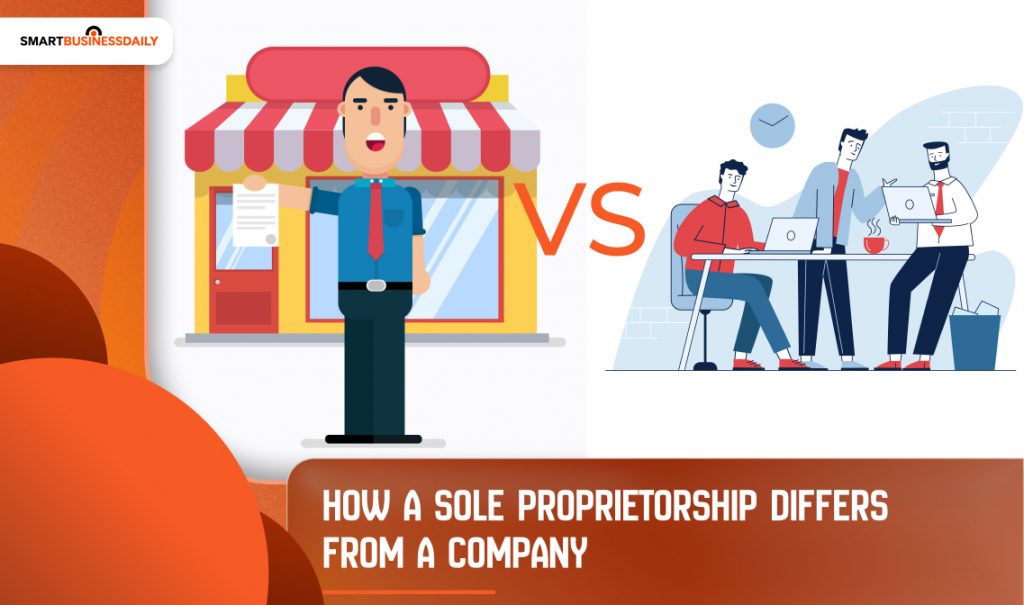
The law creates a separate legal personality for the company you form through a Private Limited Company or Limited Liability Partnership (LLP).
In a sole proprietorship, however, there is no legal separation between the owner and the business.
- No Separate Legal Identity: The founder’s tax ID, PAN (Permanent Account Number), is also the business’s official tax ID.
- Complete Operational Control: You don’t have to hold board meetings, pass formal resolutions, or file annual corporate governance reports with the Ministry of Corporate Affairs (MCA).
- Direct Profit Access: You can transfer money from the business bank account to your personal bank account whenever you like, without needing to declare dividends.
Who Should Choose A Sole Proprietorship?
Choosing a business organization depends mainly on your funding goals, workforce size, and the risk youare willing to take.
Although a sole proprietorship is the fastest and most straightforward way to set up a business, it is not the best fit for every business model.
Fits Best For Business Models Of Sole Proprietorships
Freelancers and independent consultants can work best under that structure. This includes:
- Graphic artists
- Software development engineers
- Digital marketing specialists
- Authors
- Other independent trainers
This is because, in most cases, they don’t need much cash to kick-start their businesses. They simply sell their personal skills or products.
Local Retail Stores and Service providers enjoy low startup expenses and the ease of getting a license, which is a legal requirement. Examples include:
- Markets
- Pharmacies
- Hair salons
- Repair shops
- Specialty cafes
Entrepreneurs working independently and making profits online:
A new founder can sell a variety of goods, such as handicrafts or apparel, through online marketplaces like Amazon or Flipkart.
They can quickly register for GST as an individual seller under a proprietorship. Once registered, they can start delivering products without delay.
If You’re Planning To Launch A Product:
If you would like to test whether a paying-customer model works for your business, registering as a sole proprietor lets you test your idea quickly. It allows you to:
- Avoid spending a huge amount of money on company formation (which requires at least ₹50,000 and a corporate identity).
- Conduct market surveys.
- Test the product in a much safer area.
When You Should Avoid This Structure
In contrast, a sole proprietorship will hold you back if you plan to raise money from venture capitalists or angel investors.
Investors cannot buy equity shares in a proprietorship because no shares exist.
Furthermore, if you plan to bring on a co-founder with equal decision-making power, you must choose a Partnership Firm, LLP, or Private Limited Company instead.
Step-By-Step Guide To Sole Proprietorship Registration In India
Many new business owners are under the impression that the Indian government issues a single unified “Sole Proprietorship Certificate,”.
However, no central, dedicated body registers proprietorships in India.
Sole proprietorship registration in this country is carried out indirectly by obtaining licenses and business tax registrations in your business name.
When you need to open a dedicated business account to accept commercial payments, banks will first require you, as the business owner, to provide:
- At least two official government documents that link your business name to your personal identity.
Thus, you need to carry out the steps below to set up your business on official grounds:
Step 1: Choose A Unique Business Trade Name
Coming up with a unique, catchy name is the first step. Let’s say you’ve settled on the name Sharma Digital Studio or GreenLeaf Organics.
Because there is no central name approval system for a sole proprietorship, another business in a different city could choose the same or a very similar name.
Do a trademark name search on the official Indian Trademark Registry website before settling on your business trade name. This helps ensure your name won’t infringe on an already registered brand.
Step 2: Get An MSME Udyam Registration, Free, Instantly
Register yourself for Udyam Registration through the official Ministry of Micro, Small & Medium Enterprises (MSME) portal.
- Cost: This Government-issued document is completely free of charge.
- Time & Requirements: The entire procedure through the portal takes less than 15 minutes to complete using your Aadhaar OTP and PAN.
- Key Benefits: You can get priority sector bank loans and government tender facilities through a simple business identification proof.
This proof is a Certificate of Udyam Registration, which is valid, primary, and acceptable to banks in India.
Step 3: Get A Shop & Establishment Act License.
You will need to apply for a Shop & Establishment Act License with your state government if your business is located at brick-and-mortar premises, such as a retail shop or warehouse.
- State Variations: For instance, in Maharashtra, it was commonly referred to as a Gumasta License. In other states, local municipal corporations mostly issued a trade license.
- Online Access: Interestingly, several states have now gone digital. Even those working from home can easily acquire this municipal license through online platforms.
Documents You Need:
Normally, besides uploading your Aadhaar card and PAN card, you will also be asked to submit:
- A recent photo
- Proof of your business whereabouts (a combination of an electricity bill and rent agreement, or a No Objection Certificate from your landlord, will be sufficient as proof of business address)
Step 4: If Applicable, Get GST Registration.
Now that you have decided whether to open a business, the next step is to determine whether you need a Goods and Services Tax Identification Number (GSTIN).
- When it is optional: A local business with an annual turnover of ₹40 lakh (if selling goods) or ₹20 lakh (if selling services) is not legally required to get a GSTIN. They can remain GST compliant without being taxed.
- When it is mandatory: However, for businesses dealing in interstate sales or selling on e-commerce platforms, GST registration is mandatory from day one.
Dual Benefit:
The GST certificate is clear evidence that your company is a legally registered entity, in addition to tax-related benefits.
Therefore, this GST certificate is a powerful legal document that helps you deal not just with customers, but also with corporate clients and banks.
Step 5: Get A Business Current Bank Account
Your own current bank account is the most vital thing to have, besides your savings account, if you intend to start and continue operating your business for years.
- Why it matters: Your business finances (i.e., revenue and costs) should be kept separate from your personal finances. This prevents a mess and keeps you legally compliant.
- Documents needed: You have to open your current account under the business trade name with a bank by producing your Personal PAN, Aadhaar Card, Udyam Certificate, Shop Act Certificate, or even GST certificate, and that is all you need.
Warning on using a personal account:
If your business operates exclusively through your personal savings account, be prepared for a major mess. At the very least, this invites your account to become the center of attention during a tax assessment.
Also Check: The Ultimate Small Business Guide to CGST, SGST, And IGST
Understanding Taxes And Compliance For Sole Proprietors
One of the greatest perks of having a sole proprietorship is that your tax filing procedure stays extremely easy.
By law, your business and you are considered one and the same. As a result, your business does not pay a separate corporate income tax.
What You Do When You Tax Your Profits
At the end of the financial year, subtract allowed business expenses from your total revenue to compute your Net Business Profit.
This includes software licenses, Internet payments, space rental, contractor expenses, and travel expenses.
You register a sole proprietorship in this country indirectly by obtaining licenses and business tax registrations in your business name.
Filing Your Annual Income Tax Return (ITR-3 or ITR-4)
- Standard Bookkeeping (ITR-3)
If your business grows large or you prefer deducting exact, itemized expenses, you maintain standard profit-and-loss accounts and file ITR-3 annually.
- Presumptive Taxation Scheme (ITR-4)
To help small owners avoid complex accounting, Sections 44AD (for small businesses) and 44ADA (for professionals like designers, doctors, and engineers) allow you to declare a fixed percentage of your gross receipts as taxable profit without maintaining detailed expense ledgers.
For instance, eligible professionals under Section 44ADA simply declare 50% of their gross revenue as taxable income and pay tax on that half.
Essential Ongoing Compliance Calendar
- Annual Income Tax Return: File your personal ITR once a year (usually by July 31 for non-audit cases, or October 31 if your turnover crosses tax audit thresholds).
- Monthly or Quarterly GST Returns: If you have a GST number, file your GSTR-1 and GSTR-3B returns on schedule—even in months with zero sales.
- TDS Compliance: If your business crosses statutory turnover limits and makes large payments to contractors or landlords, deduct Tax Deducted at Source (TDS) and deposit it with the government.
Major Risks And Limitations: What Every Solo Founder Must Know
Establishing a sole proprietorship may seem quite effortless at first, but failing to recognize its structural shortcomings can put your personal financial stability at risk.
It is therefore important to recognize and understand these key risks so that you can plan to manage them.
Risk 1: Unlimited Personal Liability
A sole proprietorship’s biggest disadvantage is this: unlimited liability.
- Personal responsibility
If you personally take on a business debt or accidentally cause harm to a client, you are on the hook for it. You will be personally responsible for paying it off.
Even if you are bankrupt and have only a few pennies in your personal account, your personal assets are still at risk.
The courts may legally take whatever else is in your name, such as your car, house, or savings. They can use these assets to satisfy your company’s obligations.
- Example
Imagine you borrowed ₹15 lakhs through a manufacturing workshop or inadvertently damaged a client’s property, and your business bank account has no money left.
Lenders and courts can legally take your personal savings, your vehicle, or even your home as collateral to recover business debts.
Different ways to safeguard yourself:
- Commercial Insurance
Acquiring General Liability Insurance or Professional Indemnity Insurance can protect your assets from customer lawsuits or workplace accidents.
- Don’t have large debts without security
Avoid taking huge personal guarantees or high-interest loans when you are set up as a business proprietor.
Change the structure to a Private Limited Company or Limited Liability Partnership before taking on heavy borrowing.
Risk 2: Zero Equity Fundraising Ability
Unlike incorporated entities, a sole proprietorship cannot issue shares, making it impossible to raise capital from external equity investors.
- Investor limitations
An angel investor, VCF, or startup incubator will have to register a company to become a formal shareholder by issuing shares.
- Conversion hassles
So, if you plan to grow your company over the next 12 months, starting as a sole proprietor can create extra steps later.
You will eventually have to close down or convert your sole proprietorship into a Private Limited Company.
This process involves filing new GST registrations, opening new bank accounts, and redoing vendor contracts.
Risk 3: Limited Continuity and Succession
A sole proprietorship’s lifespan depends entirely on the owner; it persists only as long as the owner is alive and active.
- Immediate closure
Such a business typically closes immediately under several scenarios. A founder could be the reason if they retire, leave the job altogether, become incapacitated, or pass away.
In any of these cases, the business shall be legally terminated.
- Transfer complications
In this case, if a new owner is to be chosen from among the owner’s family, or if the business goes to new buyers altogether, it is not as simple as transferring company shares.
Instead, each individual asset and licensing right must be transferred manually.