







Ethical Use Of AI In Insurance: Balancing Innovation With Transparency
5 Mins Read
Published on: 31 January 2025
Last Updated on: 16 February 2026

- Fair Decision-Making In Risk Assessment:
- Transparency In Claims Processing:
- Protection Of Customer Data And Privacy:
- Efficiency When Human Judgment Is Present:
- How To Build Balance Innovation With Transparency?
- 1. The Explainability Of Algorithms:
- 2. Data Privacy And Security:
- 3. Regular Audits And Oversight:
- 4. Clear Communication With Customers:
- 5. Proper Ethical Guidelines And Governance:
- AI In Insurance Industry: How To Build Trust Through Ethical Practices?
Technology has transformed the way insurance agencies operate. It has streamlined processes, making them faster and more efficient.
Automation, predictive analytics, and data-driven decision-making have improved underwriting, claims handling, and customer interactions.
While this brings many benefits, it raises concerns about fairness, accountability, and transparency.
With technology integrated into insurance companies’ daily operations, ethics is as important as efficiency.
Clients must feel that their data is used responsibly and that decisions regarding their coverage are made fairly.
Agencies must ensure AI in the insurance industry balances innovation with ethical responsibility, maintaining transparency in their processes while embracing new tools.
Fair Decision-Making In Risk Assessment:

The most significant concern with insurance automation systems is fairness. Many agencies use advanced tools to understand risk and price it.
In such a case, if left unmonitored, these processes might create unintended biases that some people experience.
This is because heavy reliance on historical data in most developed risk models may eventually perpetuate patterns of discrimination that traditional underwriting has already recognized.
For example, some neighborhoods or demographics have faced more charges over time due to extraneous factors.
An automated system would perpetuate these patterns without any consideration for fairness.
Agencies should regularly review their decision-making processes and ensure pricing models are based on objective risk factors rather than outdated or biased data.
Insurance management systems can track and audit agencies’ risk assessment processes to ensure that they treat all customers fairly and set rates transparently.
Transparency In Claims Processing:
Customers want clear, understandable explanations for a claim filed.
If an agency relies on automated processes for claim approvals, denials, or payouts, the client may be unsure about how the agency is making decisions.
It creates mistrust when a claim is denied without a reason. This is a solvable problem – by making agencies more transparent about how they decide on claims.
Clients should understand the factors that determine the outcome if automated systems are crucial to claim evaluation.
Providing detailed explanations and giving opportunities to appeal decisions ensures policyholders remain confident with their insurance provider.
For agencies using insurance management systems, integrating clear reporting tools and claim status updates will improve transparency and customer satisfaction.
Protection Of Customer Data And Privacy:
Insurance agencies involve sensitive personal and financial information, so providing data security is a must.
Data collection and analysis automation helps streamline the process; however, it also involves risks of data breaches and unauthorized access.
Agencies must have an effective security feature to protect client information from cyber threats and misuse.
Encryption, multi-factor authentication, and strict access controls should be the new norm. Agencies should also be transparent with their clients on how data is used, stored, and shared.
If third-party vendors are processing data, these agencies should also ensure they strictly adhere to security measures.
Using securely managed insurance management systems, one can effectively manage the client’s data. That will reduce the risk of breaches while staying compliant with the set privacy regulations.
Efficiency When Human Judgment Is Present:
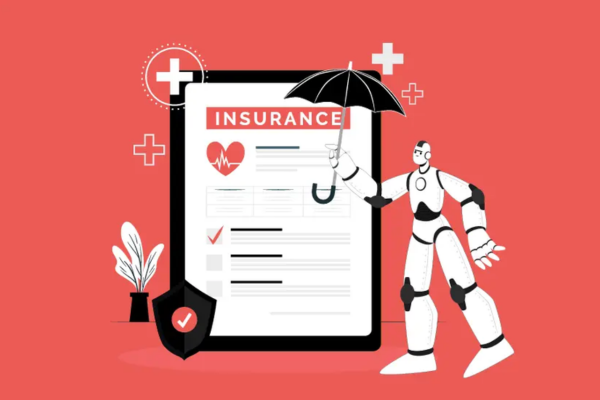
Automation allows agencies to process numerous applications, manage policies, and address claims faster, but it must never replace human judgment entirely.
Even when technology can rapidly analyze data and seek patterns, certain decisions require human reasoning.
For instance, an automated system could flag a claim for further review based on risk indicators, but the claims adjuster should ultimately decide.
Human review at these critical points in the process shall ensure that agencies treat policyholders fairly, with special consideration for exceptional circumstances.
Insurance management systems developed for use by agencies must emphasize the design of workflows that balance technology with human review, so that technology supplements personal service rather than replacing it.
How To Build Balance Innovation With Transparency?
Companies should strive to balance innovation with transparency to ensure AI in the insurance industry is used responsibly. Some of these steps include the following:
1. The Explainability Of Algorithms:
Insurance firms must use interpretable AI models and make their processes clear. This increases consumer trust and ensures their decisions are founded on fair, unbiased grounds.
2. Data Privacy And Security:
Because AI relies on vast amounts of personal and sensitive data, insurers must ensure data privacy and security.
Clear communication about how data is used and protected is important to maintain consumer trust and to comply with data protection regulations such as GDPR.
3. Regular Audits And Oversight:
Given the potential for unintentional bias, it is critical to conduct regular audits of AI systems.
There must be an audit of them; it is not only to test the models for efficiency, but also to show whether they are fair and inclusive.
Independent third-party reviews can help ensure that algorithms behave ethically.
4. Clear Communication With Customers:
Insurance companies should explain how they use AI in their services. This includes explaining how agencies calculate premiums, process claims, and the factors that influence decision-making.
Customers can always ask questions or seek clarification when any decision goes against them.
5. Proper Ethical Guidelines And Governance:
Insurers should establish ethical guidelines for the creation and use of AI. Fairness, non-discrimination, and accountability standards need to be stated.
There has to be an AI governance framework that governs and oversees adherence to legal and ethical expectations.
AI In Insurance Industry: How To Build Trust Through Ethical Practices?
Insurance is fundamentally a business built on trust.
Customers need to feel confident in their service providers’ ability and willingness to work in their best interest, handle claims fairly, and manage personal information responsibly.
As AI in the insurance industry continues to advance, agencies that prioritize ethical decision-making and transparency will build stronger, more lasting client relationships.
By reviewing decision-making processes, communicating policies, and protecting customer data, agencies will be better able to ensure the responsible and beneficial use of technology.
Investing in secure insurance management systems enables agencies to maintain this balance by improving operations while keeping ethics at the core.
The future of insurance will continue to evolve with technological advancements, but the essence of fairness, transparency, and trust will remain unchanged.
Agencies that successfully balance innovation with ethical responsibility will thrive in the long run.




Related Articles


Comments Are Closed For This Article