








Data Loss Prevention Explained: Best Practices And Strategies
8 Mins Read
Published on: 22 September 2022
Last Updated on: 17 August 2026
- Understanding The Three Types Of Data Loss Prevention:
- 1. Endpoint Data Loss Prevention:
- 2. Network Data Loss Prevention:
- 3. Cloud Data Loss Prevention:
- What Types Of Data Should Your Data Loss Prevention Strategy Protect?
- Common Causes Of Data Loss That Businesses Often Overlook
- 7 Top Data Loss Prevention Practices And Strategies:
- 1. Data Classification And Identification:
- 2. Creating A Data Inventory:
- 3. Developing Policies And Procedures:
- 4. Pre-Execution Data Loss Prevention Strategy:
- 5. Execution Of Data Loss Prevention Strategy:
- 6. Post-Execution Data Loss Prevention Strategy:
- 7. Monitoring/Testing Data Loss Prevention Strategy:
- Building An Effective Data Loss Prevention Strategy: Step By Step
- Data Loss Prevention Vs Backup Vs Disaster Recovery:
One of the most important aspects of data security is data loss prevention. Implementing effective data loss prevention measures can be challenging, but it’s essential for keeping your data safe.
Data loss can have severe consequences for businesses of all sizes.
In addition to the direct costs associated with recovering lost data, there can also be indirect costs, such as damage to your reputation and loss of customers.
That’s why it’s so important to have strong data loss prevention measures in place.
Implementing effective data loss prevention measures can be challenging, but it’s essential for keeping your data safe.
You can use ServiceNow backup services to help protect your data in the event of a disaster.
ServiceNow backup services make it easy to protect your data from loss in the event of a disaster.
By automatically creating and storing copies of your data in ServiceNow, you can be sure that your data is always safe.
Stay tuned.
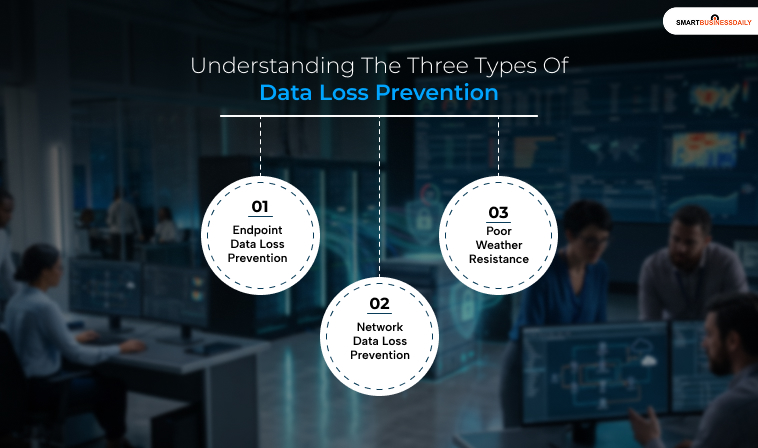
Understanding The Three Types Of Data Loss Prevention:
Many businesses think data loss prevention is a single security solution.
In reality, modern DLP strategies work across multiple environments because sensitive information no longer stays in one place.
Employees access company data through laptops, smartphones, cloud applications, email platforms, and remote networks.
Protecting only one of these areas leaves significant security gaps.
1. Endpoint Data Loss Prevention:
Endpoint DLP focuses on protecting devices such as laptops, desktops, mobile phones, and removable storage devices.
It monitors how users interact with sensitive files and prevents unauthorized activities such as:
- Copying confidential documents to USB drives.
- Printing restricted files.
- Taking screenshots.
- Uploading company information to personal cloud storage.
This type of protection has become increasingly important with hybrid and remote work environments, where employees often work outside secured office networks.
2. Network Data Loss Prevention:
Network DLP monitors data as it moves across an organization’s network.
Moreover, it analyzes emails, web uploads, file transfers, messaging platforms, and internet traffic to identify sensitive information before it leaves the organization.
For example, if an employee accidentally emails customer financial records to the wrong recipient, Network DLP can detect the confidential information and automatically block the transmission before the email is delivered.
3. Cloud Data Loss Prevention:
As organizations increasingly rely on Microsoft 365, Google Workspace, Salesforce, Dropbox, and other cloud services, Cloud DLP has become an essential part of cybersecurity.
Cloud DLP continuously scans files stored in cloud applications, identifies sensitive information, monitors user activity, and enforces security policies.
Moreover, it can detect unusual downloads, unauthorized file sharing, or risky third-party application access before confidential information is exposed.
Also, using all three forms of DLP together creates multiple layers of protection that safeguard sensitive information regardless of where it is stored or accessed.
What Types Of Data Should Your Data Loss Prevention Strategy Protect?
Not every piece of information requires the same level of protection. An effective DLP strategy begins by identifying which business data would cause financial, legal, or reputational damage if exposed.
As a result, some of the most critical categories include:
- Personally Identifiable Information (PII): Customer names, addresses, phone numbers, Social Security numbers, passport information, and government-issued identification.
- Financial Data: Credit card information, banking details, invoices, tax records, payroll information, and financial statements.
- Employee Information: Employment contracts, salary records, medical information, performance reviews, and internal HR documents.
- Intellectual Property: Product designs, source code, patents, research reports, engineering drawings, and proprietary business processes.
- Healthcare Records: Patient information, insurance details, prescriptions, and diagnostic reports that fall under healthcare privacy regulations.
- Legal Documents: Contracts, merger agreements, litigation files, compliance reports, and confidential legal communications.
- Business Intelligence: Sales forecasts, pricing strategies, marketing campaigns, customer databases, and supplier agreements.
Once sensitive information has been identified, organizations can apply different protection levels based on business impact.
Highly confidential data should receive stronger access controls, encryption, and continuous monitoring, while less sensitive information may require only basic protection measures.
In addition, proper classification reduces unnecessary restrictions while ensuring that the organization’s most valuable information receives the highest level of security.
Common Causes Of Data Loss That Businesses Often Overlook
Many organizations assume cybercriminals are responsible for most data breaches. While external attacks remain a major concern, internal mistakes account for a significant percentage of data loss incidents.
One of the most common causes is human error.
Employees may accidentally send confidential emails to the wrong recipient, upload sensitive documents to public cloud folders, or delete important files without realizing the consequences.
Cyberattacks continue to evolve as well.
Phishing campaigns, ransomware, malware infections, and credential theft remain among the leading causes of business data loss.
Moreover, once attackers gain access to employee accounts, they can steal customer records, financial information, and proprietary business data within minutes.
Also, cloud misconfigurations have become a growing risk.
Thus, incorrect sharing permissions, publicly accessible storage buckets, and poorly managed SaaS applications can expose thousands of confidential files without the organization even realizing it.
Additionally, insider threats represent another major challenge.
These incidents may involve disgruntled employees intentionally stealing confidential information or well-meaning staff unknowingly violating company security policies.
Other overlooked causes include hardware failures, outdated software, weak password practices, unsecured mobile devices, lost laptops, and third-party vendors with excessive access to company systems.
As a result, understanding where data loss originates allows organizations to build targeted security controls instead of relying solely on reactive measures after an incident occurs.
7 Top Data Loss Prevention Practices And Strategies:
In addition, ServiceNow backup services provide real-time visibility into how your data is being used, so you can quickly identify any issues.
On that note, here are some best practices and strategies for data loss prevention.

1. Data Classification And Identification:
One of the first steps in developing a DLP strategy is to classify your data.
Data classification involves grouping data based on sensitivity level, which will help you determine how that data should be protected.
For example, you may classify some data as “public,” which means it can be freely shared, while you may classify other data as “confidential,” which means it should only be accessed by authorized personnel.
Once you’ve classified your data, you can then identify where it resides (e.g., on-premises, in the cloud) and how it’s being used (e.g., for business purposes, for personal use).
2. Creating A Data Inventory:
After you’ve classified and identified your data, you need to create an inventory of that data.
This inventory should include information such as the location of the data, who has access to it, and what type of security measures are in place to protect it.
Creating a comprehensive inventory will help you better understand where your sensitive data is located and how vulnerable it is to access or theft.

3. Developing Policies And Procedures:
Once you have an understanding of where your sensitive data is located and how vulnerable it is, you can start developing policies and procedures to protect it.
These policies and procedures should be designed to prevent unauthorized access to confidential information and limit the chances of accidental data loss.
Some common policies and procedures include requiring employees to use strong passwords, encrypting sensitive data at rest, and implementing activity monitoring tools.
4. Pre-Execution Data Loss Prevention Strategy:
This strategy focuses on preventing data loss before it happens. One way to do this is by creating and enforcing policies that govern how data can be used, accessed, and shared.
For example, you might require all employees to encrypt sensitive data before sending it via email.
Another way to prevent data loss is by ensuring that all devices used to access company data are secure. This might include requiring employees to use strong passwords and two-factor authentication.
5. Execution Of Data Loss Prevention Strategy:
This strategy focuses on detecting and stopping data loss while it’s happening. One way to do this is by monitoring employee activity for unusual patterns that could indicate data theft or leakage.
Another way to detect and stop data loss is by using technologies like encryption and firewalls to protect sensitive data.

6. Post-Execution Data Loss Prevention Strategy:
This strategy focuses on minimizing the impact of data loss after it has occurred. One way to do this is by backing up all critical data so that it can be restored in the event of loss or corruption.
Another way to minimize the impact of data loss is by training employees on how to properly handle sensitive information.
7. Monitoring/Testing Data Loss Prevention Strategy:
This strategy focuses on continuously testing and improving your DLP strategy over time. One way to do this is by conducting regular audits of your systems and procedures.
Another way to test and improve your DLP strategy is by simulating data loss scenarios and measuring the results.

Building An Effective Data Loss Prevention Strategy: Step By Step
Implementing Data Loss Prevention is not simply about purchasing security software.
Successful DLP programs combine technology, governance, employee awareness, and continuous monitoring.
The process begins with conducting a complete data discovery exercise.
As a result, organizations must understand what sensitive information they store, where it resides, who can access it, and how it moves across the business.
The next step is data classification. Information should be categorized by sensitivity and business value so stronger security controls can be applied to confidential assets.
And that too while minimizing unnecessary restrictions on routine business operations.
Once data has been classified, organizations should establish clear access control policies using the principle of least privilege. Employees should have only the access required to perform their specific job responsibilities.
After implementing DLP software, businesses should configure policies to monitor file transfers, email attachments, cloud storage activity, removable devices, and collaboration platforms.
Also, automated alerts and blocking rules help prevent unauthorized data sharing without interrupting legitimate business workflows.
Employee education remains equally important. Regular cybersecurity training helps staff recognize phishing attacks, avoid accidental disclosures, and follow secure data handling practices.
Finally, organizations should continuously review DLP policies, conduct security audits, test incident response procedures, and update controls as business operations and cyber threats evolve.
Data protection is an ongoing process rather than a one-time implementation.
Data Loss Prevention Vs Backup Vs Disaster Recovery:
Many organizations mistakenly believe that backing up data is the same as preventing data loss. Although these technologies complement one another, they serve very different purposes.
Data Loss Prevention (DLP) focuses on stopping sensitive information from being exposed, copied, or shared without authorization.
It actively monitors user behavior, detects confidential data, and blocks risky actions before information leaves the organization.
Backup solutions, on the other hand, create copies of business data so it can be restored if files are accidentally deleted, corrupted, or encrypted by ransomware.
Backups do not prevent data from being leaked. Instead, they simply help recover lost information.
Disaster Recovery goes one step further by restoring entire business operations after a major incident such as a cyberattack, hardware failure, or natural disaster.
It includes infrastructure recovery, application restoration, backup systems, and business continuity planning.
The strongest cybersecurity strategy combines all three.
So, DLP prevents sensitive information from leaving the organization, backups ensure data can be restored if lost, and disaster recovery minimizes operational downtime following major disruptions.
Also, organizations that rely on only one of these solutions leave themselves vulnerable to different types of security incidents.
Additionals:




Related Articles



Comments Are Closed For This Article