







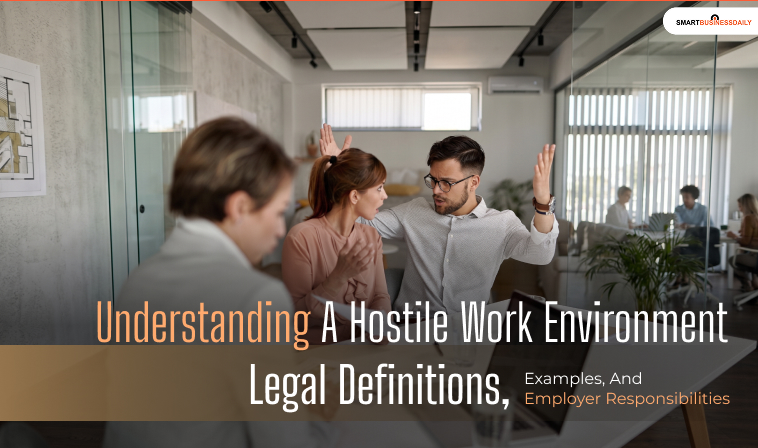
Understanding A Hostile Work Environment: Legal Definitions, Examples, And Employer Responsibilities
08 September 2026
9 Mins Read
- What Is A Hostile Work Environment Legally?
- Understanding Protected Characteristics
- Severe And Pervasive
- Deep Dive: State Vs. Federal Laws (California & New York)
- California Hostile Work Environment Laws
- New York Hostile Work Environment Laws
- Crucial Examples Of A Hostile Work Environment
- The Three Core Types Of Workplace Harassment
- 1. Verbal Harassment
- 2. Physical Harassment
- 3. Non-Verbal Harassment
- Legal Distinctions: Toxic Vs. Hostile Workplace
- Who Can Create A Hostile Work Environment?
- What Are an Employer's Legal Obligations?
- Preventive Measures and Training
- Investigation
- Taking Corrective Measures
- How To File An EEOC Complaint: Step-By-Step
- · Monitor Statutory Deadlines
- · Access EEOC Portal
- · Intake Interview
- · Execute Formal Charge
- · “Right to Sue” Notice
- Proving A Hostile Work Environment Claim
- Maintain A Contemporary Private Log
- Preserve Electronic And Physical Evidence
- Submitting Written Internal Notifications
- Document Clinical Health Effects
- Civil Damages And Constructive Discharge
- Emotional Distress Claims
- Understanding Constructive Discharge
- The Role Of An Employment Law Attorney
| Quick Summary A hostile work environment occurs when severe or pervasive discrimination or harassment based on a protected trait, such as race, gender, age, religion, or disability. This disrupts an employee’s ability to perform their job safely or effectively. Legally, a toxic workplace extends beyond a strict manager or an annoying colleague; the offensive conduct must explicitly hinder professional growth or damage mental health. Victims have the right to pursue civil remedies under federal or state frameworks (such as California’s FEHA or New York’s Human Rights Law), file claims with the EEOC, and secure damages for emotional distress with the help of specialized employment law counsel. |
I’m sure we’ve all had one of those days at work. Maybe your manager criticized you harshly, or a coworker left you out of an email chain.
Things like this happen, but they are not enough to constitute a ‘hostile work environment’
You might hear this phrase a lot, but it carries a very specific legal definition. There is a big difference between a difficult coworker and a situation that the court would recognize as illegal.
As business owners, HR specialists, and employees, it’s important that everyone understands this difference so we can keep our offices free from harassment and avoid getting caught up in a lawsuit.
So today, I’m going to tell you what exactly defines a hostile work environment legally,
and give you a breakdown of state and federal laws regarding it, as well as what steps you should take if you believe it exists in your workplace. Let’s get started.
In the video below, we’ll be learning exactly what defines a hostile work environment.
I’ll be going into each requirement in depth, as well as what actions you should take if you believe that you are in one.
What Is A Hostile Work Environment Legally?
From a legal standpoint, a hostile work environment occurs when workplace harassment or discrimination reaches a level that adversely affects employees’ working conditions. An abusive atmosphere creates such situations, which negatively impact employees’ productivity.
At the same time, uncomfortable interactions between workers and their subordinates are not enough to create a hostile work environment.
To do that, employees must be protected based on a certain legally protected category.
Understanding Protected Characteristics

Federal, state, and local statutes protect people from mistreatment based on their fundamental characteristics. Examples of these practices include:
- Discrimination on the basis of Race, Color, and Ethnicity is manifested in racist remarks, undesirable jokes, and deliberate professional disadvantages.
- Sex and Gender are regarded in terms of sexism, unwelcome sexual advances, and sexual harassment.
- Issues of Religion involve mockery about a person’s belief and obstruction of an employee during his or her attempt to practice a certain religion.
- Disabilities involve unacceptable behavior toward people with physical or mental impairments or a lack of reasonable workplace modifications.
- Age covers discrimination based on a person’s age, usually 40 years old and above, including being fired or subjected to age-based insults.
- Sexual Orientation and Gender Identity are explicitly covered in terms of sexual harassment and discrimination.
Severe And Pervasive
To protect workers from harassment, the U.S. Equal Employment Opportunity Commission (EEOC) defines two specific types of discrimination:
Severe means that an offender committed a serious and significant act, such as assault or threatening a person with injury.
Moreover, a pervasive environment requires the offender to engage in severe, persistent conduct that repeatedly subjects an employee to humiliation and insults.
For example, a worker may be exposed to rude jokes, continuous isolation from a group, and offensive messages over several weeks.
Deep Dive: State Vs. Federal Laws (California & New York)
While federal statutes establish a baseline layer of protection nationwide, individual states frequently implement much stricter employee protections.
Business entities operating in jurisdictions like California or New York face stringent regulatory oversight.
California Hostile Work Environment Laws
California is widely recognized for its robust stance on workers’ rights. Under the California Fair Employment and Housing Act (FEHA), the state strictly penalizes workplace intimidation.
- The Single-Incident Rule
California law explicitly establishes that a single severe incident of harassment is sufficient to trigger a hostile work environment claim.
Moreover, plaintiffs do not need to prove a prolonged pattern of abuse if the single action was sufficiently egregious.
- Personal Liability
Unlike federal frameworks, California allows individual harassers to be held personally liable for their actions.
Furthermore, this means an employee can sue the specific bad actor alongside the business entity itself.
New York Hostile Work Environment Laws
New York State and New York City have completely modernized their legal codes to lower the burden of proof for victims seeking civil justice.
- Eliminating the “Severe or Pervasive” Standard
Under the New York State Human Rights Law, workers no longer face the high federal burden of proving “severe or pervasive” harassment.
- The “Petty Slight” Threshold
In New York, behavior is unlawful if it rises above a “petty slight” or “trivial inconvenience.”
So, if the conduct treats an individual worse than peers based on a protected trait, legal grounds are established.
Crucial Examples Of A Hostile Work Environment
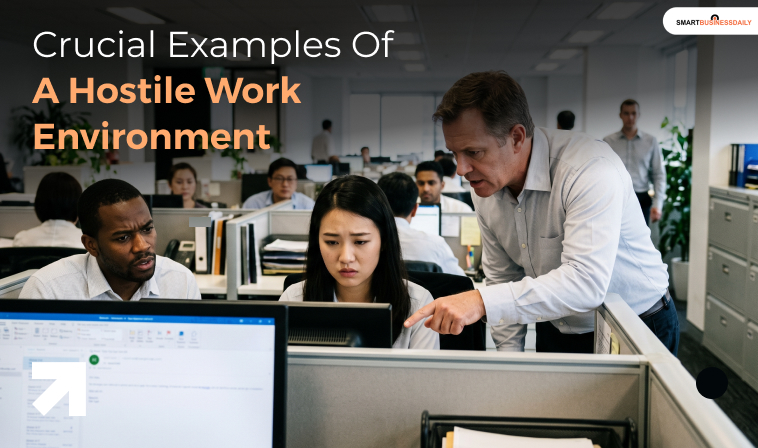
Hostility in the workplace can take many forms. It is not always straightforward, especially between managers and junior employees.
Illegal hostile work environment examples that are typical in corporate settings are:
- Unlawful Digital Communications
Sending emails containing sexually explicit images, texting innuendos, or any other digital communication that would make a person uncomfortable.
- Unwanted Physical Aggression
Following a colleague in parking lots, blocking an employee in office doors, touching others without consent, or intentionally using gestures of physical aggression.
- Targeted Identity Mockery
Making fun of someone’s religious dressing, age, accent, or any other characteristic.
- Professional Sabotage
Withholding vital information from a co-worker on purpose, or tampering with another person’s work intentionally to cause failure due to identity-based hostility.
You May Also Love To Read: How Is Gusto Payroll As A Service? – Let’s Find Out | Review, Pros & Cons, And Pricing.
The Three Core Types Of Workplace Harassment
To build a valid legal case or conduct an internal HR investigation, you must classify the offensive behavior. Harassment can generally be divided into three separate categories:
1. Verbal Harassment
Using verbal abuse to harass a colleague by threatening professional performance, insulting one’s intelligence or appearance, and making unwanted sexual propositions.
2. Physical Harassment
Physical assault, as well as unwanted touching, can create a hostile working environment.
Moreover, a harasser can also put the victim in physical discomfort by invading his/her personal space, cornering a person on purpose, or touching his/her hair or clothes.
3. Non-Verbal Harassment
Though it is not apparent, non-verbal harassment also creates a hostile environment in the workplace.
Making unpleasant gestures (eye-rolling, etc.), unpleasant symbols (in email signatures or on paper), and making co-workers avoid a person can constitute non-verbal harassment.
In some cases, entire departments can make a hostile environment for a colleague by ignoring him/her on a regular basis on the basis of gender or race.
Legal Distinctions: Toxic Vs. Hostile Workplace
Differentiating a generally unpleasant office from a legally actionable hostile work environment is critical for assessing corporate liability.
The comparative matrix below outlines these key operational differences:
| Operational Feature | Toxic Work Environment | Hostile Work Environment (Illegal) |
| Primary Root Cause | Poor management style, communication breakdowns, or aggressive corporate politics. | Targeted discrimination or harassment aiming at a protected legal characteristic. |
| Behavioral Application | An “equal-opportunity” difficult boss who berates all staff members equally. | Focused animosity directed specifically at an individual or a defined class of employees. |
| Regulatory Standing | Highly stressful and unprofessional, but generally legal under current labor codes. | Fully illegal; violates civil rights acts, EEOC rules, and state protections. |
| Common Symptoms | Unrealistic workloads, intense micromanagement, lack of transparency. | Verbal slurs, unwanted sexual advances, or identity-based exclusion. |
Who Can Create A Hostile Work Environment?

A common corporate misconception is that liability only stems from the actions of an immediate supervisor or executive.
Employment law recognizes that hostility can originate from multiple points within a business ecosystem:
- Executives and Direct Managers
First, their position of authority increases corporate liability, making their discriminatory actions especially damaging.
- Lateral Peers and Teammates
Secondly, a colleague working alongside you can trigger a hostile environment claim through persistent verbal misconduct or career sabotage.
- Subordinates
Third, employees reporting to a manager can create a hostile environment if they use discriminatory tactics or coordinated harassment to undermine leadership.
- Third-Party Non-Employees
Lastly, this is a major risk for businesses. Outside vendors, corporate clients, independent contractors, or customers can trigger a hostile work environment claim if they harass workers on-site and management fails to intervene immediately.
What Are an Employer’s Legal Obligations?
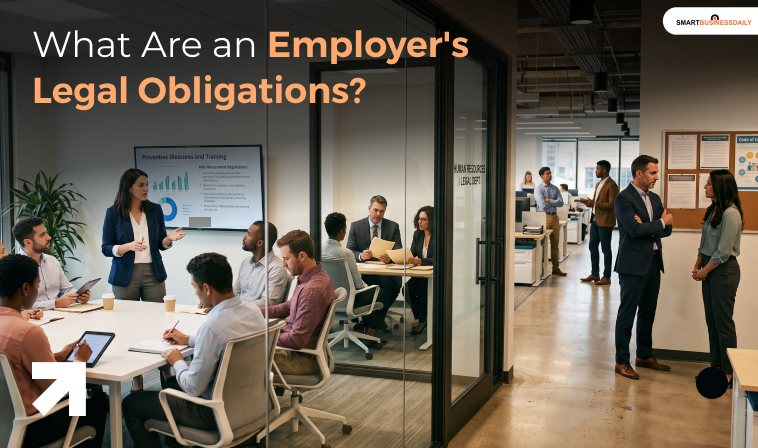
Every company has a responsibility to create a work environment free from discrimination, intimidation, and abuse. Corporations cannot ignore the problem by claiming they were unaware of it.
Preventive Measures and Training
Organizations need to devise and distribute anti-harassment rules and regulations.
Organizations also need to conduct periodic training sessions for all employees on the legal aspects of discrimination, abuse, and intimidation.
Investigation
The organization’s human resources or legal department should conduct a swift, objective investigation into all internal harassment complaints received.
Failure to deal with these complaints promptly and objectively could lead to high legal costs for the business.
Taking Corrective Measures
If the internal investigation reveals that harassment is occurring, company management is responsible for taking disciplinary action against the offenders.
Corrective measures should be firm and appropriate to the situation, ranging from transfers and demotions to dismissal.
How To File An EEOC Complaint: Step-By-Step
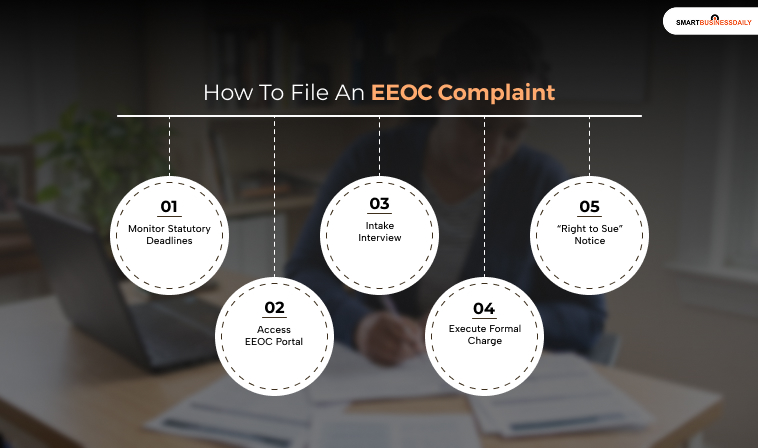
When an individual encounters an illegal hostile work environment based on federal protections, they cannot file a lawsuit directly.
They must follow statutory procedures by filing a formal Charge of Discrimination with the Equal Employment Opportunity Commission.
Below are the steps that should be followed:
· Monitor Statutory Deadlines
Under federal law, you must file a formal discrimination charge within 180 days of the incident.
However, if state or local laws offer protection, the deadline may increase to 300 days. It is always advisable not to wait until the due date.
· Access EEOC Portal
An individual can make an initial inquiry about the agency’s coverage. They just need to visit the official portal of the Equal Employment Opportunity Commission,
· Intake Interview
After completing the above step, a claimant must participate in an intake interview with an EEOC investigator.
· Execute Formal Charge
By signing a formal “Charge of Discrimination,” an individual asks the agency to intervene on their behalf. Filing this formal charge compels an employer to respond to the allegations.
· “Right to Sue” Notice
If EEOC declines to take legal action against the employer, a “Notice of Right to Sue” has to be filed by the claimant with the federal court in collaboration with his or her attorney.
Proving A Hostile Work Environment Claim
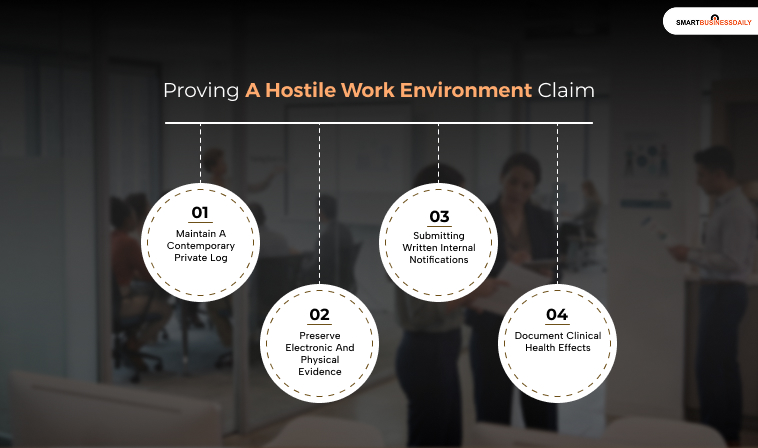
To achieve a positive outcome in a hostile work environment case, it is essential to present a strong evidence base.
It is also critical that the information given to the court or investigator be objective and documented.
During the tracking process, it is recommended that the following steps are implemented:
Maintain A Contemporary Private Log
This document records all incidents that occurred in the hostile work environment. It is critical to track the exact date, time, participants, statements, and witnesses for each situation.
Save this information privately on a phone or computer, not on company or corporate servers.
Preserve Electronic And Physical Evidence
The preservation process focuses on keeping digital and physical evidence safe.
Print and save emails, messages, texts, Slack transcripts, and other digital evidence of bias or unfair treatment.
It is also essential to save records of unexpected changes in performance evaluations.
Submitting Written Internal Notifications
The submitter must formally report the issue in writing. The report must state that the reporter is experiencing a hostile work environment based on a protected category.
This step is crucial to provide concrete evidence that the company was aware of the situation.
Document Clinical Health Effects
If the stress from the situation has caused health issues, such as panic attacks, insomnia, and depression, it is critical to see a doctor and keep the records private.
Doctors’ documents are a strong piece of evidence in hostile work environment cases
Civil Damages And Constructive Discharge
When an abusive workplace shatters an individual’s health, civil courts provide frameworks for financial recovery through tailored legal remedies.
Emotional Distress Claims
Employees can sue corporate entities for the severe mental anguish, anxiety, or trauma resulting from reckless workplace harassment.
If management intentionally permits an abusive atmosphere, they can be held liable for compensatory damages linked to pain and suffering.
Understanding Constructive Discharge
If ongoing harassment forces an employee to resign for their safety, the situation is classified as a constructive discharge.
The legal system treats this forced resignation as an unlawful termination, recognizing that corporate leadership deliberately allowed conditions to become intolerable.
The Role Of An Employment Law Attorney
Managing a hostile work environment dispute without professional guidance exposes organizations and individuals to major risks. Partnering with an expert employment attorney helps protect civil rights, simplifies complex EEOC filings, and supports comprehensive settlements.




Related Articles