








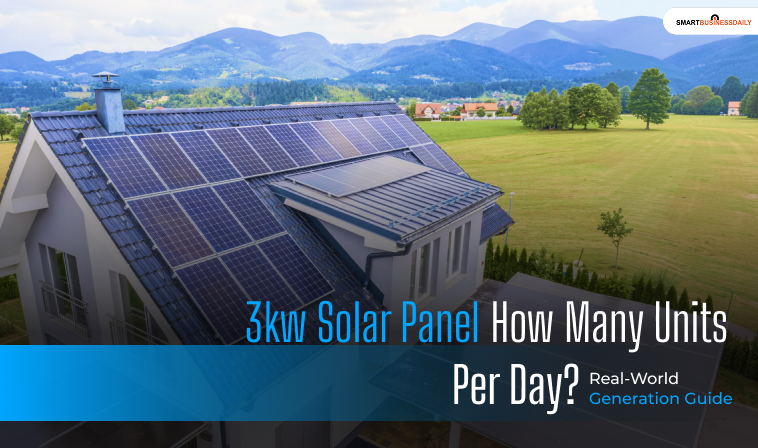
3kw Solar Panel How Many Units Per Day? Real-World Generation Guide
24 July 2026
5 Mins Read
- The Core Calculation: 3kw Solar Panel How Many Units Per Day
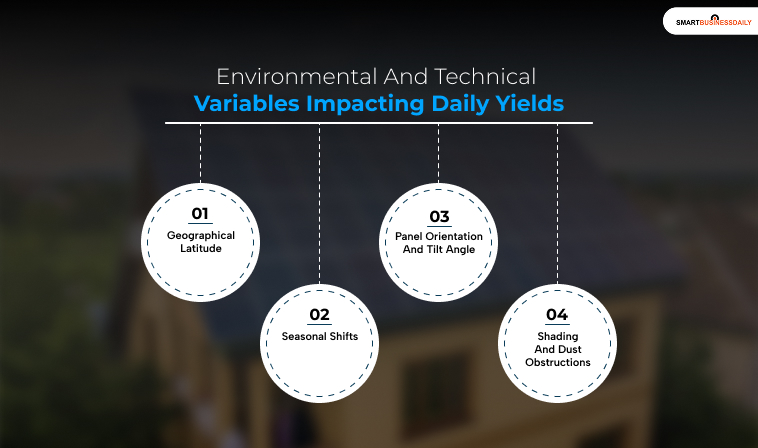
- Environmental And Technical Variables Impacting Daily Yields
- 1. Geographical Latitude
- 2. Seasonal Shifts
- 3. Panel Orientation And Tilt Angle
- 4. Shading And Dust Obstructions
- Appliance Compatibility: What Can A 3 kW System Power?
- The Significance Of On-Grid And Off-Grid Configurations
- 3kw Solar Panel How Many Units Per Day Explained
Switching to solar infrastructure is one of the most effective ways for homeowners to reduce monthly utility expenses.
Additionally, it is a great step to secure energy independence.
Therefore, when you are auditing residential solar configurations, the common advice is to check out the 3kW solar panel system.
It stands out as the most popular capacity tier for small to mid-sized households.
However, maximizing your investment requires understanding exactly how much energy this setup produces.
This comprehensive guide breaks down the math behind daily unit generation.
Moreover, it evaluates environmental variables and details 3kw solar panel how many units per day.
The Core Calculation: 3kw Solar Panel How Many Units Per Day
To convert kilowatts (kW) into units of electricity, you need to know how long the device is used.
One unit is equal to one kilowatt-hour (kWh). You can find the number of units by multiplying the power in kilowatts by the time in hours.
For example, if a device uses 2 kW and runs for 5 hours, the energy used will be 2 kW × 5 hours = 10 kWh.
This means it consumes 10 units of electricity. Remember, this calculation assumes that the power consumption stays the same during that time.
The actual energy usage may change based on the device’s efficiency and how you use it.
Environmental And Technical Variables Impacting Daily Yields
Solar panels do not generate power at a completely flat rate throughout the year.
The actual number of units your system sends to your electrical panel varies based on several distinct factors:
1. Geographical Latitude
The amount of solar energy that a location receives is significantly influenced by its proximity to the equator.
Regions situated nearer to the equator benefit from increased solar irradiance.
Additionally, this is the measure of solar power received per unit area. They also enjoy more peak sun hours throughout the year.
For residential solar power systems, such as a 3kW installation, this means that they can consistently achieve higher energy outputs.
Moreover, they often reach the upper limit of approximately 15 kilowatt-hours (kWh) per day under optimal conditions.
In contrast, areas at higher latitudes may experience reduced solar energy potential due to less direct sunlight.
This happens especially during certain times of the year.
2. Seasonal Shifts
Seasonal variations play a crucial role in solar energy production.
During the summer months, many regions experience longer daylight hours and higher solar angles. Therefore, this results in peak solar output.
For example, a well-placed solar panel system can generate maximum electricity during these months due to the prolonged exposure to sunlight.
However, this efficiency sharply contrasts with the winter months, when days are shorter and the sun’s angle is lower.
Additionally, adverse weather conditions such as heavy snowfall can further diminish the amount of solar energy produced.
Moreover, it often reduces daily generation to between 6 and 8 kilowatt-hours.
Consequently, the energy output can vary significantly based on seasonal changes.
3. Panel Orientation And Tilt Angle
Proper orientation and tilt angle are critical factors that influence the efficiency of solar panels.
In the Northern Hemisphere, solar panels are ideally positioned to face true South to maximize sunlight capture, while in the Southern Hemisphere, panels should face true North.
Any misalignment caused by roof design or positioning can significantly hinder the solar panels’ ability to harness direct sunlight.
Furthermore, the optimal tilt angle depends on the installation location’s latitude and the time of year.
This is because it helps balance exposure during both summer and winter months.
Incorrect orientation and tilt can lead to substantial energy losses.
Then, this can be particularly detrimental for solar power systems aiming for maximum efficiency.
4. Shading And Dust Obstructions
The performance of solar arrays can be significantly affected by shading and dust.
Objects such as nearby trees, chimneys, or even buildings can cast shadows onto solar panels.
Therefore, this creates shaded areas that reduce panel output.
This shading effect can lead to resistance drops within the solar cells, thereby reducing the overall energy yield of the system.
Studies have shown that shading can cut the energy output of a single string of solar panels by as much as 30% or more.
Also, this makes it critical to assess the surrounding environment before installation.
Additionally, the accumulation of dust and debris on the surfaces of the panels can also obstruct sunlight.
Therefore, this warrants regular maintenance to ensure optimal performance.
Also Check: Find The Most Affordable Electricity Plan In Singapore
Appliance Compatibility: What Can A 3 kW System Power?
Generating 12 units of electricity per day provides a substantial amount of operational power.
To maximize user help, the table below maps out how a typical household can distribute these 12 daily units across standard home appliances:
| Household Appliance | Power Rating (Watts) | Daily Run Time | Total Daily Consumption |
| LED Light Bulbs (x5) | (50text{ W (total)}) | 6 Hours | (0.3text{ kWh (Units)}) |
| Ceiling Fans (x3) | (220text{ W (total)}) | 10 Hours | (2.2text{ kWh (Units)}) |
| Inverter Refrigerator | (200text{ W}) | 24 Hours (Cycle) | (2.5text{ kWh (Units)}) |
| Smart LED Television | (100text{ W}) | 4 Hours | (0.4text{ kWh (Units)}) |
| 1.5 Ton Inverter AC | (1,200text{ W}) | 4 Hours | (4.8text{ kWh (Units)}) |
| Water Micro-Pump | (750text{ W}) | 1 Hour | (0.75text{ kWh (Units)}) |
| Laptop & Wi-Fi Router | (100text{ W (total)}) | 8 Hours | (0.8text{ kWh (Units)}) |
| Total Combined Load | — | — | 11.75 kWh (Units) |
The Significance Of On-Grid And Off-Grid Configurations
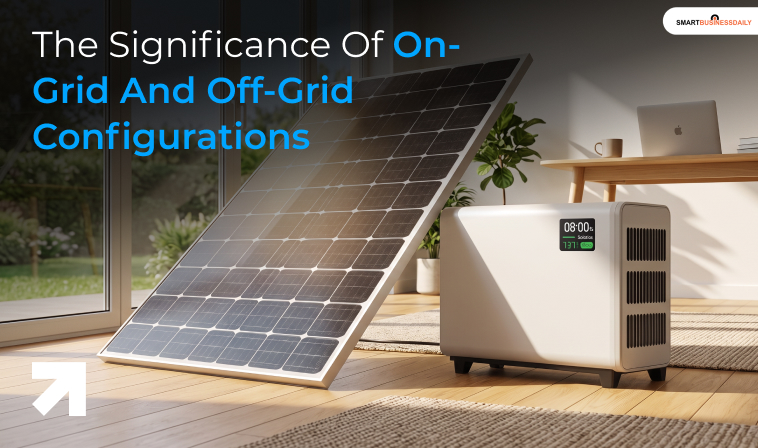
An on-grid configuration connects your array directly to the public utility lines.
If your home generates 12 units during the day but only consumes 6 units, the remaining 6 units are automatically sent back to the grid.
Through a system called net metering, your utility provider issues credits for this exported power.
Therefore, this plays a huge role in offsetting the cost of electricity you draw back from the grid at night.
An off-grid system functions completely independently of the utility infrastructure.
It routes your daily units through a charge controller into a dedicated solar battery bank (such as lithium-ion or lead-acid cells).
This configuration ensures you have power during blackouts. But it requires a larger initial budget to pay for the storage batteries.
3kw Solar Panel How Many Units Per Day Explained
A 3kW solar panel system is an optimal, cost-efficient investment for households with a monthly electricity consumption pattern of 300 to 400 units.
By generating an average of 12 units per day, this configuration effectively wipes out the baseline daytime running costs of:
- Lights
- Fans
- Smart Appliances
- An Inverter Air Conditioner
To achieve the absolute highest yield, homeowners should prioritize using tier-1 monocrystalline panels. This ensures zero-shade roof placement and regular cleanings.




Related Articles



Comments Are Closed For This Article