








TheSindi com: Internet vs. Reality (A Comprehensive 2026 Reader’s Guide)
10 September 2026
6 Mins Read
- Section 1: The Internet View – What The Site Claims To Be
- The Core Content Pillars
- Section 2: The Reality Check – What Readers Actually Get
- 1. The Content Depth Dilemma
- 2. The Question Of Expert Authority (E-E-A-T)
- 3. Media And Original Reporting
- Section 3: The Direct Comparison (Multi-Niche Vs. Authority)
- Section 4: Why Does "Thesindi Com" Rank So Well?
- Section 5: Pros, Cons, And The Ultimate Safety Rules
- The "Low-Stakes" Green Light
- The "High-Stakes" Red Light
- Final Verdict: Internet vs. Reality
If you have ever done a basic Google search or looked up a few simple DIY guides online recently, you’ve probably seen thesindi com in your results.
The blog has built a significant online following in a very short time. One moment it ranks on the first page of Google for artificial intelligence tips.
The next, for car maintenance schedules; and the day after, for personal budgeting strategies.
Moreover, on the surface, thesindi com looks like a multi-million dollar media empire full of professional journalists covering every corner of human knowledge and existence.
But what is the actual reality underneath? Why is a single blog writing about everything from travel checklists to complex financial loan eligibility?
In this review, we will cut through the digital curtain and reveal the site’s online presentation, the practical reality, and an honest guide to safely navigating multi-niche blogs in 2026.
Section 1: The Internet View – What The Site Claims To Be
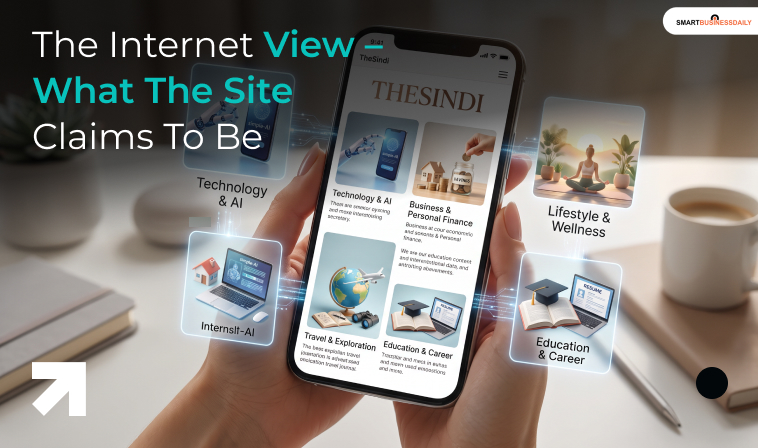
To appreciate the blog’s reality, we must first look at its online presentation.
TheSindi is the product of an early 2024 launch and currently represents a classic example of a multi-niche informational blog.
The website runs on WordPress and is optimized for mobile use with a streamlined presentation.
Moreover, the blog’s stated goal is to simplify highly complex, jargon-laden topics into digestible, beginner-friendly English.
The site serves more as a digital lifestyle magazine than a specialized industry journal.
The Core Content Pillars
Unlike specialized blogs, thesindi com does not focus on a single topic pillar. Instead, it has been able to attract a broad readership by branching out across 5 core pillars:
- Technology & AI: Firstly, the website frequently posts articles on how modern generative AI tools work, basic computer hardware troubleshooting, and smartphone spec comparisons.
- Business & Personal Finance: Secondly, this vertical focuses on entry-level finance: explaining how credit scores work, how to build an emergency fund, and what documents are required for basic bank loans.
- Lifestyle & Wellness: After that, this catch-all section features a wide variety of human-interest articles, from home organization tips to stress-management advice.
- Travel & Exploration: This category has extremely practical packing lists, destination guides, and budget travel guides.
- Education & Career: Lastly, content here targets students and job seekers, offering study and language-learning tips and resume-building advice.
From a user interface perspective, the blog looks great. The website opens almost instantly on a mobile device thanks to optimized loading speeds.
The text is presented in a clean, easy-to-read format using large fonts and short paragraphs.
Crucially, the blog doesn’t require registration or sign-up and avoids the angry paywall of many modern blogs.
Finally, the website does not utilize the ubiquitous, intrusive pop-up advertising banners that have plagued blog design in recent years.
You Can Also Check: SmartBusinessTimes.com Review: What This Site Actually Is
Section 2: The Reality Check – What Readers Actually Get
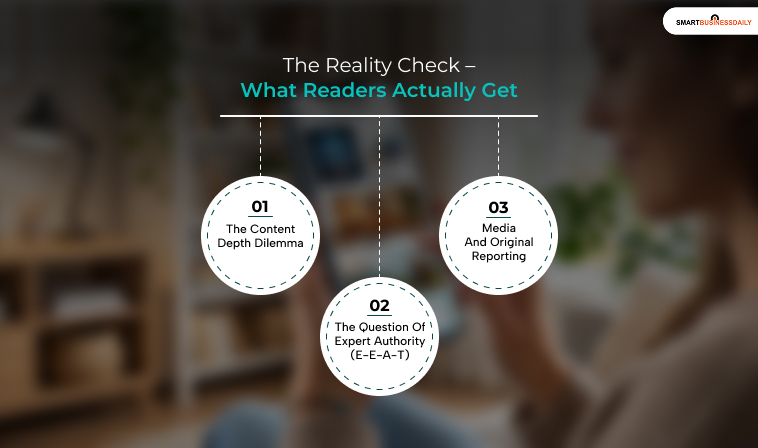
Once we move from the blog’s aesthetic appeal to the value of its content, it becomes clear why the blog has a certain reputation and standing in the digital media world.
1. The Content Depth Dilemma
The Internet View: A comprehensive and elite knowledge hub that can help you solve your most complex daily dilemmas.
The Reality: The articles on the blog are strictly introductory summaries. To appeal to a global audience, the blog strips out technical sophistication, nuance, and detail, leaving only the simplest explanations and definitions.
Moreover, if you need a two-minute summary of a concept, the blog is good for that.
But if you are struggling with a multi-layered dilemma, the blog will not provide satisfactory solutions.
2. The Question Of Expert Authority (E-E-A-T)
The Internet View: An authoritative publication backed by the deep knowledge and industry research of experienced professionals.
The Reality: From the Google algorithm’s perspective, E-E-A-T (Experience, Expertise, Authoritativeness, and Trustworthiness) is vital to determining a blog’s credibility.
At thesindi com, the site’s public ownership information is obscured and hard to find.
Moreover, the blog lacks an editorial masthead, a staff directory, or information outlining its writers’ professional credentials.
Almost all content on the site is published under one recurring generic author profile.
3. Media And Original Reporting
The Internet View: First-hand, deeply-researched guides and guides.
The Reality: The blog is largely dependent on generic stock imagery and aggregated research rather than original photography, first-hand video production, software screenshots, or exclusive interviews.
Moreover, the website summarizes online information well, but it does not produce any groundbreaking original reporting.
Section 3: The Direct Comparison (Multi-Niche Vs. Authority)
To better understand the role a blog like thesindi.com can play in your digital reading habits, it helps to compare a generalized multi-niche blog directly against a specialized industry authority.
| Evaluation Metric | TheSindi.com Reality | Industry Authority (e.g., NerdWallet, TechCrunch) |
| Topic Strategy | Horizontal (Covers 5+ completely unrelated industries) | Vertical (Deep focus on one single specialized field) |
| Target Audience | Absolute beginners looking for fast definitions | Professionals and consumers needing exact details |
| Writer Credentials | Anonymous or generalized pen names | Verified industry experts, licensed pros, and journalists |
| Sourcing Style | Summarizes general internet consensus | Direct citations of scientific studies and official data |
| Primary Monetization | Display advertising networks | Premium affiliate partnerships and subscriptions |
| Best Used For | Fast, low-stakes situational overviews | High-stakes financial, medical, or career planning |
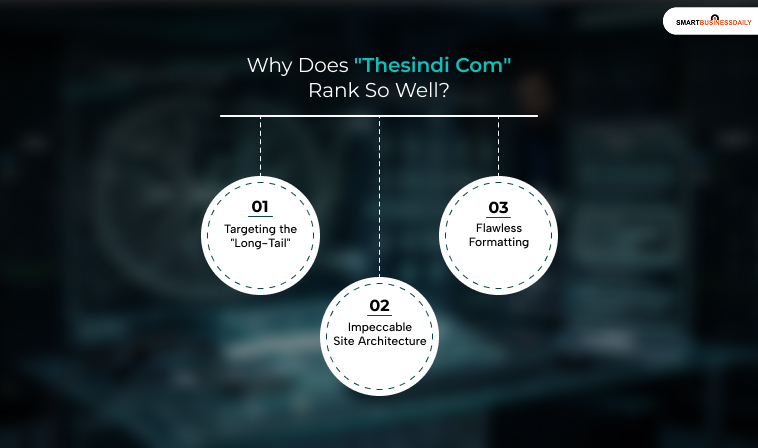
Section 4: Why Does “Thesindi Com” Rank So Well?
Given that Thesindi Com has few credible experts, why can the blog rank on the first page of search results for its many targeted keywords?
The reason is simple: elite SEO Engineering. The blog has been optimized to the highest standards of search engine requirements:
1. Targeting the “Long-Tail”: The blog focuses on long-tail keywords rather than trying to compete with major media corporations for generic terms.
2. Impeccable Site Architecture: Search engines favor websites that load quickly and are easy to navigate.
The WordPress framework that powers much of the blogosphere helps search engines index content quickly.
3. Flawless Formatting: The blog utilizes a smart heading structure (H2, H3) and concise text formatting that is identical to what search engines desire for featured snippets.
Section 5: Pros, Cons, And The Ultimate Safety Rules
Is the blog safe to visit? Of course, it is! The blog has valid SSL encryption, a clear Privacy Policy and Terms of Service, and no malicious download links, phishing scams, or financial traps.
Moreover, the blog is a safe, legitimate reading source. However, in order to use it safely and effectively without making real-world errors, you should abide by these three consumer rules:
The “Low-Stakes” Green Light
Feel completely comfortable using the blog for casual, non-essential informational queries.
If you need a quick packing checklist for a weekend trip to Europe, a summary of study hacks for a high school exam, or a basic explanation of generative AI, the blog is an excellent resource with a clean reading interface.
The “High-Stakes” Red Light
Avoid making important life decisions based solely on a generalized blog post.
Always treat guidance on a multi-niche blog as casual conversation, and close the tab if an article addresses anything serious to you.
This includes asset investment, loan processing, medical symptoms, or legal compliance guidance.
Thus, you must always contact a licensed professional with questions in these spaces.
Final Verdict: Internet vs. Reality
The online presentation of TheSindi.com suggests that the blog represents an all-knowing, omnipresent digital encyclopedia.
In reality, the blog is more of a sleek, well-organized, well-curated aggregation source designed for rapid orientation.
Think of the blog as a well-read friend: they know a little bit about everything, and can give you an excellent overview and explanation of a topic over coffee.
But you would not ask them to manage your investment portfolio or diagnose a health condition. The blog is a great source of free, easy reading material – but always remember to keep your consumer advocate mindset while using the open web.
Additional Resource: Discover Scoopupdates .com: Your new destination for new and reliable news!!




Related Articles