








Why Do ACL Tears Change The Legal Value Of Slip And Fall Claims?
02 February 2026
5 Mins Read
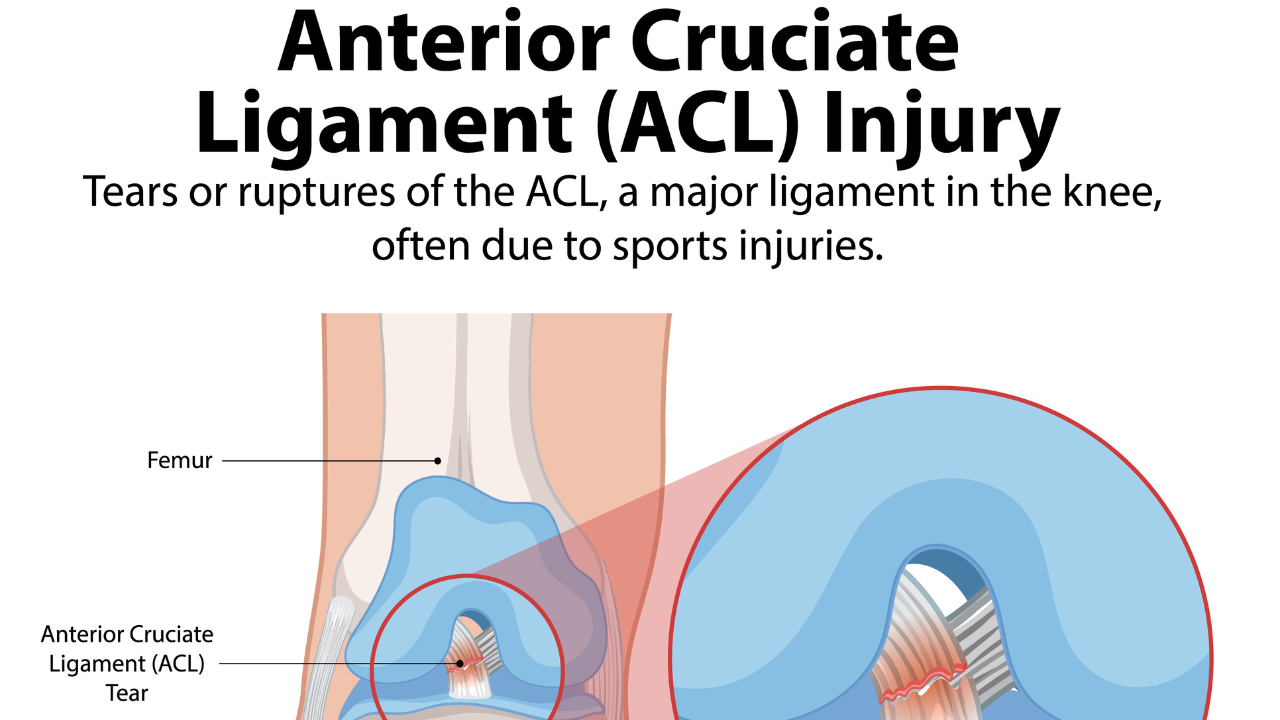
- What Are The Reasons ACL Tear Injury Change the Legal Value of Slip and Fall Claims?
- 1. Objective Medical Proof Matters Most
- 2. Long Treatment Timelines Increase Claim Value
- 3. Daily Movement And Independence Are Affected
- 4. Lost Income and Work Limitations Add Pressure
- 5. Connection Between Property Conditions and Injury
- 6. Insurance Companies Push Back
- 7. The Injury Changes Settlement Calculations
- The Trajectory And Legal Aftermath Of ACL Tear Injury Explained
Slip and fall cases are so common these days. You really cannot distinguish some as important anymore.
But, not in the eyes of the law. When a legal claim happens, that’s when it’s not just a slip and fall case anymore!
That ACL tear after a slip and fall drags routine premises liability into a heavyweight bout.
Think MRIs screaming damage, surgeons charting fixes, work months lost, movement boxed forever—redefines fault lines, comp math total.
Forget temporary ouch. After ACL tear injury, we’re talking verified losses, care costs looming, body rewired permanently, paycheck muscle crippled long haul.
What Are The Reasons ACL Tear Injury Change the Legal Value of Slip and Fall Claims?
These are very important and impactful reasons. Let’s take a look and understand these better:
1. Objective Medical Proof Matters Most
Claims require proof to succeed. When it comes to ACL injuries, medical images such as MRIs clearly show ligament damage, leaving no room for debate.
Orthopedic reports explain the severity of the tear and the risks of knee instability.
A real injury, born from a fall, has strong links that can overcome an insurer’s skepticism.
What about soft tissue injuries like whiplash? They often face doubts, but a clear ligament tear documented by films can show the need for surgery or a brace.
But if you have solid proof that strengthens a claim. Insurers are less likely to label claims as exaggerated when clear evidence is available.
Minor claims often fail without imaging, while ACL scans demand fair settlements.
A client who initially overlooked minor pain secured a six-figure settlement with an MRI taken a month later. Concrete evidence outweighs vague claims.
2. Long Treatment Timelines Increase Claim Value
ACL injuries do not allow for quick fixes. Even with top-notch care like arthroscopic surgery, physical therapy multiple times a week, and routine check-ups, recovery can take nine months or more.
Longer treatment means higher medical bills, which impact daily life.
The risk of further issues, like arthritis or additional surgeries, increases with time.
Courts recognize this and account for the ongoing burden of treatments in their decisions.
Short-term injuries lead to small payouts, while surgery and therapy for ACL injuries can significantly increase settlement amounts.
Consider a client whose recovery stretched over a year, still limping from therapy.
This long process influenced the size of their settlement, as future medical needs were included.
3. Daily Movement And Independence Are Affected
Knee injuries affect everyday activities like walking, standing, bending, and climbing stairs. ACL injuries can severely limit these abilities.
It’s simple: lifting groceries becomes impossible, chasing kids turns into a dream.
Additionally, you won’t be able to even bend for work, which becomes a challenge.
Jurors easily understand the impact—there’s no need for complex pain comparisons. Non-economic damages, like pain and suffering, become significant.
Injuries disrupt daily routines, jobs, and family life. Healing takes time, but the effects linger longer.
A client who was once a runner lost the chance to compete in marathons, suffering both from pain and the loss of enjoyment.
Courts recognize the serious impact of lost mobility, making this a strong point in cases.
4. Lost Income and Work Limitations Add Pressure
This is literally one of the scariest parts of the ACL tear injury. Whenever we go through such major surgeries, we have to take a huge break from work.
I know someone brilliant in what he does. But due to such an accident, he had to take a break to heal.
And honestly? He probably won’t be able to get back into this career ever like before.
So yeah, it’s not about the lost income. It’s also about an abrupt end to your career.
5. Connection Between Property Conditions and Injury
Property accidents often come down to a simple reason: a danger causes a fall. Consider an ACL injury—the cause could be a spilled drink, a cracked walkway, or a rug that trips someone.
The principles of physics explain these situations perfectly.
To build a case, we gather evidence like video clips, photos, and witness statements.
If someone gets hurt because of a hazard, it’s clear that responsibility lies with the property owner.
If someone strains their ankle, they might be told, “You should have been more careful.”
But if an ACL tears because of a puddle on the floor, the property owner might start to worry.
In grocery stores, for instance, a wet aisle that leads to a slip shows clear negligence, and that can raise the value of a claim.
Minor slips may seem insignificant, but the facts often tell a different story.
6. Insurance Companies Push Back
Serious injuries attract attention. An ACL injury prompts in-depth investigations/.
So, the insurance companies might look at previous medical records to find past knee issues or question if the injury was really caused by the incident.
Even when records are strong, the challenge remains. Serious knee injuries often require surgical attention and may not be fully valued.
This pushes insurance adjusters to question the claim, asking things like, “Were you injured before?” This kind of skepticism can lower the initial settlement offer.
7. The Injury Changes Settlement Calculations
Calculating settlements also involves looking beyond just emergency room visits.
Factors like pain and suffering, limits on activity, ongoing care, and lifestyle changes all matter.
An ACL injury can significantly increase what someone claims—medical bills, recovery time, and future concerns all add to the total.
For a simple trip, the payout might be small. But for knee reconstruction after a slip, the compensation can be much higher.
The more serious the injury, the greater the impact on the claim. A significant injury like an ACL tear injury often leads to much larger settlements.
The Trajectory And Legal Aftermath Of ACL Tear Injury Explained
ACL injuries make claims clearer. You just need to have some strong evidence.
Additionally, you must also present the right timelines and clear boundaries. Then, it’s easier to explain their impact.
These injuries often get the attention they deserve because they carry serious consequences.
Understanding their severity helps everyone involved prepare better and fight stronger for their rights.
Read Also:




Related Articles



Comments Are Closed For This Article