








Strategies For Managing Your Email Without Letting It Take Over Your Workday
13 January 2026
7 Mins Read
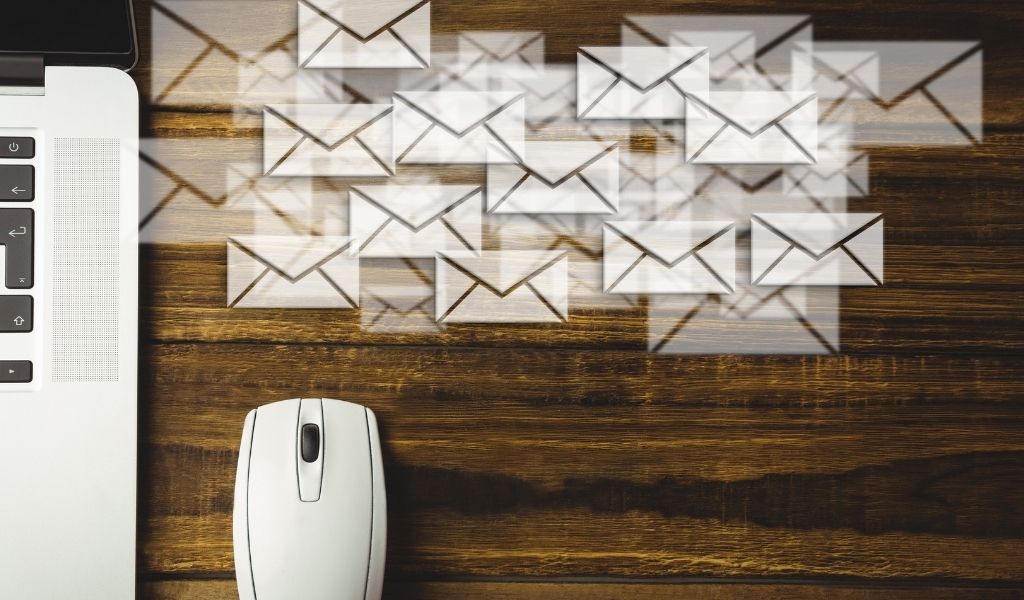
- Email Management Strategies: How To Not Let Work Ruin Your Day!
- 1. Decide What Belongs In Email And What Doesn’t
- 2. Cut Down The Messages You Never Needed In The First Place
- 3. Stop Treating Your Inbox As A Waiting Room
- 4. Make Fewer Decisions By Making Them Once
- 5. Separate Communication From Execution
- 6. Use Rules, Templates, And Automation Sparingly
- 7. Set Expectations With The People You Work With
- Make Email Management Easy
Email rarely becomes a problem in a single moment. More often, it builds as messages accumulate without decisions attached to them, creating pressure that grows gradually rather than all at once. What feels like overload is usually the result of many small delays compounding over time.
That slow buildup is why inbox stress often feels vague rather than urgent. Messages are read, mentally acknowledged, and then left untouched.
They remain visible, resurfacing later and demanding attention again without adding any new information. Over time, this repetition makes the inbox feel heavier than it actually is.
Some people respond by trying to clear their email immediately. Entrepreneur and investor Sky Dayton has described his approach clearly: “I do whatever I can to completely handle each email as soon as I read it. I try to reply at that moment, or I delete it. Anything left I strive to resolve by the end of each week.”
The instinct behind that mindset is not speed for its own sake, but closure.
For most people, the real issue is not discipline or responsiveness. It is asking email to manage work, which it was never designed to handle. When the inbox becomes a holding space for unfinished thinking, even modest volume begins to feel unmanageable.
And the worst thing comes when you have to think about email management strategies. But if that’s what you are worried about, keep reading till the end…
Email Management Strategies: How To Not Let Work Ruin Your Day!
This constant thought of what you are missing, how many emails are getting unnoticed, might scare you. But if you know how to take care of email management, things might get easier.
Here are a few tips when it comes to making the most effective email management strategies.
1. Decide What Belongs In Email And What Doesn’t
Email works best when its role is limited to communication. It handles updates, explanations, and documentation reliably when expectations are clear. Problems arise when it becomes a storage space for obligations that have no defined next step.
Messages that imply future work without spelling it out tend to stall. They feel too important to archive but too ambiguous to act on, which leaves them sitting in the inbox indefinitely.
As these messages accumulate, they blur together and quietly lose urgency without ever losing their claim on attention.
A practical distinction helps clarify this. If a message requires effort beyond a brief response, it should be moved out of the inbox. Email can introduce work, but it should not be responsible for remembering it.
Once we establish that boundary, the inbox behaves differently. Fewer messages linger in half-finished states, and closing threads becomes easier because we no longer worry about forgetting something important.
2. Cut Down The Messages You Never Needed In The First Place
Habit drives inbox volume more than necessity. We never disabled automated messages, so they keep arriving.
We CC people on emails because including them feels safer than leaving anyone out. Additionally, we send replies simply because silence feels uncomfortable.
The scale of this becomes clear when looking at volume alone. Research published by Microsoft’s Work Trend Index shows that the average office worker receives 117 emails per day, which helps explain why inboxes fill so quickly with messages that demand attention without advancing work.
Filters can reduce visible noise, but they rarely address the underlying issue. Messages still exist even when they are routed elsewhere, and they still require attention at some point. The sense that something is waiting does not disappear just because it has been moved out of sight.
Changes in social behavior tend to have a larger impact than changes in settings. When people are more deliberate about who actually needs to be included, volume drops naturally. Fewer unnecessary messages upstream lead to fewer decisions downstream.
3. Stop Treating Your Inbox As A Waiting Room
Inbox checking often slips into the margins of the day. People glance at messages before meetings start or scroll through threads after calls end, assuming these brief checks are harmless. Those moments add up. These can eventually make email management during travel a task.
A study published in Computers in Human Behavior found that people check their email an average of 15.48 times per day, a pattern documented at ScienceDirect. Each check introduces new information without creating the time or context needed to deal with it.
What follows is rarely a resolution. We notice messages, partially process them, and leave them open, only to revisit them later under similar conditions. Each return to the inbox reactivates unresolved items and contributes to a steady sense of mental drag.
Processing email in longer, intentional sessions changes that dynamic. When decisions are made in context, messages are resolved rather than skimmed.
The inbox becomes a place where work moves forward instead of a place where obligations accumulate.
4. Make Fewer Decisions By Making Them Once
Inbox fatigue often comes from repetition rather than volume alone. The same message is opened, reconsidered, and then set aside, sometimes multiple times. Nothing changes except the cost of revisiting it.
Email encourages this cycle because it holds information and implied work in the same space. Messages that require follow-up sit alongside those that require no action at all, and without a clear decision, they remain equally visible.
That repetition consumes real time. A roundup published by EmailToolTester shows that workers spend an average of 5 hours per week reading and writing emails, much of it spent reprocessing messages that were never fully resolved.
Breaking the cycle means treating every message as a decision point. Responding, delegating, archiving, or moving the work elsewhere all move the message toward closure. Leaving it in place is also a choice, and it is often the most expensive one.
5. Separate Communication From Execution
Email is great for sharing information, but it struggles to track progress. When tasks stay in the inbox, they sit alongside new messages and compete for attention in a space that does not support follow-through.
That tension becomes more pronounced as work grows more complex. Multi-step tasks require reminders, sequencing, and some sense of priority, none of which email provides reliably.
As a result, meaningful commitments begin to blend into routine correspondence, making it harder to tell what actually requires action.
Moving work out of email changes how the inbox functions. You can close messages once they have served their purpose, without risking losing track of what still needs to happen.
Execution then takes place in a system built to hold ongoing responsibility rather than passing communication.
When email is relieved of the burden of tracking work, it becomes easier to keep it focused and responsive.
The inbox stops acting as a substitute task list and returns to what it does best: connecting people and conveying information.
6. Use Rules, Templates, And Automation Sparingly
Automation helps when patterns stay consistent and predictable. Simple rules route routine messages away from the main inbox. So, there are fewer interruptions, and templates save time when you send the same types of responses repeatedly.
Problems tend to arise as automation becomes more elaborate. Rules that rely on narrow conditions break quietly, and exceptions begin to accumulate.
Instead of simplifying email, the system creates a second layer of work that requires monitoring and upkeep.
Over time, maintenance replaces benefit. What began as an effort to save time ends up adding another set of decisions to manage.
A useful test is durability. If a rule or template needs frequent adjustment, it is likely addressing a symptom rather than the underlying behavior.
Fewer, simpler automations usually last longer because they demand less attention and adapt more easily as work changes.
7. Set Expectations With The People You Work With
Many inbox problems are not individual failures but shared assumptions left unspoken. You cannot guess the response times. It must be agreed upon, and urgency builds quietly when silence is misread.
Over time, this uncertainty encourages people to send more messages than necessary, often just to confirm that something has been seen.
Clear expectations reduce that pressure. When people know when email will be checked and what kind of response time is reasonable, communication becomes more measured.
You send out fewer follow-ups out of anxiety, and messages carry more intent instead of acting as reminders.
Clarity also helps separate what truly requires email from what does not. Some updates benefit if you document them and revisit them later. While in the case of others, it is best to handle them through faster, more lightweight channels.
Making those distinctions explicit prevents email from becoming the default for every interaction.
When, as a team, you understand the use of emails, volume drops without anyone needing to police their inbox.
Communication improves not because people work harder at it, but because expectations remove the guesswork that drives unnecessary messaging.
Make Email Management Easy
An inbox rarely stays manageable through vigilance alone. Volume shifts, responsibilities change, and habits drift as work evolves. What matters more than maintaining order is having a way to bring things back into alignment when they start to sprawl.
A workable inbox reflects consistent decisions about what belongs there and what does not. When email has clear boundaries, messages are easier to process and easier to set aside without anxiety. The sense of control comes from placement rather than constant attention.
Email works best as a supporting tool rather than a workspace. When you use it to communicate, close loops, and then step out of the way, it stops competing with deeper work for attention and becomes easier to live with over time.



Related Articles



Comments Are Closed For This Article