







Future-Ready Leadership Skills For Tomorrow’s Business Challenges
6 Mins Read
Published on: 06 January 2026
Last Updated on: 11 March 2026

- How Can The Future-Ready Leadership Skills Change The Dynamics?
- What Are Some Future-Ready Leadership Skills To Foster In 2026?
- 1. Embracing Digital Fluency And Ai Literacy
- 2. Developing Emotional Intelligence
- 3. Building Resilience And Adaptability
- 4. Authentic Leadership
- 5. Fostering Continuous Learning
- The Importance Of Learning Future-Ready Leadership Skills Explained
The business world is evolving faster than ever. I have been an entrepreneur for the last 5 years.
But I still am a student when it comes to learning about the changes. Today, the business world is reshaped by:
- Digital innovation
- Global competition
- Unpredictable market shifts
The biggest change I had to incorporate was that I had to redefine my leadership roles. Completely.
So, I started to create new expectations for those at the helm of organizations.
Also, I need to mention that businesses are constantly navigating the impact of:
- Groundbreaking technologies
- Shifting consumer behaviors
So, today’s professionals must cultivate a diverse skillset to navigate ongoing change.
So, I wanted to be a leader who is equipped to anticipate trends and proactively solve challenges.
And I can assure you, they are the ones who will consistently drive their teams and organizations to greater success.
When you learn future-ready leadership skills early, you will notice that even as the landscape becomes more complex and volatile.
How Can The Future-Ready Leadership Skills Change The Dynamics?
What is the best way you can prepare for this future? As someone who has tried and tested the methods, I can surely help you with a thing or two!
It starts with focused education. You have to keep up with the learning. Additionally, you need to match your pace with ongoing upskilling.
Also, you must have practical experience. I mean, such as pursuing a general MBA online.
So, now you are intentionally investing in your leadership abilities. Also, you are organically staying attuned to industry best practices.
This is great! Now, you can position yourself to meet the demands of tomorrow’s workplace confidently.
Forward-thinking leaders follow these three things with their hearts. They always:
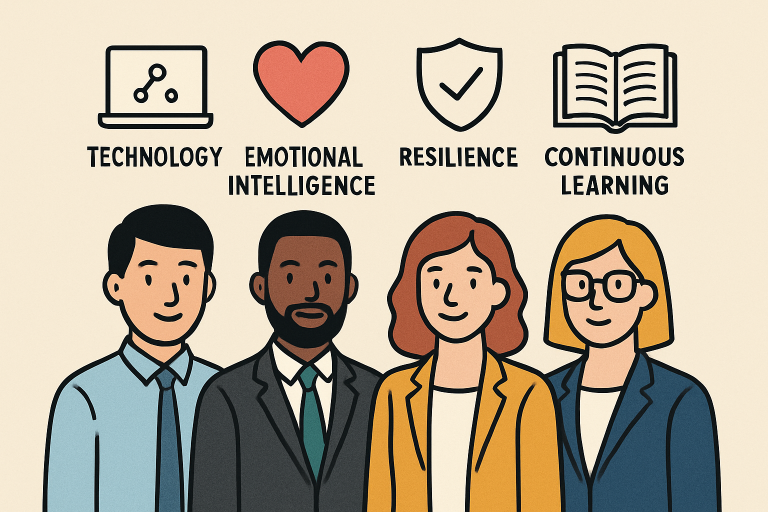
- Embrace technology
- Prioritize emotional intelligence
- Commit to ongoing self-improvement
So, they are positioning themselves to thrive in the face of external pressures and change. Note that while individual leaders can (and absolutely should) invest in their own training, organizational investment in leadership development is also a crucial activity at a wider business level in order to enhance growth and innovation across departments and elevate whole company performance, so also consider this strongly when looking at opportunities to develop your wider team.
What Are Some Future-Ready Leadership Skills To Foster In 2026?
These skills prepare you to think strategically across disciplines. Additionally, you will be able to adapt rapidly to new market demands.
1. Embracing Digital Fluency And Ai Literacy
Modern leaders recognize that digital transformation is no longer optional. It has become imperative for survival and growth in nearly every sector.
There are three major things that are transforming the way businesses operate.
Additionally, they are streamlining workflows and redefining customer engagement. They are:
- Digital platforms
- Big data analytics
- AI-driven tools
Future-ready leaders leverage digital tools to not only streamline operations and enhance customer experiences
But they also need to make well-informed, strategic business decisions. These will propel the entire organization forward.
This sets the tone for an organization’s technological culture. Additionally, it also encourages ongoing digital adoption and learning.
2. Developing Emotional Intelligence
See, I strongly assert that technical skills are vital for navigating today’s complex business landscape.
But I also believe that successful leadership increasingly relies on emotional intelligence (EQ). Leaders with high EQ excel at:
- Self-awareness
- Empathy
- Conflict resolution
So, this allows them to build stronger, more resilient professional relationships. Additionally, they can use this to effectively manage diverse teams.
Emotional intelligence has surpassed other leadership qualities in importance across various industries and cultures.
This hugely highlights its universal significance for success. Prioritizing EQ enables leaders to:
- Inspire loyalty among employees
- Establish trust
- Empower teams to adapt swiftly during times of change or uncertainty
Also, as a good leader, I had to practice active listening. Additionally, I needed to provide constructive feedback.
See, I genuinely care about others’ growth and well-being. So, that bit helped
These are the must-haves for emotionally intelligent leaders. Only this way can you foster inclusive workplaces where innovation and resilience flourish.
3. Building Resilience And Adaptability
Resiliency is a very important trait for effective leadership. This helps the leader to deal with:
- Economic cycles
- Disruptive technologies
- Changing societal expectations
You know what I do? I don’t resist change or fear failure. I have learnt that resilient leaders adopt a solutions-oriented outlook.
Additionally, I also make sure to learn actively from setbacks.
Also, I view change as an opportunity for growth. This makes me continually adjust my strategies to stay ahead of the curve.
Research published by Forbes highlights that leaders prepared to pivot quickly are more effective at:
- Navigating times of volatility
- Capitalizing on new trends
- Keeping their organizations agile
This adaptability is increasingly valued. I have seen it absent in environments where the pace of change can lead the company to keep up.
The best leaders model resilience not just in words. But they believe in taking decisive action.
Additionally, they maintain optimism even in the most challenging situations.
4. Authentic Leadership
Authentic leaders earn credibility by consistently aligning their actions with their core values and communicating openly at all levels of the organization.
This genuine engagement improves morale, which in turn increases both performance and employee retention.
Authentic leadership is significant in environments characterized by rapid change and high expectations.
You must ensure that your employees turn to you for
- Stability
- Guidance
- A shared sense of purpose
When leaders are transparent about their goals, admit to mistakes, and demonstrate vulnerability appropriately, they foster psychological safety and loyalty within their teams.
This leadership approach promotes individual well-being and fosters collective resilience.
Teams led by authentic and trustworthy leaders report:
- Higher productivity
- Greater creativity
- Stronger financial performance
When employees trust their leaders, they are more likely to feel engaged at work.
Additionally, they will also participate in collaborative problem-solving. In fact, this will drive them to support organizational goals during challenging times.
5. Fostering Continuous Learning
The most effective leaders recognize that professional growth and development have no finish line.
What happens when they model a steadfast commitment to lifelong learning?
They inspire their teams to expand their skills. Additionally, they also challenge the status quo continually.
Continuous learning can take many forms, from formal education programs and online courses at St. Thomas University (STU) to mentorship relationships and cross-functional collaboration.
Leaders must always dedicate time and resources to personal and team development.
Then, they will help their organizations stay agile. In fact, they will inspire the team to be competitive in rapidly changing industries.
Well-structured upskilling initiatives do more than improve technical proficiency. Firstly, they foster agility.
Additionally, they also play an important role in reducing employee vulnerability to automation.
Consequently, they also enhance organizational resilience during market disruptions.
I always aim to build a company that invests in ongoing learning and development.
I know that only this way can I report greater readiness for digital transformation.
Also, this is the only way to demonstrate more robust long-term growth.
See, you just have to create a learning culture. Additionally, it must ultimately ensure that both leaders and their teams are well-equipped.
They must feel confident enough to take on future industry challenges with confidence and capability.
The Importance Of Learning Future-Ready Leadership Skills Explained
Success in the future business world relies on a strong commitment to building digital, emotional, and adaptive skills.
Leaders can navigate uncertainty and drive positive change by:
- Adopting new technologies
- Valuing emotional intelligence
- Being authentic
- Focusing on continuous learning
Becoming a ready leader begins with education, self-awareness, and a desire to grow.
This approach opens up chances to confidently guide teams and organizations through future challenges and opportunities.




Related Articles



Comments Are Closed For This Article