








Top Printing Materials Used For Signage
8 Mins Read
Published on: 08 January 2026
Last Updated on: 17 August 2026
- Why The Material Matters More Than The Design?
- Comparing Popular Printing Materials For Signage:
- How Different Industries Choose Signage Materials?
- 1. Retail Stores:
- 2. Restaurants And Cafés:
- 3. Real Estate:
- 4. Corporate Offices:
- Weather Resistance: Which Material Performs Best?
- A) Excellent Weather Resistance:
- B) Moderate Weather Resistance:
- C) Poor Weather Resistance:
- What Are The Top Printing Materials For Signage?
- 1. Vinyl:
- 2. Corrugated Plastic:
- 3. Acrylic:
- 4. Wood:
- 5. Foam Board:
- 6. Aluminum:
- 7. Glass:
- How To Pick The Best Printing Materials For Signage?
- Common Mistakes When Choosing Signage Materials:
- Frequently Asked Questions:
- 1. Which signage material lasts the longest?
- 2. What is the cheapest material for signage?
- 3. Which material offers the most premium appearance?
- 4. Can wooden signs be used outdoors?
- 5. Which material is best for outdoor business signs?
- The Different Types Of Printing Materials For Signage Explained
Have you ever walked past a store and felt attracted to it? I have felt it so many times! I think it’s just because the sign outside looked clean, bold, and professional.
That is the power of good branding. A well-made sign creates a first impression. Also, it builds trust and tells people what a business stands for.
But many businesses face the problem that, even with a great design, the sign doesn’t last. It fades in the sun, peels in the rain, bends in the wind, or fades after a few months.
That is why smart businesses pay close attention to the material used for signage. The right printing materials for signage can boost brand visibility.
In addition, it also makes the sign durable. Also, it keeps it looking sharp for years.
The wrong material can turn even a great design into a disappointment. In this article, we will explore the top printing materials used for signage.
Why The Material Matters More Than The Design?
A great sign isn’t just about attractive colors or an eye-catching logo.
The material underneath the print determines how well that design performs over time. Even the highest-quality graphics can quickly lose their impact if the substrate isn’t suitable for the environment.
For example, a foam board sign may look excellent at an indoor exhibition, but the same sign could warp after a single rainy day outdoors.
Similarly, an untreated wooden sign may develop cracks or discoloration when exposed to moisture for extended periods.
As a result, choosing the right printing material affects several aspects of signage performance, including:
- Durability against weather and daily wear
- Print quality and color vibrancy
- Installation options
- Maintenance requirements
- Overall lifespan
- Long-term return on investment (ROI)
Businesses that invest in the appropriate signage material spend less on replacements and maintain a professional appearance for years.
Comparing Popular Printing Materials For Signage:
Every material offers unique advantages. The best choice depends on where the sign will be displayed, how long it needs to last, and the overall branding goals.
| Material | Best For | Lifespan | Indoor/Outdoor |
|---|---|---|---|
| Vinyl | Banners, vehicle wraps, window graphics | 3–7 years | Both |
| Corrugated Plastic | Yard signs, election signs, event boards | 6–24 months | Outdoor |
| Acrylic | Office signs, retail branding, reception displays | 5–10 years | Mostly Indoor |
| Wood | Boutique stores, cafés, rustic branding | 5–15 years | Both (sealed) |
| Foam Board | Presentations, exhibitions, indoor promotions | Several months | Indoor |
| Aluminum | Directional signs, storefronts, industrial signage | 10+ years | Outdoor |
| Glass | Corporate offices, luxury businesses | 10+ years | Indoor |
How Different Industries Choose Signage Materials?
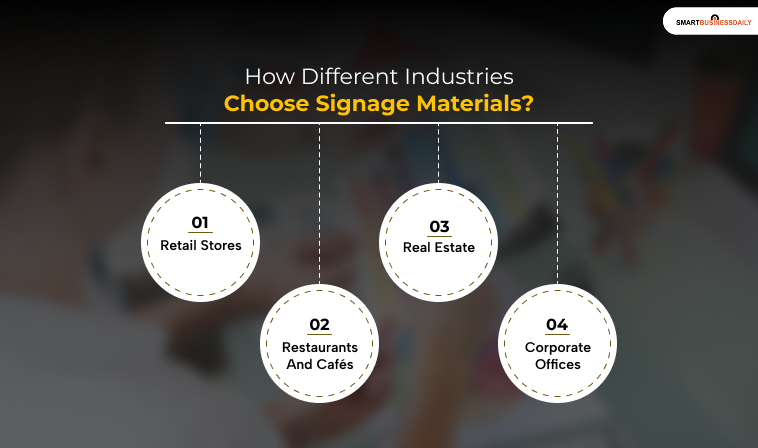
Different businesses have different signage needs. Choosing materials based on industry often produces better results.
1. Retail Stores:
Retail businesses typically prioritize visibility and aesthetics.
Popular materials include:
- Acrylic
- Vinyl window graphics
- Aluminum storefront signs
Additionally, these materials create a polished appearance while remaining durable enough for everyday customer traffic.
2. Restaurants And Cafés:
Restaurants often combine multiple materials.
For example:
- Wooden menu boards
- Vinyl promotional stickers
- Acrylic indoor displays
- Aluminum outdoor signs
Also, the combination creates both warmth and professionalism.
3. Real Estate:
Real estate companies frequently use:
- Corrugated plastic
- Aluminum
- PVC boards
These materials remain lightweight while surviving months of outdoor exposure.
4. Corporate Offices:
Professional environments usually prefer premium finishes such as:
- Acrylic
- Glass
- Brushed aluminum
These materials reinforce brand credibility and create a sophisticated first impression.
Also Check: What Does Collate Mean When Printing? The Definitive Sorting And Layout Guide.
Weather Resistance: Which Material Performs Best?
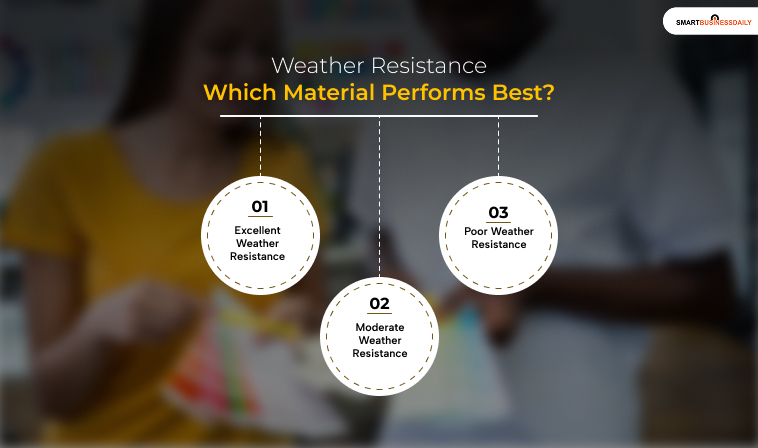
Outdoor signage faces constant exposure to harsh environmental conditions. So, here’s how popular materials compare.
A) Excellent Weather Resistance:
- Aluminum
- High-quality vinyl
- Acrylic
These materials resist moisture, UV rays, corrosion, and temperature fluctuations.
B) Moderate Weather Resistance:
- Treated wood
- Corrugated plastic
These work well outdoors but may require occasional maintenance or replacement.
C) Poor Weather Resistance:
- Foam board
- Standard paper boards
These should generally remain indoors because moisture quickly damages them.
What Are The Top Printing Materials For Signage?
These are the top ones. Make your pick, but let’s take a look at all of them first:
1. Vinyl:
Vinyl is the most widely used material for signage. It is flexible, durable, and works well for both indoor and outdoor signs.
If you need a banner for an event or some stickers to promote something, vinyl usually does the job perfectly.
People tend to choose vinyl because it can handle rain, sunlight, and everyday wear without getting damaged. Because of the increase in popularity and demand, the number of vinyl supplier in India has also increased.
You can also cut it into almost any shape or size, which makes it very handy for different types of signs. It works well with both digital printing and screen printing.
Compared to many other materials, vinyl is inexpensive, which makes it a perfect option for people who are just starting their business or working on personal projects.
2. Corrugated Plastic:
If you are looking for a printing material for signage that is lightweight yet strong, corrugated plastic is a great option. It’s especially popular for yard signs, political signs, and event promotions.
These signs are perfect for temporary outdoor use because they can handle rain and sunlight while still being very affordable.
You can print colorful graphics and text on this material so your message stays clear to the audience, and it is also very easy to cut into different shapes.
Corrugated plastic is ideal when you need a temporary outdoor sign that is easy to move and strong enough to survive different weather conditions.
3. Acrylic:
Acrylic signs look a bit like glass, but they are actually a type of plastic. They are very clear, shiny, and give a modern feel. You have probably seen them in offices, on nameplates in homes, or in high-end retail stores.
These signs are useful because they have a smooth, glossy finish that creates a professional look. You can use them clear or colored, and they are lightweight yet strong.
They can be cut into any shape, and they even light up beautifully when used with backlighting. If you want a sign that stands out and looks polished, acrylic is definitely worth considering.
4. Wood:
Wooden signs bring a classic, rustic feel. This is why you often see them in cafes and boutiques.
Additionally, I have seen people using wood in farmhouse-style homes and outdoor shops.
Also, I want to add that wood is easy to customize. So, you can carve it, paint it, or print designs on it based on your style.
People like wooden signs because they feel unique and handmade.
They also stay strong and can last a long time, even outside. Additionally, they give a natural, warm appearance that many businesses love.
Just remember that untreated wood can be affected by weather, so outdoor wooden signs may need protective coatings.
5. Foam Board:
Foam board is made of a light foam core covered with paper or plastic, and it is great for indoor signage. Additionally, it is lightweight and easy to carry.
People use it for:
- Presentations
- School projects
- Indoor events
- Promotional displays
I have also used it in many such cases, because its smooth, flat surface makes prints look bright and clear.
Since it is affordable, it fits well into most budgets. The only thing to keep in mind is that foam board is not suitable for outdoor use.
This is because it can bend or get damaged if it gets wet.
6. Aluminum:
Aluminum is one of the most reliable materials ever. People use it as a printing material for signage because it is the strongest and most durable.
Even though its material is metal, it is still lightweight. So, this makes it easy to install and move around.
People mostly use Aluminium for outdoor signs. A very good example of this can be parking boards.
Additionally, I have also seen people use this for direction signs and real estate signage.
This is because it can handle harsh weather without rusting or fading.
You can paint it or add printed vinyl on top to create clean and sharp designs. And the best part is, Aluminium signs last for many years.
So, they are a smart choice if you want something long-term and reliable for your business.
7. Glass:
Glass signs are usually chosen when a business wants a classy and premium look. They give a clean, professional vibe that you often see in offices, hotel lobbies, and reception areas.
As per Sun Sign & Technologies, glass can be used in different ways: clear, frosted, or even with designs printed directly on it.
The only thing to keep in mind is that glass needs careful handling since it can break. But when used safely, glass signs add a stylish and long-lasting touch to any space.
How To Pick The Best Printing Materials For Signage?
These are the tips that you can use when you are confused about which material to choose. Let’s take a look:
- Location: You should know where the sign will be placed. Indoor signs don’t face much harsh weather, so lighter materials usually work fine. But for outdoor signs, you need something strong that can handle sunlight, rain, heat, or wind.
- Budget: If you are looking for something pocket-friendly, materials like vinyl or foam board are good options. If you want something more premium, materials like glass and acrylic will give you that high-end look.
- Longevity: If the sign is for a short event or a temporary promotion, you can go with basic materials. For long-term or permanent signs, choose something strong and durable.
- Appearance: Different materials create different looks. Some give a professional finish, while others look more simple or casual. So the material you choose will affect how your sign appears to people.
Maintenance Tips to Extend the Life of Your Signs
Even durable materials benefit from proper maintenance. In this context, a few simple practices can significantly extend a sign’s lifespan:
- Clean signs regularly using mild soap and water.
- Avoid abrasive cleaning products.
- Inspect mounting hardware every few months.
- Remove dirt and bird droppings promptly.
- Apply protective coatings to wooden signs.
- Replace damaged vinyl before peeling spreads.
- Store temporary signs indoors when not in use.
Proper maintenance helps preserve color, structural integrity, and overall appearance.
Common Mistakes When Choosing Signage Materials:
Many businesses focus only on cost, leading to frequent replacements and higher long-term expenses. As a result, some of the most common mistakes include:
- Choosing indoor materials for outdoor applications.
- Ignoring UV resistance.
- Selecting the cheapest option instead of the most durable.
- Using materials incompatible with the printing method.
- Overlooking installation requirements.
- Forgetting future maintenance costs.
Considering the total cost of ownership often results in better long-term value than simply choosing the lowest-priced material.
Frequently Asked Questions:
1. Which signage material lasts the longest?
Aluminum is generally the most durable option, often lasting more than 10 years outdoors with minimal maintenance.
2. What is the cheapest material for signage?
Corrugated plastic and vinyl are among the most affordable choices for temporary and promotional signs.
3. Which material offers the most premium appearance?
Glass and acrylic provide the most professional and high-end finish for office and retail environments.
4. Can wooden signs be used outdoors?
Yes, but they should be properly sealed or treated to protect against moisture, insects, and UV damage.
5. Which material is best for outdoor business signs?
Aluminum remains one of the best choices because it is lightweight, rust-resistant, weatherproof, and highly durable.
The Different Types Of Printing Materials For Signage Explained
The effectiveness of a sign depends on much more than its design.
The printing material influences durability, print quality, maintenance requirements, weather resistance, and the overall impression your business creates.
While vinyl offers versatility, aluminum provides unmatched longevity, acrylic delivers a premium appearance, and wood adds warmth and character.
So, by evaluating your location, budget, branding goals, and expected lifespan, you can select a signage material that not only looks impressive on day one but continues representing your business effectively for years to come.




Related Articles



Comments Are Closed For This Article