







How To Promote Mobile Games? A Step-By-Step Guide
6 Mins Read
Published on: 19 April 2022
Last Updated on: 15 June 2026
- The Biggest Mistake In Mobile Game Marketing:
- How To Promote Mobile Games?
- Step 1: Promotion Begins Before Launch
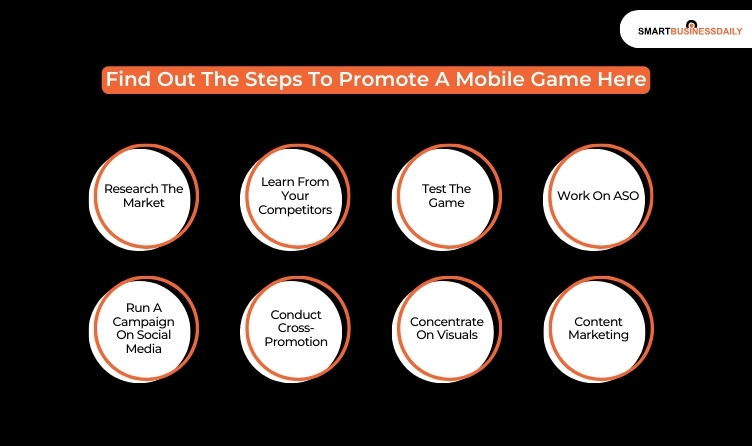
- Step 2: Research The Market
- Step 3: Define Your Core Player Before Choosing A Marketing Channel
- Step 4: Learn From Your Competitors
- Step 5: Test The Game
- Step 6: Work On App Store Optimization
- Step 7: Run A Campaign On Social Media
- Step 8: Community Is Often More Valuable Than Reach
- Step 9: Conduct Cross-Promotion
- Step 10: Concentrate On Visuals
- Step 11: Content Marketing
- Step 12: Turn Existing Players Into Your Marketing Engine
- Step 13: Measure Growth Differently
- The Future Of Mobile Game Promotion
Ask most developers how to promote mobile games, and you’ll hear a familiar list of tactics: social media campaigns, influencer partnerships, paid ads, app store optimization, and community outreach.
None of these tactics is inherently wrong.
The problem is that many developers treat them as independent marketing activities rather than parts of a larger growth system.
As a result, they often spend months trying to generate downloads only to discover that players leave after a few sessions, acquisition costs continue to rise, and growth stalls.
The truth is that successful mobile game promotion is not about generating attention. It is about creating a system that turns attention into engagement and engagement into long-term growth.
Before investing in marketing channels, developers need to understand how players discover, evaluate, and ultimately commit to a game.
The Biggest Mistake In Mobile Game Marketing:
Many teams focus on acquisition before validating retention.
This creates a common scenario:
- A game launches.
- Advertising generates downloads.
- Players install the game.
- Most leave within a few days.
The marketing campaign appears successful because download numbers increase. However, the game’s actual growth remains weak because players are not staying.
This is why experienced mobile game marketers often ask a different question: Why would a player keep playing after installing? So, if that question cannot be answered clearly, increasing traffic will simply magnify existing retention problems.
How To Promote Mobile Games?
Step 1: Promotion Begins Before Launch
Many developers assume promotion starts on release day. But in reality, effective promotion often begins months earlier. So, pre-launch marketing serves several purposes, including,
- identifying the target audience,
- gathering early feedback,
- building anticipation,
- testing messaging, and
- creating a community of interested players.
A small but engaged audience before launch is often more valuable than a large but indifferent audience afterward. Also, developers who involve potential players early frequently gain insights that improve both the game and its marketing.
Step 2: Research The Market
To prevent creating a game for an uninterested audience, thorough market research is required.
Find out what kinds of games are popular and what subcategories are popular.
Use trends.google.com to locate trending search phrases on Google, the world’s most popular search engine, if you’re performing research before building a game. It’s typically a decent sign of some interest.
Also, if you’ve already created a game, research your competition.
Step 3: Define Your Core Player Before Choosing A Marketing Channel
One reason promotional campaigns fail is that they target broad audiences – not every player is a potential user.
For instance, a strategy game enthusiast may have little interest in hyper-casual puzzle games. Likewise, players who enjoy competitive multiplayer experiences may ignore narrative-driven titles.
As a result, before selecting channels, define:
- Who is the game for?
- What motivates those players?
- Which competing games do they already play?
- Where do they spend time online?
The clearer the audience definition becomes, the easier every marketing decision becomes.
Step 4: Learn From Your Competitors
You should develop a list of everything of interest when surfing to learn from your app competition. Take a look at various customer reviews.
Pay attention to the titles, screenshots, and descriptions of your competitors. Make a mental note of the screenplay for their video. Examine where and how they use keywords throughout their app listing.
Putting your mobile game up with the rest of the app forest isn’t enough to promote it. You must completely prepare yourself if you want to succeed.
And
Planning entails completing your study before making any decisions. After all, a game with more features has a higher chance of fame and money.
Step 5: Test The Game
Testing is something I always recommend.
Look at the statistics if you’re as unsure as I am – they are not deceitful. Also, make sure to test your items and ensure they meet industry quality standards.
You want to fix as many bugs as possible before your scheduled launch date, but you should concentrate on poor game design flaws.
Step 6: Work On App Store Optimization
Mobile game advertising is challenging without effective app search optimization (ASO).
You’ll have the minimum experience necessary to tackle your mobile game’s ASO if you’ve studied and understood your competitors’ point of view. Almost 70% of mobile consumers use app store search to find new apps.
When you switch off your marketing initiatives, your game will vanish from your audience’s radar without organic traffic from the app stores.
Organic traffic is critical to the survival of any mobile game. The quantity of installations you may expect is directly proportional to your game’s ranking in the app store.
Step 7: Run A Campaign On Social Media
Use social media to run sponsored marketing.
You may market your mobile game on various social media networks, but the idea is to figure out what works best for your game and target your efforts appropriately.
You’ll need eye-catching artwork, gaming footage, and a compelling message.
Consider your target audience and what could pique their attention. These kinds of creatives are worthwhile even though they take time and money.
Step 8: Community Is Often More Valuable Than Reach
Many indie developers assume they need millions of impressions. But in reality, highly engaged communities frequently outperform massive audiences.
As a result, players who actively discuss a game tend to:
- Create user-generated content
- Recommend the game to friends
- Share strategies
- Provide feedback
- Generate organic visibility
A dedicated Discord server, subreddit, or social community can become one of the most powerful marketing assets available. The goal is not simply to attract players.
Instead, it is to create a space where players want to remain involved.
Step 9: Conduct Cross-Promotion
Cross-promotion is a cost-free method of promoting mobile games. You may cross-promote a mobile game in your other games or approach other creators to see if you can work anything out.
Cross-promote your games by looking for developers in related online communities.
Advertise in other mobile games and applications as another opportunity to cross-promote. As you may be aware, in-app advertising is a common monetization approach in which developers display advertisements in their app or game in exchange for ad money.
Step 10: Concentrate On Visuals
Video games are visually heavy mediums. This means people interact with these games more in a visual setting. As a result, to popularise your game, you need to concentrate on the visual side of things.
Start by designing a captivating trailer that showcases the in-game gameplay. A CGI trailer works, but an in-game trailer is just better. It allows you to showcase everything that you have been working on.
Moreover, drop gameplay teases here and there. This would keep the fans engaged. Just follow what Rockstar Games is doing with GTA VI. But follow that to promote the mobile game that you have created.
Step 11: Content Marketing
Last but not least is content marketing. Content marketing is a vital tool to have. A proper content marketing campaign can help you quickly promote mobile games.
Create content based on the game and release it consistently. Keep track of your end goal. Therefore, do not go overboard and spoil the game altogether. Keep things mysterious but on the topic.
This is the only way you should proceed. Otherwise, nobody would like to play a spoiled game.
Step 12: Turn Existing Players Into Your Marketing Engine
The most successful mobile games eventually reach a point where existing players contribute to growth.
This can happen through:
- Referral programs
- Social sharing
- Competitive rankings
- User-generated content
- Community events
At this stage, promotion becomes less dependent on continuous spending. Moreover, the game begins generating its own visibility through player activity.
This is one reason some games continue growing years after launch, while others disappear despite substantial marketing budgets.
Step 13: Measure Growth Differently
Downloads are important, but they rarely tell the full story.
A game with fewer installs and stronger retention may outperform a game with significantly larger download numbers. As a result, developers should monitor:
- Daily active users
- Monthly active users
- Retention rates
- Revenue per user
- Community engagement
- Organic acquisition trends
These metrics provide a clearer picture of long-term success.
The Future Of Mobile Game Promotion
The mobile gaming market becomes more competitive every year.
As acquisition costs rise and app stores become increasingly crowded, promotion is evolving from a marketing challenge into a product challenge.
Games that deliver memorable experiences, encourage community participation, and create reasons for players to return consistently generate stronger marketing outcomes.
The most effective promotional strategy is not simply reaching more people.
It is creating a game that players genuinely want to talk about.
Because in mobile gaming, the strongest growth channel has always been the same: a player telling another player that the game is worth downloading.
Read Also:




Related Articles



Comments Are Closed For This Article