








How Advancements In Technology Drive Manufacturing
03 December 2025
5 Mins Read
- How Can We Use The Technology In Manufacturing Industry?
- The Role Of Automation And Robotics In Modern Production
- Artificial Intelligence And Machine Learning Applications
- Advanced Materials And Additive Manufacturing Techniques
- Internet Of Things And Connected Manufacturing Ecosystems
- Digital Twin Technology And Simulation Capabilities
- Technology In Manufacturing Industry: Major Challenges And How To Overcome Them?
- Wrapping It Up!
Technology in manufacturing industry is bringing a new revolution in terms of efficiency, precision, and innovation.
Industry 4.0 is strongly integrating the manufacturing process with the help of:
- Creating smart factories
- Reshaping the way products are designed.
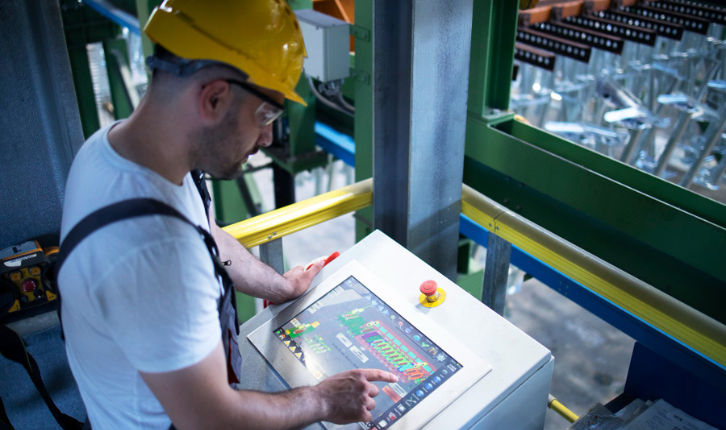
Walk into a factory floor today, and you’d hardly recognize it compared to a decade ago. Everything’s different! From how things are made to the quality we can achieve, and definitely how efficient operations have become.
It’s not just about new opportunities anymore; it’s about hitting precision levels we once thought were out of reach, cutting down waste like never before, speeding things up, and meeting crazy-specific customer demands.
What’s really hitting home now? Using this tech has shifted from a “nice-to-have” advantage to a complete necessity. If you want to stay in the game today, you’ve gotta keep up.
Let’s explore how the cutting-edge innovations are bringing a new revolution and making an impact on manufacturing operations.
How Can We Use The Technology In Manufacturing Industry?
Technology is changing the way business is done in virtually every industry! This includes manufacturing!
The advanced technology in manufacturing industry is helping the factories to streamline their production processes and increase innovation at a faster pace.
Most of all? Its versatile nature is also very easy to use. Here are the number of technologies that are bringing change in the manufacturing industry!
The Role Of Automation And Robotics In Modern Production
Automation has totally changed the factory floor. It brings a level of consistency and efficiency that’s really hard for people to match over long, grueling hours.
Robots handle the repetitive stuff with insane precision—doing tasks that would be tough, if not impossible, for a human to repeat perfectly all day, every day.
These machines just don’t get tired, right? They can run 24/7, pumping up production while keeping quality rock-solid across every shift.
And the really smart ones? They’re equipped with sensors and AI that let them adapt on the fly.
They notice tiny changes in materials or conditions and tweak things in real time to keep everything running smoothly.
Artificial Intelligence And Machine Learning Applications
AI has become a total game-changer for manufacturing. Its predictive powers would’ve felt like sci-fi not too long ago.
Machine learning algorithms chew through mountains of data from equipment, finding patterns that hint at a failure before it happens.
That means maintenance crews can plan rather than just react when things break down.
And AI-driven quality control? It inspects products so fast that it leaves human inspectors in the dust, catching tiny flaws that could lead to bigger issues later.
The best part is that these systems keep learning. They get sharper and more efficient with every cycle, constantly fine-tuning themselves.
Advanced Materials And Additive Manufacturing Techniques
New materials have seriously opened up possibilities we didn’t have before. Engineers now work with composites, super-strong alloys, and specialized polymers that are lighter, tougher, and can handle extreme conditions where old-school materials would fail.
That means we can build better-performing products that actually use fewer resources—pretty much a win-win.
And additive manufacturing, or 3D printing as most folks call it, has grown up. It’s moved past just making prototypes to producing real, working components, even really complex ones.
Internet Of Things And Connected Manufacturing Ecosystems
Thanks to the Internet of Things, factories have become connected ecosystems in which machines, products, and systems communicate in real time.
Sensors everywhere are constantly gathering data—temperature, pressure, vibration, you name it—giving a crystal-clear view of what’s happening on the floor.
This lets manufacturers monitor quality, equipment health, and environmental factors simultaneously, sometimes across multiple locations.
Take something like producing precision components at scale: many folks rely on quality metal stamping services to consistently hit those tight tolerances.
All this data feeds into unified dashboards, giving managers real insights they can actually use.
Technicians can now diagnose and fix problems remotely, which is incredibly handy. Smart factories using this tech see less downtime, use resources more efficiently, and can adapt their schedules much faster when priorities shift.
Digital Twin Technology And Simulation Capabilities
Digital twin tech is a bit of a breakthrough, if you ask me. It creates a virtual copy of a physical asset, a process, or even a whole production system.
These digital models mimic real-world conditions remarkably well, allowing engineers to run tests, predict outcomes, and tweak processes—all without touching the actual production line.
Manufacturers can play around with improvements, equipment setups, and schedules in a virtual sandbox before making any real changes.
It slashes the usual risks and costs associated with optimization and speeds up the entire improvement cycle.
Technology In Manufacturing Industry: Major Challenges And How To Overcome Them?
Implementation of technology in the manufacturing industry brings major challenges such as skill gap, high costs, and, most importantly, cybersecurity threats.
However, with the right kind of strategic planning and phased implementation, the issues can be easily resolved.
| Challenges | Solutions |
| High initial investment and uncertain ROI | You can start with small and high-impact pilot projects. These can help you to demonstrate value and further investment. You can also explore scalable and cloud-based solutions to reduce upfront infrastructure costs. |
| Skill gap | You can start investing in ongoing upskilling and reskilling programs for all existing employees. Other than that, you can also partner with the educational institutions in order to create a talent pipeline. |
| Cybersecurity risks in the connected environments | Start by implementing robust, tailored cybersecurity measures. You can also conduct regular audits and further prioritise the awareness training. |
| Resistance to change | Employees need motivation and a space for open communication. So, you must involve the employees in the planning process. |
Wrapping It Up!
Tech just keeps pushing manufacturing toward new levels of efficiency, quality, and flexibility.
It’s completely reshaping how we think about making things. The blend of automation, AI, new materials, connectivity, and simulation has created production environments.
Technology in the manufacturing industry is making everything more responsive, sustainable, and capable than anyone dreamed possible a generation ago.
Manufacturers who lean into these changes aren’t just surviving; they’re setting themselves up to meet whatever the market throws at them next.
And as tech keeps evolving, faster every day, it seems you can bet we’ll see even more transformations that stretch what’s possible in production.




Related Articles


Comments Are Closed For This Article