








How Integrated Technology Is Transforming Business Security?
5 Mins Read
Published on: 17 March 2026
Last Updated on: 06 July 2026
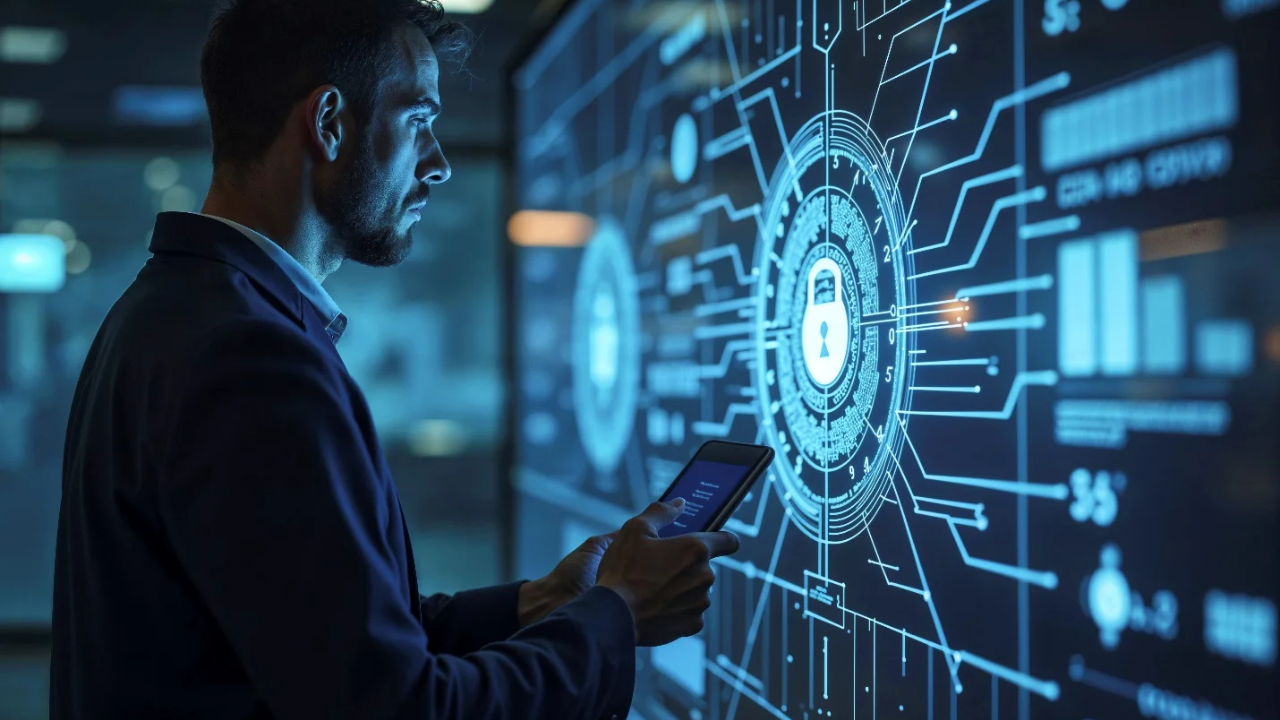
- Transformation Of Business Security Is The Shift From Fragmented To Unified Security
- What Are The Benefits You Get Post Transformation Of Business Security?
- 1. Effective Tracking With Unified Systems
- 2. Real-Time Intelligence And Faster Decision-Making
- 3. Strengthening Collaboration Across Teams
- 4. Supporting Compliance And Risk Management
- Transformation Of Business Security Helps You To Prepare For The Future
In today’s fast-moving digital environment, business security is no longer limited to locked doors.
In fact, I don’t see my business being secure with just firewalls. I need more than that and isolated IT policies.
I can tell you about how I have curated the transformation of business security in my own case.
Now, I operate in a connected ecosystem where data, employees, customers, and systems interact continuously.
As a result, I assert that integrated technology has become a powerful force.
In fact, it is reshaping how companies protect their assets and manage risk.
What I had to do was combine multiple security tools, intelligence sources, and operational processes into unified systems.
Now my businesses are gaining stronger visibility.
Additionally, I am also getting faster responses, thanks to its developed capabilities.
In this article, I will tell you everything about how to bring transformation in business security.
This will help you have greater confidence in their long-term resilience.
Transformation Of Business Security Is The Shift From Fragmented To Unified Security
For many years, businesses relied on a patchwork of security solutions.
This fragmented approach created gaps that could be exploited by cyber threats.
Additionally, there was also an option for insider risks. Another worst-case situation would have been operational failures.
Integrated technology is changing that dynamic. It is bringing security components together.
Then, it is turning these into cohesive frameworks that communicate in real time.
What Are The Benefits You Get Post Transformation Of Business Security?
Now, I will tell you how the transformation of business security in my organization has helped me.
I hope you get a clear picture from these points:
1. Effective Tracking With Unified Systems
When systems are unified, organizations can track activity across networks, devices, and cloud environments without relying on manual data collection.
This holistic visibility allows security teams to identify patterns, detect anomalies, and respond to potential issues before they escalate.
Instead of reacting to problems after damage occurs, integrated platforms support proactive protection strategies that strengthen both digital and physical security measures.
2. Real-Time Intelligence And Faster Decision-Making
One of the most significant advantages of integrated security technology is the ability to leverage real-time intelligence.
Modern solutions analyze large volumes of data instantly. Therefore, it provides actionable insights.
Trust me, these insights help leaders make informed decisions.
After the transformation of business security in my workspace, I can detect any suspicious login attempts effectively.
In addition, I can also seamlessly monitor unusual network traffic. In fact, it has also become quite easier for me to manage access permissions.
Therefore, I can confidently say that integrated systems allow businesses to act swiftly and effectively.
Automation also plays a vital role in this transformation.
Now, I can handle routine tasks with fewer human resources. I am talking about tasks such as:
- Threat Detection
- Compliance Reporting
- Incident Alerts
Therefore, this reduces the risk of oversight. Additionally, it also allows security professionals to focus on strategic initiatives.
I have seen that many organizations are adopting a comprehensive Cybersecurity Platform.
This will help them to streamline these capabilities.
In addition, this will also ensure that protective measures remain consistent and scalable as operations grow.
3. Strengthening Collaboration Across Teams
Integrated technology isn’t just about tools. It also improves communication between departments.
You see, I no longer restructure all the security responsibilities to IT teams alone.
I think Human Resources and operations should be equally responsible!
In fact, imagine a finance guy claiming to take zero responsibility when his organization is facing threats.
Quite bizarre, right? I am sure that you will feel the same about leadership taking no responsibility.
Basically, all I am trying to say is that every single sector plays a role in safeguarding business continuity.
Unified systems make it easier for teams to share insights. Additionally, it also becomes much easier to coordinate responses.
In fact, now, I can effortlessly maintain clear accountability during incidents.
This collaborative approach enhances organizational awareness. Also, it helps cultivate a culture of security.
Employees become more informed about potential risks. Additionally, I have also seen a distinct change among the managers.
They have gained better visibility into how security strategies align with business objectives.
So, I will always suggest that you break down silos.
This way, integrated technology encourages a more resilient and adaptive mindset across the entire organization.
4. Supporting Compliance And Risk Management
Regulatory requirements and industry standards continue to evolve, placing additional pressure on businesses to maintain robust security frameworks.
Also, I have noticed that integrated solutions simplify compliance efforts by centralizing processes such as:
- Documentation
- Monitoring
- Reporting Processes
This not only reduces administrative burdens. Rather, it also improves accuracy and transparency during audits or risk assessments.
Furthermore, as I have mentioned earlier, integrated security technology has helped my organization to anticipate emerging threats.
Here, I am referring to the amazing feature of predictive analytics.
Additionally, I have also become quite comfortable with continuous monitoring.
Therefore, this has allowed my businesses to identify vulnerabilities early.
In fact, now, I can even implement safeguards before incidents occur.
This forward-thinking approach strengthens overall risk management. Also, it really supports sustainable growth in competitive markets.
Transformation Of Business Security Helps You To Prepare For The Future
I am pretty sure you can feel the acceleration of digital transformation in the air.
Well, all I can confirm is the importance of integrated technology in this change. It will legit shape the future of business security.
Therefore, I would suggest that you, like your company, must invest in unified systems.
Trust me, this will ensure that you are better positioned to adapt to changing risks and protect valuable data.
Additionally, you will also be able to maintain trust with customers and partners.
Ultimately, the transformation driven by integrated security technology is about much more than defense.
It helped me and my businesses to operate with confidence.
Additionally, I was able to innovate without unnecessary fear.
Therefore, I could build environments where security supports progress rather than limiting it.
By embracing comprehensive, connected solutions, organizations can create a stronger foundation.
Also, this will be beneficial for both present challenges and future opportunities.




Related Articles



Comments Are Closed For This Article