








How To Get A Virtual Address For Business In 2026? Read This Blog To Find Out This Answer And More!!
08 January 2026
7 Mins Read

- What Is A Virtual Address For Business?
- Who Typically Uses A Virtual Address For Business, And Why It Makes Sense?
- 1. Home-Based Entrepreneurs And Freelancers
- 2. Online Businesses And E-Commerce Sellers
- 3. Remote Teams And Distributed Businesses
- 4. Startups And Early-Stage Companies
- What Are The Key Benefits Of Using A Virtual Address For Business?
- 1. Professionalism And Credibility
- 2. Privacy Protection
- 3. Cost Effectiveness And Low Overhead
- 4. Flexibility And Scalability
- 5. Administrative And Operational Convenience
- 6. Legal And Compliance Benefits Depending On Jurisdiction
- What Are The Potential Limitations Or Drawbacks To Consider About Virtual Addresses For Business?
- 1. Lacks Physical Presence
- 2. Perception Issues
- 3. Dependent On The Service Provider
- When Does A Virtual Address Make The Most Sense: Use Case Scenarios
- How To Choose The Right Virtual Address Or Virtual Office Provider
- What Are Some Practical Steps To Set Up A Virtual Address For Your Business?
The way businesses operate has changed significantly over the past decade. I am so surprised to see a vast number of services emerge.
Additionally, I remember that these were not so prominent even 3 years ago. I am talking about:
- Remote work
- Online services
- Digital startups
In addition, I have also noticed that location-independent companies are no longer exceptions.
They are now common across industries. In this shift, one concept has gained steady attention among entrepreneurs and small business owners: the virtual address.
Now, even though my business operates from an office, I still have a virtual address drawn up. So I have prior experience with it.
A virtual address for business allows a business to use a real physical location as its official address. But guess what? You don’t have to actually rent or occupy that space.
According to LegalZoom, a virtual address is commonly used for
- Receiving mail
- Registering a business
- Maintaining a professional presence
All this comes in handy when you are working remotely or from home.
Additionally, all the startups aim to reduce costs. Also, all the individuals seek flexibility.
So, the virtual addresses have become an attractive alternative to traditional office spaces.
I wish to explore here what a virtual address means for businesses. In addition, I will talk about how it works and who should use it.
Wait! There’s more! I will also highlight its advantages and limitations. Finally, I will throw some advice on how to decide if it is the right fit for your business model.
What Is A Virtual Address For Business?
A virtual address is a real street or commercial address. It is provided by a third-party service provider.
It is not an office space you physically occupy daily. Instead, it serves as your official business address for
- Correspondence
- Registrations
- Branding Purposes
According to LegalZoom, a virtual address differs from a post office box. This is because it uses a real business location that can receive official documents and packages.
It is important to understand the difference between a virtual address and a virtual office.
A virtual address usually includes only the address and basic mail handling services.
Mail sent to this address is received by the provider and then forwarded, scanned, or stored based on your preferences.
A virtual office goes a step further. In addition to the address, it may include services such as
- Mail scanning
- Phone answering
- Reception services
- Access to meeting rooms when required
LegalZoom also highlights that many providers allow businesses to customize services based on their needs
In practice, once you sign up with a provider, all business correspondence is sent to that address. You manage everything remotely through:
- Online dashboards
- Email notifications
- Scheduled forwarding
Who Typically Uses A Virtual Address For Business, And Why It Makes Sense?
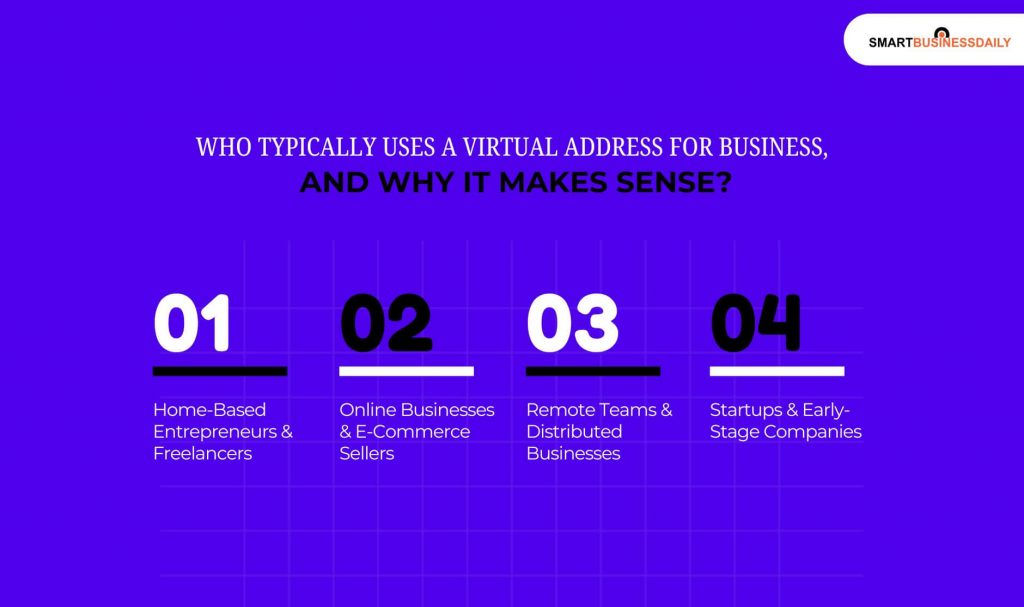
Virtual addresses are used by a wide range of businesses and professionals. Their appeal lies in
- Flexibility
- Cost savings
- Privacy
1. Home-Based Entrepreneurs And Freelancers
Home-based entrepreneurs and freelancers often use virtual addresses. It helps them to avoid listing their personal residential address publicly.
Additionally, it protects privacy. Also, it allows them to present a professional image.
2. Online Businesses And E-Commerce Sellers
Online businesses and e-commerce sellers commonly need a registered business address for:
- Compliance
- Shipping
- Customer trust
IndiaFilings notes that virtual office addresses are widely used in India for company registration and statutory correspondence.
3. Remote Teams And Distributed Businesses
Remote teams and distributed businesses benefit from having a stable address while team members work from different locations.
A virtual address allows the company to operate from anywhere. Additionally, you can maintain consistency in documentation and communication.
4. Startups And Early-Stage Companies
Startups and early-stage companies often choose virtual addresses to appear established without committing to long-term office leases.
This helps conserve capital during the early growth phase.
Businesses expanding into new cities or regions also use virtual addresses. This helps them to establish a local presence without opening physical offices.
LegalZoom confirms that this approach is common for multi-location operations.
What Are The Key Benefits Of Using A Virtual Address For Business?
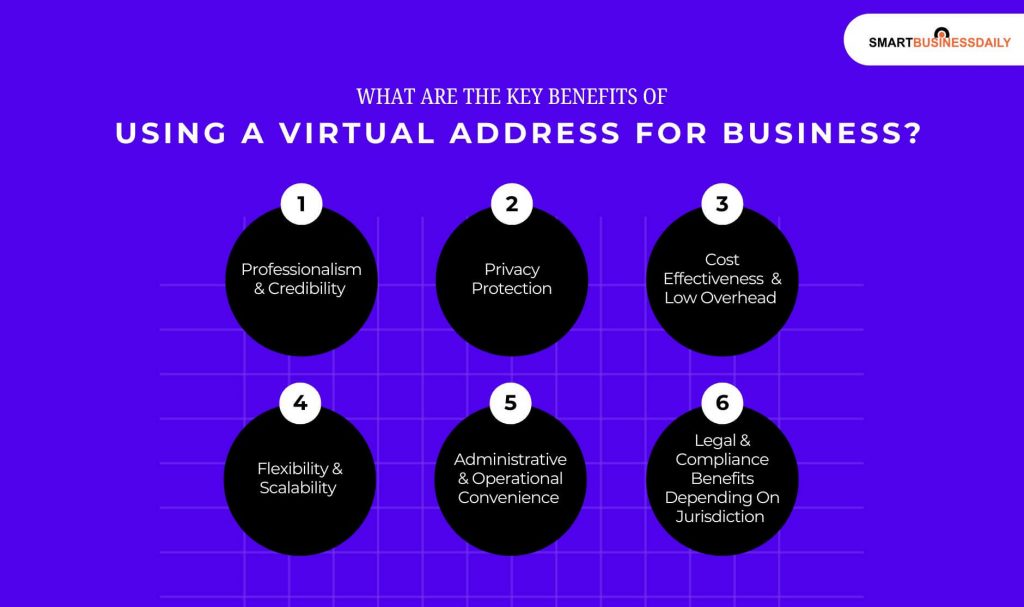
Now that I have asserted this enough that a virtual address for business can give you a lot of benefits, let’s check out what these benefits actually are:
1. Professionalism And Credibility
A real street address enhances a business’s credibility. Clients, vendors, and partners are more likely to trust a business that lists a professional address rather than a home address or PO box.
LegalZoom emphasizes that a virtual address can be used on
- Websites
- Invoices
- Business cards
- Legal documents
Why? It is important to give the impression of a stable and legitimate business presence.
For startups and freelancers, this small detail can make a significant difference when dealing with clients or investors.
2. Privacy Protection
One of the strongest reasons for using a virtual address is privacy. Listing a home address online can expose individuals to
- Unwanted visitors
- Marketing mail
- Security risks
A virtual address keeps personal information separate from business operations.
3. Cost Effectiveness And Low Overhead
Traditional office spaces come with high costs, including rent, utilities, maintenance, and furnishings. A virtual address eliminates most of these expenses.
IndiaFilings points out that virtual office solutions are especially useful for small businesses and startups that want to remain compliant without investing heavily in physical infrastructure.re
This makes virtual addresses ideal for bootstrapped ventures and solo founders.
4. Flexibility And Scalability
A virtual address allows businesses to operate from anywhere while maintaining a consistent official location. This flexibility supports modern work styles and remote teams.
As the business grows, services can often be upgraded to include mail scanning, phone support, or meeting room access.
LegalZoom notes that some providers also allow businesses to maintain addresses in multiple cities.
Additionally, this supports expansion without relocation.
5. Administrative And Operational Convenience
Managing business mail and documents can be time-consuming, especially for remote businesses.
Virtual address providers simplify this process by handling incoming mail on your behalf.
According to LegalZoom, many providers offer mail forwarding, mail scanning, and secure storage.
Additionally, this allows business owners to access important correspondence digitally without being physically present.
Also, some virtual office services include:
- Reception support
- Call handling
- Access to meeting rooms
These are used when required.
In addition, these features help businesses maintain operational efficiency without maintaining a full-time office.
6. Legal And Compliance Benefits Depending On Jurisdiction
In many regions, a virtual address can legally be used as a registered business address. This is particularly relevant for compliance and statutory communication.
IndiaFilings explains that in India, virtual office addresses are commonly used for:
- Company incorporation
- GST registration
- Receiving official notices
Of course, this only happens provided the service provider supplies proper documentation.
This helps businesses meet legal requirements without owning or leasing physical office space.
What Are The Potential Limitations Or Drawbacks To Consider About Virtual Addresses For Business?
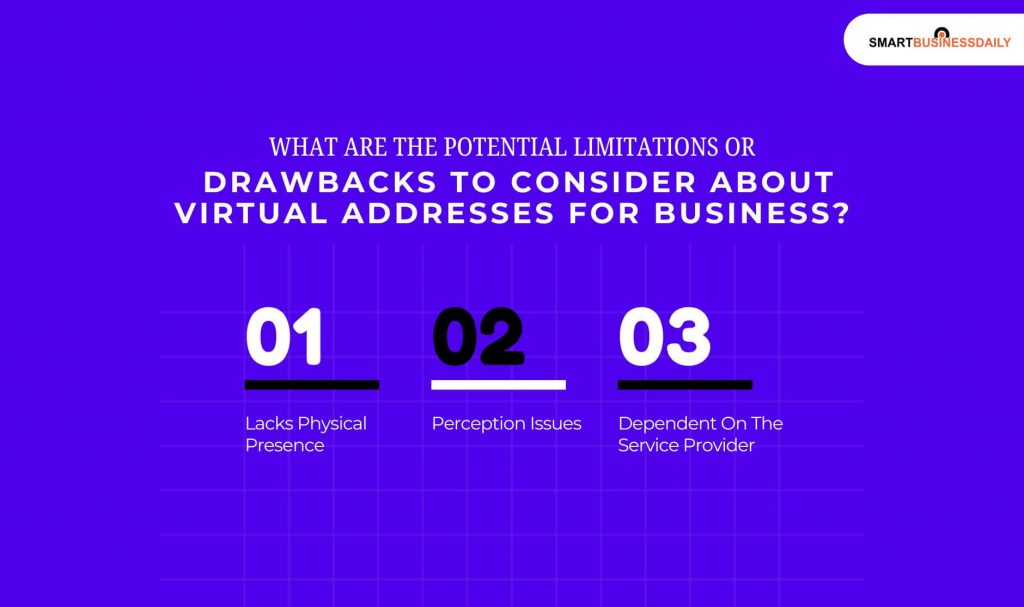
While virtual addresses offer several advantages, they are not suitable for every business type.
1. Lacks Physical Presence
One limitation is the lack of physical presence. If your clients expect to visit your office regularly, a virtual address alone may not meet their expectations.
2. Perception Issues
There can also be perception issues. Some clients or authorities may view businesses operating only with a virtual address as less established, especially in industries that traditionally rely on physical offices.
3. Dependent On The Service Provider
Another consideration is dependency on the service provider. The quality of mail handling, responsiveness, and reliability varies across providers.
According to LegalZoom, businesses should carefully evaluate service standards before choosing a provider.
Additional services, such as call answering or meeting room usage, may also involve extra costs. Over time, these expenses should be compared against the benefits.
Virtual addresses are also unsuitable for businesses that require physical operations, such as:
- Manufacturing
- Retail stores
- Warehouses
When Does A Virtual Address Make The Most Sense: Use Case Scenarios

A virtual address works best in specific business scenarios.
- Freelancers and solopreneurs who work from home. They benefit from having a professional address. Additionally, it protects personal privacy.
- Startups and small businesses with limited budgets can establish credibility. Also, it can remain compliant without committing to high rental costs.
- Remote teams and online businesses that operate digitally do not need physical offices. But still require an official address for documentation and communication.
- Businesses seeking a presence in premium locations can use virtual addresses to improve brand perception without paying premium rents.
- Companies expanding into new cities or states can use virtual addresses to register their business presence in multiple regions efficiently.
How To Choose The Right Virtual Address Or Virtual Office Provider

Choosing the right provider is critical to ensure smooth operations and compliance.
- Start by identifying whether you need only a mailing address or a full virtual office with additional services such as call handling or meeting rooms.
- Ensure that the provider can supply valid documentation if you plan to use the address for business registration. IndiaFilings highlights the importance of lease agreements and address proof for regulatory purposes.
- Compare pricing plans carefully and start with the minimum services you need. Upgrade only as your business grows.
- Check the provider’s reputation, customer support quality, and mail handling reliability.
- Also, confirm that the address location and zoning are suitable for your business type. This is more important if it will be used as a registered office.
What Are Some Practical Steps To Set Up A Virtual Address For Your Business?
These are some very simple but important steps for you to set up a virtual address for business. Let’s check these out:
- Begin by deciding whether you need only an address or a full virtual office setup.
- Choose a provider that aligns with your business requirements and budget.
- Complete the registration process and submit identity or business documents if required.
- Once activated, use the virtual address in your business registration, website, invoices, and branding materials.
- Set up mail forwarding, scanning, or pickup options based on how frequently you receive correspondence.
- Maintain a separate residential address for personal use to avoid mixing personal and business mail.




Related Articles



Comments Are Closed For This Article