








What Are People Saying About Logicalshout? (A Step-By-Step Guide)
11 Mins Read
Published on: 14 October 2025
Last Updated on: 03 August 2026

- What Is Insights LogicalShout All About?
- My First Experience Using Logicalshout (What Surprised Me)
- What Are The Key Features Of Insights LogicalShout?
- 1. Real-Time Data Analytics
- 2. Customizable Dashboards
- 3. Advanced Analytics
- 4. Multi-Platform Data Integration
- 5. User-Friendly Interface
- Who Is Behind LogicalShout And Why That Matters
- What Are The Top Used Cases For Insight LogicalShout?
- 1. For Ecommerce: Understanding Buyer Behavior
- 2. For Content Creators: Engagement And Audience Insights
- 3. For Agencies: Client Analytics Dashboards
- Where LogicalShout Falls Short (And When I Wouldn’t Use It)
- How To Get Started With Insight LogicalShout?
- 1. A Step-By-Step Guide
- 2. Define Your Objectives And Key Metrics
- 3. Training And Support
- How I Use LogicalShout In My Weekly Content Workflow
- What Is The Future Of Insight LogicalShout?
- Frequently Asked Questions (FAQs) About LogicalShout
- 1. What Is Logicalshout Actually Used For?
- 2. Is Logicalshout Different From Google Analytics In 2026?
- 3. Who Should Use Logicalshout And Who Shouldn’t?
- 4. Does Logicalshout Show Real-Time Data?
- 5. Can Logicalshout Be Trusted For Business Decisions?
- 6. Is Logicalshout Only For Gaming And Esports Content?
- 7. Is There A Free Trial Or Demo Available?
- 8. How Long Does It Take To See Value From Logicalshout?
The phrase “Insights LogicalShout” might sound like just another buzzword to you. But it actually represents something quite valuable.
It refers to the process of using the analytics platform LogicalShout to transform raw data into meaningful strategies. I know you would be eager to learn more about logicalshout and how we apply it to improve. But before that, think about the numbers we often see:
- Page views
- Bounce rates
- User demographics
Each of these metrics tells a story about our audience. What are they curious about? When are they most engaged? What drives them away from our content?
What Is Insights LogicalShout All About?

Insights LogicalShout refers to the data analysis features of the LogicalShout Platform.
LogicalShout focuses on esports and gaming content. The “Insights” section is a tool that helps businesses and content creators track key performance indicators (KPIs) and make informed decisions.
Think of it as a way to clearly understand your audience’s performance and content. Insights LogicalShout helps you know more than just that a post has 1,000 views.
It reveals where the views come from. Also, you will learn how long visitors stay on your page and what they do next.
This moves you beyond vanity metrics and into useful analytics.
My First Experience Using Logicalshout (What Surprised Me)
When I first heard about LogicalShout, I didn’t expect much. I’ve worked with analytics tools before. Most of them look impressive but feel distant.
LogicalShout felt different within the first week. The first thing I noticed was clarity. Not because the data was simpler, but because it was framed better. I wasn’t staring at charts wondering, “Okay, but what do I do with this?”
Let me share a good example with you:
I was tracking a gaming article that had decent traffic but poor engagement. LogicalShout showed me something I had missed earlier. Readers were exiting right after the opening section. That told me the hook wasn’t working.
I rewrote the intro. Above all, I made it shorter. At the same time, I made it more direct. And less hype.
Two days later, the time-on-page increased. Not magically, but logically.
What helped most was that LogicalShout didn’t push me to “check everything.” It nudged me to focus on what mattered for that page.
That moment changed how I approach analytics. I stopped chasing numbers and started chasing clarity.
What Are The Key Features Of Insights LogicalShout?
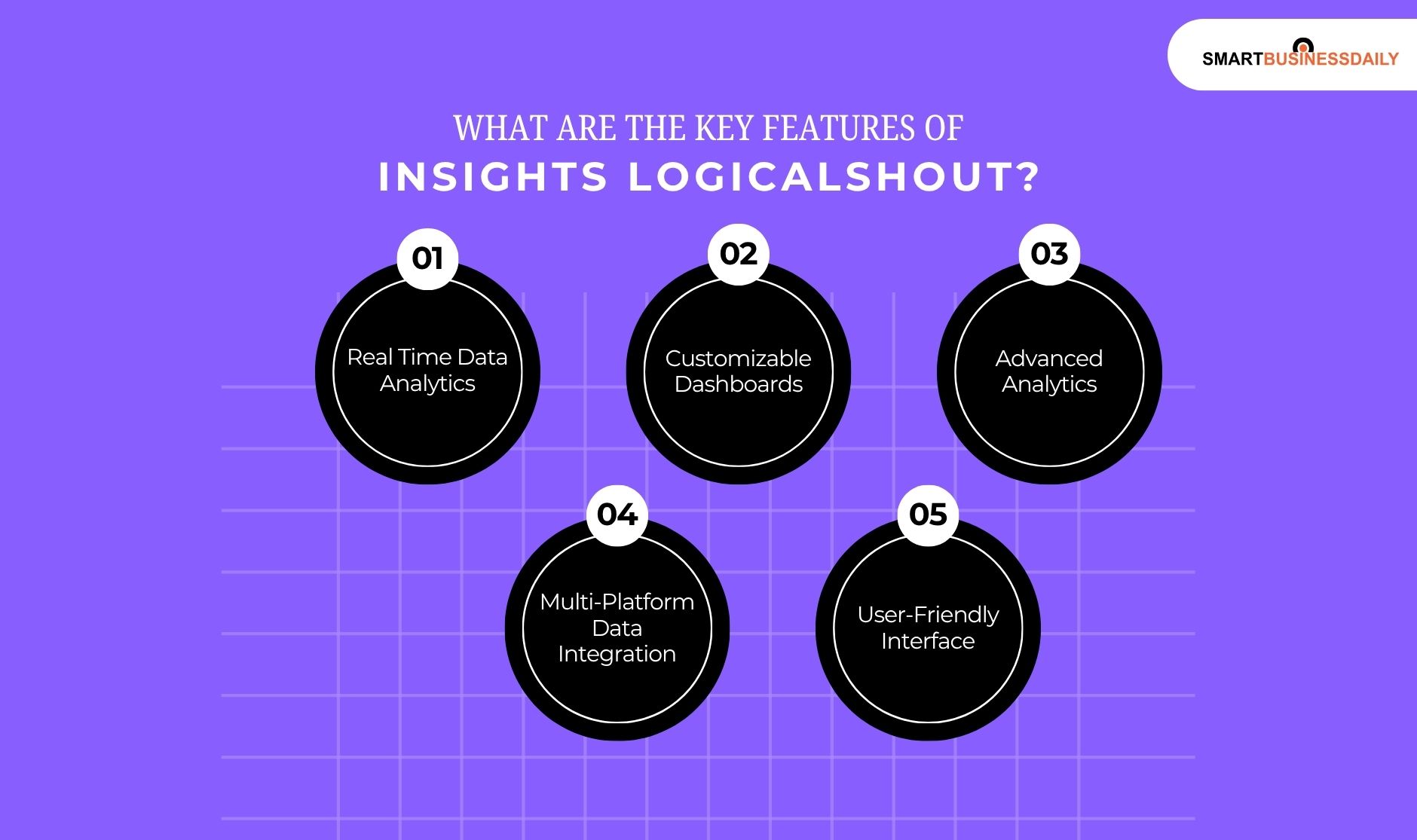
People stick to it for features like real-time data interpretation and trend analysis. But I feel the accessibility that it gives through logical dashboards is the best thing about LogicalShout.
1. Real-Time Data Analytics
The digital world changes quickly. Trends that are popular today may become outdated tomorrow.
With real-time analytics, you can see how you are performing right now. You can monitor traffic spikes.
Additionally, you can track social media engagement. Also, you can measure the response to new content right away.
This flexibility allows you to boost the promotion of an article that is doing well to reach more people.
You can also adjust or pause a campaign if it’s not effective.
2. Customizable Dashboards
Data overload can be a problem. Standard analytics reports can give you many metrics, but not all of them may be relevant to your goals.
You can reduce this noise with customizable dashboards. These dashboards let you view only the KPIs that matter to you.
For a blogger, this might be:
- Organic traffic
- Time spent on the page
- Mewsletter signups
3. Advanced Analytics
Everybody is eager to learn about Predictive Analytics. However, let me tell you that it is not a beginner’s tool. The two pillars of predictive analysis are machine learning and existing data sets or data packets.
In other words, you can use these 2 assets to get an idea of future events. You can also use this to determine whether the market will be in your favor.
However, I feel that its best use is in pitching the best content plans. In other words, you can always use predictive analytics to discuss new and potential content topics.
So, what kind of data do we use for predictive analytics? Most importantly, we use information such as which products are the best sellers and the most frequently repeated.
As a result, we can use that data to pitch more similar products or give mny customers an idea of what else they can buy.
4. Multi-Platform Data Integration
Insights LogicalShout connects easily with various business tools, such as
- CRM systems
- Marketing platforms
- Business intelligence software
This feature allows users to consolidate data from different sources in one central place, providing a complete view of their operations.
By merging data from various tools, businesses can better understand their
- Customers
- Marketing performance
- Sales processes
This approach to data analysis removes the need to switch between different platforms. Additionally, it saves time and increases efficiency.
Insights LogicalShout helps users make decisions based on a full view of their operations.
5. User-Friendly Interface
LogicalShout makes it easy for users to find content. The site organizes information into clear categories like “Esports” and “Online Gaming,” so users can navigate without confusion.
The interface works well on different devices, including desktops, tablets, and smartphones.
If you are eager to know about logicalshout before using, let me tell you this ensures a consistent experience for all users, even when they’re on the go, which is important for a gaming site.
Check Also: How To Use Business Data Analytics For Smarter Decisions?
Who Is Behind LogicalShout And Why That Matters
Before trusting any analytics platform, I want to know one thing.
Who built this, and why?
LogicalShout was created with a clear focus on content-led ecosystems, especially in esports, gaming, and fast-moving digital media. That shows in how the platform behaves.
It doesn’t act like enterprise software that assumes you have a data team. Most importantly, it assumes you are a creator, publisher, or manager trying to make better calls, and that too fast.
From what I gathered while researching LogicalShout, the platform sits at the intersection of content intelligence and decision support, not raw data dumping.
If you ask me, that matters. Above all, this is a tool built by people who understand that publishing pressure behaves differently. At the same time, it cares about timing. But for me, what makes it stand apart is that it cares about attention. And certainly about momentum.
That intent flows into the product. And intent is something Google quietly values, too.
What Are The Top Used Cases For Insight LogicalShout?
Insights LogicalShout works well across different fields. Here are three clear examples.
1. For Ecommerce: Understanding Buyer Behavior
An online store started using Insights LogicalShout to learn how shoppers behaved on its site.
The goal was simple. Sell better.
The team looked at:
- Pages people visited
- Products they viewed
- Carts they left behind
This data showed clear patterns.
Some products were popular but priced wrong. Others needed better descriptions.
They fixed this by:
- Improving product suggestions
- Sending more relevant emails
- Testing small pricing changes
Within three months, conversions went up by 25%. The store didn’t guess. It adjusted based on insight.
2. For Content Creators: Engagement And Audience Insights
A content creator used LogicalShout to track blog posts and social updates.
They focused on:
- Page views
- Bounce rate
- Reader actions
The data made one thing clear. Some topics kept readers longer. Others did not. So they doubled down on what worked. They dropped what didn’t.
Over time, traffic grew. Rankings improved, too. Better focus led to better results.
3. For Agencies: Client Analytics Dashboards
A digital agency used Insights LogicalShout to track work across clients.
They spotted gaps in:
- Content flow
- Approval delays
- Publishing time
Once those problem areas were clear, the team fixed them.
Small changes made a big impact. Productivity improved. Costs went down by 20%. The dashboard helped the agency act faster and waste less time.
Where LogicalShout Falls Short (And When I Wouldn’t Use It)
No platform is perfect. That is also a truth about LogicalShout. That is to say, there are times I wouldn’t recommend it.
If your team needs deep statistical modeling or custom scientific forecasting, this isn’t your best fit. To clarify, LogicalShout is more about direction than deep math.
Wait, there is another point worth mentioning. If someone expects instant results without acting on insights, they’ll feel disappointed. This tool doesn’t “fix” content.
It shows you where the problem lives. You still have to do the work. There’s also a learning curve, which is not technical, but mental.
The bottom line is that you need to stop asking, “How many views?” and start asking, “So what?”
For creators who only want surface-level numbers, simpler tools may feel enough. But for anyone serious about growth decisions, the trade-off is fair.
How To Get Started With Insight LogicalShout?
These are the three main categories you need to check when you want to start your journey with Insights LogicalShout. Let’s get into it:
1. A Step-By-Step Guide
Getting started with Insights LogicalShout is simple. First, sign up for an account on the platform.
After you log in, customize your dashboard. This will show the key performance indicators (KPIs) and metrics that matter most to your business goals.
Then, you need to import data from your current systems.
These data, like your CRM or marketing tools, can be used to start analyzing your performance in real time.
2. Define Your Objectives And Key Metrics
Before you start data analysis, you need to set clear goals. What do you want to achieve with Insights LogicalShout?
Defining your goals will help you focus on the key metrics and ensure your analysis supports your business strategy.
This is helpful whether you aim to:
- Boost sales
- Enhance customer engagement
- Improve efficiency
3. Training And Support
LogicalShout provides useful training resources, including tutorials, webinars, and customer support.
These resources help users understand how to use the platform effectively and get the most value from it.
The support team is always ready to help with any questions or technical issues that come up while using the platform.
How I Use LogicalShout In My Weekly Content Workflow
Here’s how LogicalShout fits into my real week.
On Mondays, I don’t plan content. To clarify, I review what already exists.
I look at three things only:
- Pages losing attention
- Pages quietly gaining traction
- Topics with repeat interest
On Wednesdays, I check patterns. Not spikes. Patterns.
If two different posts lose readers at the same place, that’s not a traffic issue. That’s a writing issue.
On Fridays, I export insights and plan edits. In other words, there are no new posts. Just Edits. This habit alone improved performance more than publishing more content ever did.
LogicalShout helped me slow down. And slowing down made my work sharper.
That’s the kind of utility dashboards don’t usually talk about.
What Is The Future Of Insight LogicalShout?
Insights about logicalshout go beyond being a buzzword; they provide a way to turn raw data into helpful decisions that drive digital growth.
By examining performance metrics, using audience segmentation, and focusing on keyword intelligence, any marketing team or individual creator can improve their work.
The key takeaway? Don’t just look at numbers — use them. Combine insights from logicalshout with your own tools and always test in real time.
This approach will make your content strategy stronger and more sustainable.
Frequently Asked Questions (FAQs) About LogicalShout
If you want to know more about LogicalShout and its best uses, read what people mostly query online:
1. What Is Logicalshout Actually Used For?
LogicalShout is used to understand how content performs and why it does so. It goes beyond surface numbers like page views.
From my experience, the platform is most helpful when you want to answer questions such as:
- Why are users leaving this page early?
- Which topics hold attention over time?
- What content deserves an update instead of deletion?
Instead of treating analytics as a report card, LogicalShout works more like a decision guide. That’s what makes it useful for creators, publishers, and teams who care about longterm growth, not just traffic spikes.
2. Is Logicalshout Different From Google Analytics In 2026?
Yes, and the difference is practical. Google Analytics is excellent for raw data collection. LogicalShout focuses on interpretation and action.
In simple terms:
- Google Analytics tells you what happened
- LogicalShout helps you understand what to do next
When researching about logicalshout, one thing becomes clear: it’s built with content ecosystems in mind, not just websites. That design choice shapes how insights are presented and prioritized.
Many teams use both together, not as replacements.
3. Who Should Use Logicalshout And Who Shouldn’t?
LogicalShout works best for:
- Content creators and editors
- Marketing teams working with steady publishing schedules
- Agencies managing multiple content properties
- Businesses that want clarity, not complexity
It may not be ideal if:
- You only want basic traffic counts
- Plus heavy statistical modeling
- Again, you prefer raw spreadsheets over guided insights
In short, it’s a thinking tool more than a reporting tool.
4. Does Logicalshout Show Real-Time Data?
Yes, LogicalShout provides near real-time visibility into how content is performing.
That said, the real strength isn’t watching numbers move minute by minute. It’s spotting patterns early enough to act before momentum is lost.
For example, noticing a steady drop in scroll depth over a few hours can help you fix an article before it completely fades. That kind of timing matters more than raw speed.
5. Can Logicalshout Be Trusted For Business Decisions?
Trust comes from transparency.
LogicalShout doesn’t hide how insights are formed, and it doesn’t promise guaranteed outcomes. It highlights signals, not certainty.
That’s important. In my usage, the platform works best when paired with human judgment. It shows where attention drops, which content repeats interest, and when behavior shifts. But decisions still stay with you.
That balance is a strong trust signal in 2026.
6. Is Logicalshout Only For Gaming And Esports Content?
No, but that’s where its roots show.
LogicalShout started with gaming and esports contexts, where audience attention changes fast, and trends move quickly. Those lessons translate well to other industries, too.
I’ve seen the same logic apply to:
- Blogs and media sites
- SaaS content hubs
- Ecommerce learning content
If your work depends on keeping people engaged, the insights remain relevant.
7. Is There A Free Trial Or Demo Available?
LogicalShout doesn’t always aggressively promote public trials. The best approach is to:
- Explore official case studies on the site
- Reach out to the support team directly
- Request a guided walkthrough if available
That extra step may feel slower, but it often leads to better onboarding and clearer expectations.
8. How Long Does It Take To See Value From Logicalshout?
You won’t see value in five minutes. But you can see it within the first week if you use it intentionally. The fastest wins usually come from:
- Identifying pages losing attention
- Updating existing content
- Fixing weak openings or unclear structure
Most results come from edits, not new posts. That’s something many tools don’t emphasize, but LogicalShout quietly encourages.
Additional Resource: The Essential Guide to Safeguarding Your Business’s Sensitive Data




Related Articles


Comments Are Closed For This Article