








Taebzhizga154: A Detailed Overview Of The Recently Famous Structured Identifier In 2026
11 June 2026
5 Mins Read

- What Is Taebzhizga154?
- What Is The Structure Of Taebzhizga154?
- Where Can You See Taebzhizga154 Appearing Online?
- 1. Database Record Labels
- 2. Gaming And Forum Usernames
- 4. Log Files And Error Reports
- How To Handle Taebzhizga154 When You Encounter It?
- 1. Check The Source
- 2. Assess The Context
- 3. Avoid Clicking Unsafe Links
- 4. Run A Direct Search
- 5. Contact The Platform For Confirmation
- Is Taebzhizga154 Safe?
- Signs That It Is Legit
- Signs It Is Risky
Have you heard about Taebzhizga154? It is all over the internet right now. And the moment I saw this, I knew I had to look into it seriously.
First things first, it is not a meaningful word. In fact, many reviews say it can be a code string consisting of numbers and letters.
It has appeared numerous times across databases and digital platforms. Moreover, it has also appeared as a reference system on online systems.
Additionally, some review articles also claim that it can be an alphanumeric identifier.
When individuals come across the string “Taebzhizga154” in search results, platform URLs, content feeds, or messages, they often seek to understand its significance.
Unlike traditional terms, this identifier lacks a dictionary definition and was not created to express a specific concept.
Instead, its primary function is to serve as a specific reference within a digital system, much like a tracking number correlates to a package.
By comprehending its structure, one can alleviate most uncertainties surrounding its use.
What Is Taebzhizga154?
Taebzhizga154 is a structured identifier string used in digital systems to label, track, or reference entities such as user accounts, sessions, database records, and platform-generated objects.
The format of this string is typical of machine-generated IDs, featuring a combination of letters followed by a numeric suffix (in this case, 154).
This numeric component often signifies a version number, sequence position, or a partition tag within a broader dataset.
Identifiers like Taebzhizga154 are essential to modern digital infrastructure, which relies heavily on lookup tables.
When a system needs to retrieve a specific record, it queries by ID rather than by name.
This approach is advantageous because names can change, be duplicated, or contain characters that disrupt queries.
In contrast, a fixed alphanumeric string does not encounter these issues.
Now, nobody is really sure where this identifier comes from. It is possible that Taebzhizga154 was generated by an automated system.
Additionally, it might also be assigned by an algorithm on a platform. In fact, it can also be chosen as a username.
Regardless, its fundamental purpose remains the same.
It serves as a string of characters that uniquely identifies a specific item within a defined context.
What Is The Structure Of Taebzhizga154?
The identifier has two parts: a letter block (“taebzhizga”) and a number (“154”). Knowing this structure helps us understand how similar identifiers work in different systems.
The 10-letter base is longer than a typical random string but shorter than a UUID (32 characters).
This length range of 10 to 15 characters is common in systems that require readable IDs yet still unique enough to avoid duplicates in vast datasets.
According to NIST guidelines for digital identity, identifier formats should balance uniqueness, length, and complexity to stay secure and efficient.
The 13character format of taebzhizga154 fits these requirements. It is short enough for URLs and database indexing.
However, it is long enough to reduce the risk of duplicates in large datasets.
Where Can You See Taebzhizga154 Appearing Online?
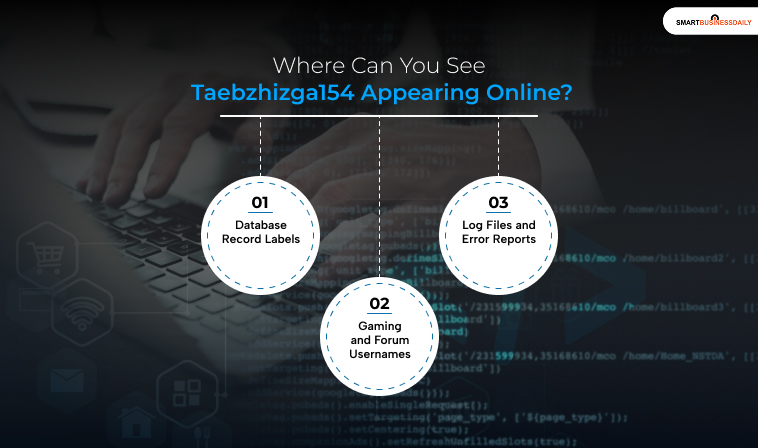
You will see this identified structure mainly in four digital contexts.
Additionally, in each of these contexts, you will find a different use of this. Let’s check this out:
1. Database Record Labels
In many content management systems (CMS) and ecommerce platforms, products and posts are assigned unique alphanumeric IDs.
Additionally, it also happens to a lot of user accounts.
These identifiers often appear in administrative panels and export files.
Additionally, you will also see them in API responses. Moreover, it can also be indexed in search results due to the platform’s metadata.
2. Gaming And Forum Usernames
Certain users intentionally create usernames that resemble generated codes, such as “taebzhizga154.”
Platforms like Discord, Reddit, and various gaming networks permit this format without restrictions.
Moreover, this allows anyone to search for these usernames in posts or chat logs.
- Automated Content Systems
A variety of SEO tools, content farms, and bulk publishing frameworks utilize template-generated identifiers as components of slugs or internal labels.
If these pages are indexed before undergoing quality filtering, the identifiers themselves can begin generating search traffic.
4. Log Files And Error Reports
IT and development teams frequently encounter strings similar to “taebzhizga154” in system logs.
Also, you will also get to see it in crash reports and monitoring dashboards.
Identifiers in log files typically serve as reference pointers.
Therefore, these help to identify which record, session, or process triggered a particular event.
Also Check: Zytescintizivad Spread: The Fake Trend That Accidentally Became a Smart Marketing Idea
How To Handle Taebzhizga154 When You Encounter It?
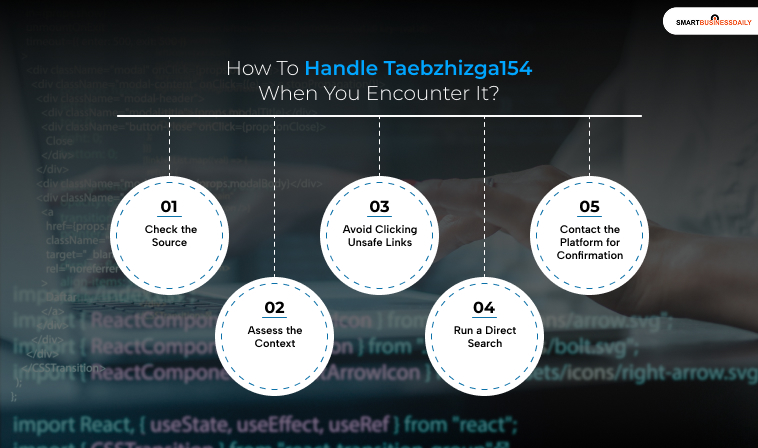
If you encounter the identifier “taebzhizga154” and are uncertain about how to proceed, consider following these five steps to address the most common scenarios:
1. Check The Source
The platform that presents this identifier can provide valuable insights.
For instance, a legitimate API response will have different characteristics compared to one found in an unsolicited message.
2. Assess The Context
Evaluate whether the page or platform displaying this identifier appears authentic.
Look for usual signs of legitimacy, such as standard navigation elements, contact information, and a privacy policy that aligns with your expectations.
3. Avoid Clicking Unsafe Links
Exercise caution before clicking on links that include this identifier as a redirect parameter, like those formatted as `?ref=taebzhizga154`.
While some may be legitimate referral links, others could hide phishing attempts.
Always check the destination domain before proceeding.
4. Run A Direct Search
Conduct a quick search for “taebzhizga154.” This can help you identify the contexts in which it appears.
If the results primarily result in informational articles or developer documentation, the identifier is likely part of the standard platform infrastructure.
5. Contact The Platform For Confirmation
If “taebzhizga154” arises in relation to your account, such as in notifications, transaction records, or security alerts, reach out to the platform’s support team.
They can verify whether the reference is authentic or not.
Is Taebzhizga154 Safe?
Encountering an identifier like taebzhizga154 online should not automatically raise alarm bells.
Alphanumeric identifiers of this nature are common elements within digital infrastructures, and their safety or suspiciousness largely depends on the context in which they are found.
Understanding the context is very important.
While a format similar to this can be used for harmless database labels, it can also appear in phishing attempts, spam communications, or misleading redirect sequences.
The identifier itself is neutral; its association with specific content ultimately determines its safety.
Signs That It Is Legit
- Firstly, you will find this in the URL path of a platform you already trust.
- Secondly, it functions as a username or handle on a recognized social media network.
- Thirdly, it appears in an API response or within developer documentation.
- Also, it aligns with the standard structure used by that platform for record IDs.
Signs It Is Risky
- You will receive this in an unsolicited email or message that prompts you to click a link containing it.
- Also, you will notice that it appears in a URL to which you were redirected without your action.
- Moreover, the surrounding webpage lacks a clear publisher, date, or purpose.
Finally, it is presented as a “code” you need to enter to claim a prize or access a benefit.
Additional Resource: A Detailed Description Of Technewstop Org: The New Tech Weapon In Town



Related Articles



Comments Are Closed For This Article