








7 Artificial Turf Mistakes Homeowners Should Avoid Before Installation
7 Mins Read
Published on: 24 April 2025
Last Updated on: 07 July 2026
- What Is The Downside Of Artificial Turf For Lawns?
- 1. Regular Cleaning:
- 2. Pet Waste Cleanup:
- 3. Heat Retention:
- Top 7 Mistakes To Avoid When Choosing Artificial Turf For Lawns
- 1. Ignoring The Turf’s Quality:
- 2. Choosing The Wrong Pile Height:
- 3. Overlooking The Infill Material:
- 4. Not Considering Drainage Needs:
- 5. Forgetting About Safety and Environmental Impact:
- 6. Neglecting Budgeting For Installation Costs:
- 7. Skipping The Maintenance Plan:
- Annual Artificial Turf Maintenance Checklist:
- What Is The Lifespan Of An Artificial Turf?
- 1. Quality:
- 2. Installation:
- 3. Maintenance:
- How To Choose The Right Artificial Turf
- Key Highlights:
- Frequently Asked Questions:
- 1. Does artificial turf get hot?
- 2. Is artificial grass safe for pets?
- 3. How long does artificial turf last?
- 4. Can weeds grow through artificial turf?
- 5. Does artificial turf increase home value?
If you are a homeowner looking for low-maintenance options, consider artificial turf lawns, which have been very popular lately!
Artificial turf can save homeowners thousands of hours of lawn maintenance, but only if you choose the right product.
The wrong turf can overheat in summer, drain poorly, flatten within a few years, or end up costing more than expected. Before you invest, becoming aware of the common mistakes is essential.
In this article, we will discuss seven common mistakes that you should avoid when selecting artificial turf for your lawn.
Stay tuned.
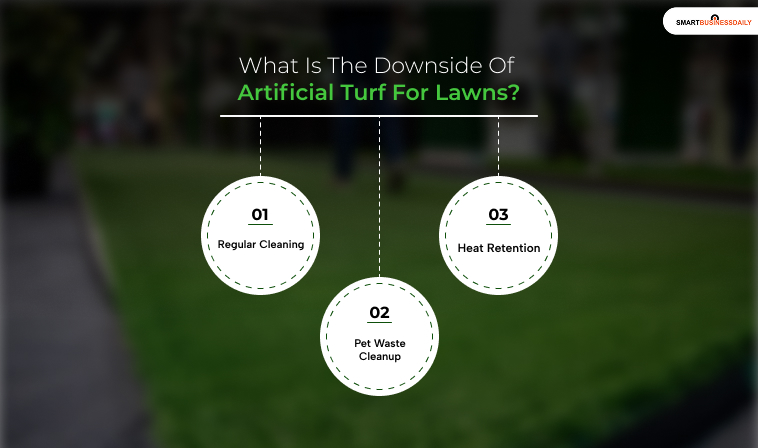
What Is The Downside Of Artificial Turf For Lawns?
Although artificial turf for lawns does seem like a very favored option for homeowners, there are certain drawbacks.
While you are planning to get artificial turf for lawns and researching it, I suggest that you take note of these drawbacks and plan accordingly.
1. Regular Cleaning:
Although artificial grass reduces the requirement to mow and maintain, it does demand deep cleaning occasionally.
You have to check thoroughly for any dirt, debris, pine needles, leaves, and other deposits that might have accumulated on the turf surface.
Generally, if you regularize these deep cleanings, you will only need to schedule a few of them per year.
2. Pet Waste Cleanup:
Artificial turf comprises plastic blades along with spaces in between. This prevents the pet waste from decomposing or being absorbed into the soil as it normally would.
If you have a pet, then any sort of waste disposal needs to be quick and manual. You always have to keep an eye on and remove the waste as soon as possible.
3. Heat Retention:
Artificial Turf for lawns lacks an inbuilt cooling mechanism; additionally, it is made of materials such as polyethylene, nylon, and polypropylene.
All these attributes contribute to the concern of the turf’s heat retention ability. During summer, it will become quite a headache.
Top 7 Mistakes To Avoid When Choosing Artificial Turf For Lawns
So, are you ready to learn about the top 7 mistakes that you always have to dodge when choosing artificial turf for lawns? Read on…
1. Ignoring The Turf’s Quality:
One common mistake to avoid is selecting low-quality turf. Although it looks great in the store, it doesn’t hold up over time.
You can go for higher-quality turf, which is made from polyethylene or nylon, which are more durable and longer-lasting.
Moreover, cheaper options may appear attractive initially, but can quickly fade or deteriorate after exposure to the elements.
Ensure you select turf that is UV-resistant to prevent fading and damage from the sun.
2. Choosing The Wrong Pile Height:
You must avoid the common mistake of choosing turf with the wrong pile height for your lawn. If the pile is too short, it may look too artificial and cheap.
On the other hand, if it’s too long, the turf may not lie flat, which can make it look untidy. The right pile height should match the natural grass that grows in the area.
You can choose a pile height between 1 and 2 inches, which is generally ideal for most residential lawns.
3. Overlooking The Infill Material:
Do you know infill actually helps your blades? That too in two ways!
- Firstly, it helps to keep your blade in good shape!
- Secondly, it can give a more natural feel to your turf.
Using the wrong infill can cause the turf to become too hard or too soft.
Furthermore, you should take note that sand and rubber are two common types of infill, but the best option will depend on the area where the turf is going.
For example, if you expose the turf to a high volume of foot traffic, rubber infill may offer improved durability.
4. Not Considering Drainage Needs:
If you install the turf without proper drainage, water can collect underneath. This will lead to an uneven surface or mold growth.
Therefore, you should choose a turf product with good drainage capabilities and ensure that the installation is done correctly, with proper base preparation and drainage systems.
For those in the area, artificial turf Dallas offers experts who can guide you through the right options for your lawn.
Also, if your yard already has drainage problems, fix those before installing artificial turf – turf cannot solve standing water caused by poor grading.
5. Forgetting About Safety and Environmental Impact:
Using artificial turf has become more eco-friendly over the years, but not all turf options are created equal.
Some products are manufactured with harmful chemicals that can be detrimental to the environment and human health.
Always ensure that you choose artificial turf that is free of bad substances like lead and BPA.
Furthermore, make sure that you always check if the turf is designed to remain cool and safe to walk on during the hottest days of the year.
6. Neglecting Budgeting For Installation Costs:
Are you just focusing on the cost of the turf and not on the installation at all? If it’s a yes, then stop! You’re doing the wrong thing.
A common mistake that most homeowners make is that they allocate a budget just for the turf, not for its installation.
While artificial turf can save money over time by reducing lawn maintenance costs, installation can be expensive.
The cost of installation depends on the
- Size of the lawn.
- The complexity of the design
- The turf quality.
Be sure to get a clear estimate of installation costs before making a final decision.
7. Skipping The Maintenance Plan:
Here’s a little tip from my end: Regular cleaning can help to keep your turf clean.
There are two basic things that you have to do:
- Remove the waste regularly
- Hose it down periodically
This can help you keep it clean and fresh easily.
You will also need to change the oil every few years. This depends on the maintenance as well as the quality of the turf.
Furthermore, don’t overlook the long-term maintenance needs to ensure the turf remains in top condition for many years.
Annual Artificial Turf Maintenance Checklist:
To keep your artificial turf looking its best year after year, make these simple maintenance tasks part of your routine:
- Brush the turf fibers regularly to keep the blades upright and maintain a natural appearance.
- Rinse the surface periodically to remove dust, pollen, and pet residue.
- Inspect seams and edges for any signs of lifting or damage, and repair them promptly.
- Replenish the infill when necessary to preserve cushioning, drainage, and blade support.
What Is The Lifespan Of An Artificial Turf?
The lifespan of artificial turf for lawns is generally 20-25 years; however, three primary factors significantly determine its longevity, including:
1. Quality:
Although you might have already guessed it, this point is often overlooked by many consumers. The quality of the turf plays a significant role in deciding its durability.
Always look for materials such as latex backing or polyurethane. Furthermore, turf with higher density and longer fibers is also recommended.
2. Installation:
When you check the turf base model, always look for features such as proper drainage and rainwater flow.
Also, make sure the grass is properly attached to the turf surface. This will prevent complications such as the grass falling apart.
Finally, ensure that the base of the turf is more than 4” deep. This will prevent weeds from growing through the turf.
3. Maintenance:
Primarily, you need to do a lot to maintain the artificial turf. Simply address the points above and ensure regular deep cleaning sessions are maintained.
How To Choose The Right Artificial Turf
Choosing the right artificial turf is about more than finding the lowest price. Use this checklist to compare different products before making your final decision.
- UV-resistant fibers to prevent fading and sun damage.
- Efficient drainage holes that allow rainwater and pet waste to drain quickly.
- A solid manufacturer’s warranty for added peace of mind.
- Polyethylene blades for a softer, more natural appearance and feel.
- Safe, non-toxic infill that suits your climate and intended use.
- Professional installation to ensure proper drainage, stability, and long-term durability.
Key Highlights:
Choosing artificial turf isn’t just about finding the lowest price. A quality product installed correctly can stay attractive for two decades with minimal maintenance.
By focusing on durability, drainage, realistic appearance, and long-term upkeep, you’ll avoid costly mistakes and enjoy a lawn that looks great year-round.
Frequently Asked Questions:
Check out the most frequently asked questions related to artificial turf for lawns.
1. Does artificial turf get hot?
Yes, artificial turf can get hot in direct sunlight, especially during summer. Darker turf and certain infill materials tend to retain more heat, while shaded areas and cooling infills can help reduce surface temperature.
2. Is artificial grass safe for pets?
Artificial grass is generally safe for pets when you choose a non-toxic, lead-free product with proper drainage. It is also easier to clean than natural grass, but pet waste should be removed quickly to keep the surface sanitary.
3. How long does artificial turf last?
Most artificial turf lasts about 20 to 25 years, depending on the quality of the material, the installation, and how well it is maintained. Higher-quality turf with proper care usually lasts longer and keeps its appearance better over time.
4. Can weeds grow through artificial turf?
Weeds can sometimes grow around the edges or through poorly prepared turf installations. A proper base, weed barrier, and regular maintenance can greatly reduce the chances of weeds appearing.
5. Does artificial turf increase home value?
Artificial turf can improve curb appeal and may make a home more attractive to buyers who want low-maintenance landscaping. However, its effect on home value depends on the quality of the turf, the installation, and the preferences of local buyers.



Related Articles

Comments Are Closed For This Article