








Stop Overpaying Suppliers: The Power Of The GRN Full Form And 3-Way Matching
21 August 2026
11 Mins Read
- What Does GRN Stand For?
- What Does A GRN Confirm?
- Who Needs This Document And Why Do They Need It?
- Why Does It Matter In Procurement Operations?
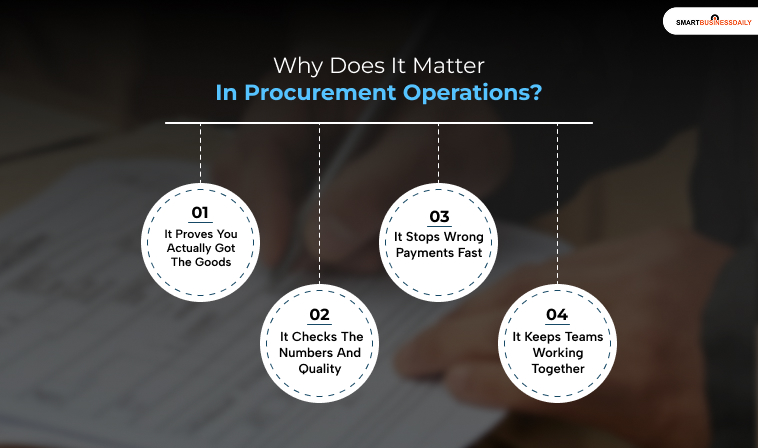
- 1. It Proves You Actually Got The Goods
- 2. It Checks The Numbers And Quality
- 3. It Stops Wrong Payments Fast
- 4. It Keeps Teams Working Together
- How A GRN Connects The Dots From Order To Payment?
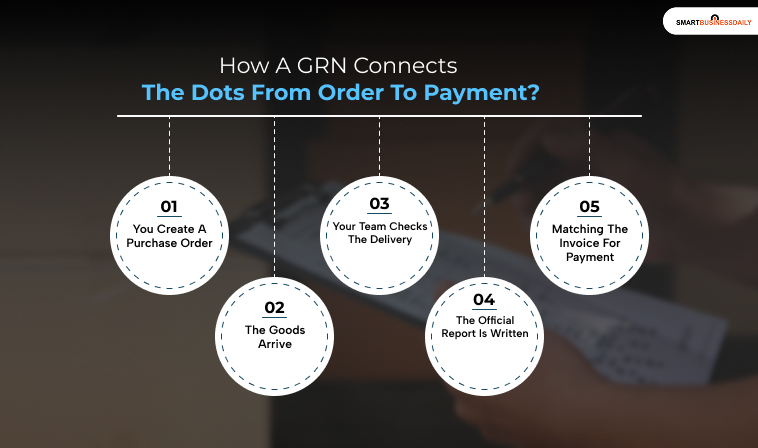
- 1. You Create A Purchase Order
- 2. The Goods Arrive
- 3. Your Team Checks The Delivery
- 4. The Official Report Is Written
- 5. Matching The Invoice For Payment
- The Core Details That Make The Document Work
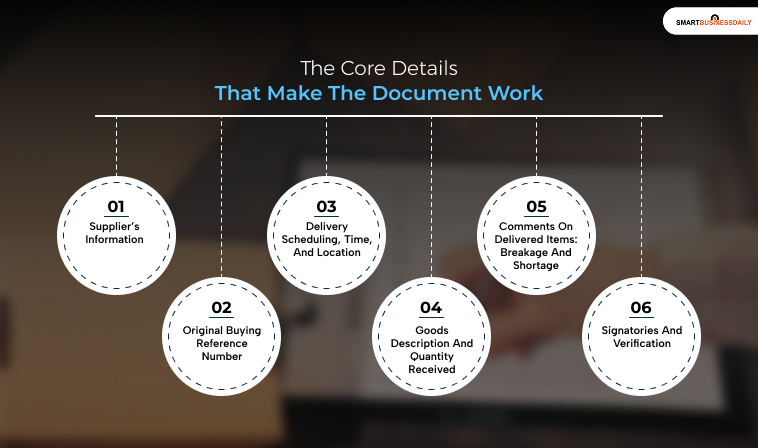
- 1. Supplier’s Information
- 2. Original Buying Reference Number
- 3. Delivery Scheduling, Time, And Location
- 4. Goods Description And Quantity Received
- 5. Comments On Delivered Items: Breakage And Shortage
- 6. Signatories And Verification
- Who Drafts The Note And Who Gains From It?
- Why Accounting Absolutely Loves This Document
- 1. It Keeps Stock Levels Accurate
- 2. It Proves Real Debts
- 3. It Halts Wasteful Spending
- 4. It Creates An Unbeatable Paper Trail
- The Secret Weapon: Achieving A Perfect Three-Way Match
- GRN Full Form: Pitfalls That Damage Your Bottom Line
- 1. Rushing The Paperwork
- 2. Glossing Over The Damaged Deliveries
- 3. Skipping The Three-Way Matching
- 4. Using Paper Ledgers
- 5. Hoarding Vital Information
- 6. Disregarding The Sheet’s True Purpose
- Smart GRN Habits For Smoother Retail Operations
- 1. Standardise Forms Across All Shops
- 2. Log And Approve Shipments Right Away
- 3. Use Barcodes And RFID Technology
- 4. Tie The Order, Delivery Note, And Invoice Together
| Quick Summary: When a business buys goods, ordering is only half the battle. The real challenge is making sure you actually got what you paid for. A Goods Received Note (GRN) is an internal receipt that confirms your items arrived in the correct quantity and condition. It acts as a safety checkpoint between the warehouse and the finance team, ensuring you never pay for incorrect, damaged, or missing orders. |
When you run a business, ordering new material feels fantastic. But what happens when you see the delivery van arriving at your warehouse after a few days?
Did you receive exactly what you wanted? Are there any defective products? And are the quantities correct?
This is where the GRN full form comes into play. Specifically, you can think of a GRN (Goods Received Note) as some kind of internal document confirming receipt and acceptance of delivered goods.
In other words, it is an internal audit control that documents the warehouse’s receipt, checking, and verification of goods before payment.
A GRN note is an important document used in most organisations because it offers several significant advantages.
It is particularly useful for founders and heads of the finance department because it helps them maintain accurate inventory and avoid erroneous payments.
In addition, the GRN significantly simplifies audits by tax authorities. Finally, proper GRN procedures help eliminate the risk of losses due to the erroneous acceptance of goods.
With Alaan, finance leaders can maintain complete oversight of spending while delivering an exceptional employee experience through automated approval processes and expense tracking.
What Does GRN Stand For?
In their work, warehouse managers control the receipt of goods from suppliers.
They check whether the delivered products are complete and match the information in the purchase orders.
Based on this information, a Goods Received Note is written. Thus, the GRN certifies the receipt of goods.
What Does A GRN Confirm?
A GRN confirms the following:
• Receipt of goods,
• Checking and verification of these goods,
• Marking of received products as accepted or rejected.
Who Needs This Document And Why Do They Need It?
A GRN document is needed, for example, by inventory managers to update stock levels.
In addition, finance managers need this document to ensure payments are made only to the supplier that provided the required goods.
Why Does It Matter In Procurement Operations?
A GRN brings the order to life when deliveries happen. Without it, companies can easily lose track of things.
They might pay for items that never arrived or get into arguments with suppliers. In short, it keeps your business safe and organised.
1. It Proves You Actually Got The Goods
A purchase order only shows what you wanted to buy. It doesn’t prove the vendor actually shipped it.
That is why the GRN full form—Goods Received Note—is so vital.
It creates an official record showing that the truck arrived and the boxes are now safely inside your building.
2. It Checks The Numbers And Quality
Let’s face it: deliveries are not always perfect. Sometimes items break during shipping, or the vendor sends the wrong quantity.
A GRN gives your team a clear place to note down these mistakes immediately. Consequently, you can fix problems before they mess up your accounting.
3. It Stops Wrong Payments Fast
One big business risk is paying bills too quickly. If a supplier sends an invoice, you should never just pay it blindly.
Instead, check the GRN first. This step ensures you only pay for the exact items you received in good condition, saving your company from wasting cash.
4. It Keeps Teams Working Together
Usually, the buying team, the warehouse crew, and the finance department look at things differently.
This disconnect creates confusion. Fortunately, a GRN acts as a single source of truth that connects everyone.
As a result, your teams can collaborate smoothly without any stressful guesswork.
Related Article For You: Is ShipBob Right For You! Here’s Your Answer!
How A GRN Connects The Dots From Order To Payment?
Now that we have covered the GRN full form, it is time to see how it helps from order to payment.
A GRN makes the most sense when you consider the whole chain of events from ordering goods to actually paying for them.
In other words, it connects ordering items with paying the supplier.
1. You Create A Purchase Order
First, you, as the buyer, create a purchase order for the supplier. It is a document that describes what items you want to purchase, how many, and at what price.
2. The Goods Arrive
Next, the supplier ships the ordered items to your warehouse or office.
3. Your Team Checks The Delivery
Your team inspects the delivery. They count and check the items to ensure that everything is in perfect condition and that there are no discrepancies between the purchase order and the actual delivery.
4. The Official Report Is Written
After everything is inspected, the warehouse team completes a report describing the received items.
In other words, they create the GRN, Goods Received Note. The report notes whether any items were damaged or missing.
5. Matching The Invoice For Payment
Finally, when the supplier sends you the invoice, your finance department matches it against the report and the original purchase order.
The Core Details That Make The Document Work
A GRN is only as good as the information captured on it, which enables verification, dispute management, and subsequent payment processing.
While variations exist between companies and software, several key fields should be present in a Goods Receipt Note to ensure accurate recording of goods received.
1. Supplier’s Information
This section captures the company or personal details of the supplier of the goods.
This information is important as it allows the buyers’ accounts payable team to clear the relevant invoice against the correct supplier.
2. Original Buying Reference Number
The purchase order number is a unique reference number that allows the buyers to cross-check the purchase against the original invoice.
Without this reference number, reconciling the invoice against the purchase order becomes riskier, causing payment delays.
3. Delivery Scheduling, Time, And Location
It is important to capture the time and delivery location of the goods.
In this regard, this data element helps monitor delivery performance while ensuring all required information for receipt documentation is present.
4. Goods Description And Quantity Received
The description of the items together with the quantity received is arguably the most important section of the GRN.
The description enables recording and subsequent recording of stock receipts, while the quantity allows for inventory management.
In this respect, a goods description is important because it ensures the buyer only clears payment for goods they have received.
5. Comments On Delivered Items: Breakage And Shortage
Any comments on shortages, breakages, or discrepancies in the delivered items should be captured to highlight the goods received.
In this respect, including this information in the GRN is important, as it empowers the buyer in case of any differences between the delivered items and the purchase specifications.
6. Signatories And Verification
Most importantly, a GRN should have a field for the signatory or a scan of an electronic seal to show that the receiving party has verified the delivered items against the original purchase order.
This ensures verification and accountability of the delivery against the original purchase order.
Who Drafts The Note And Who Gains From It?
A GRN starts its journey right on the receiving dock.
However, its true value depends entirely on how well that information travels to the main office. Different teams rely on it every single day:
- The Warehouse Crew: Because they are closest to the physical delivery, these workers count the boxes and create the actual note.
- The Buying Team: If a delivery arrives broken or light, buying agents use the document to confront the vendor and demand a fix.
- The Billing Team: Staff members look at the note to verify that the items listed on a bill actually sit inside the building.
- The Finance Leaders: Managers use these files to protect company cash and ensure every single cent spent matches a real product.
Why Accounting Absolutely Loves This Document
This paperwork does more than track boxes. It significantly impacts the company’s balance sheet.
It shapes how your business recognises its debts and updates its digital stock levels.
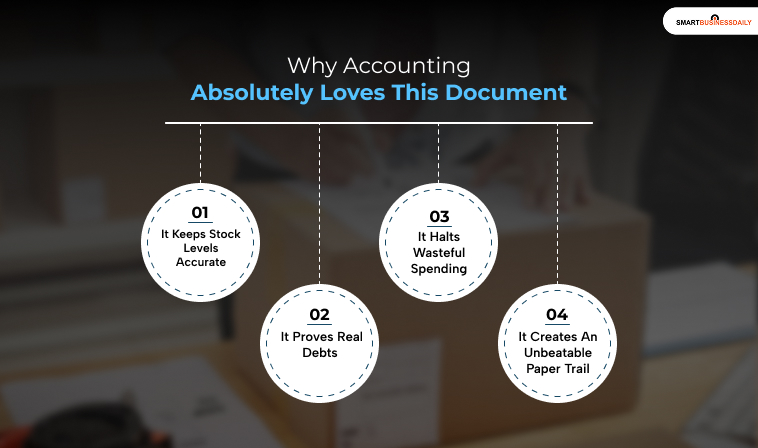
1. It Keeps Stock Levels Accurate
When a new shipment passes the gate, the document alerts your system to update inventory records. Without it, your stock data becomes messy and unreliable.
2. It Proves Real Debts
A supplier bill shouldn’t become an official corporate expense just because it landed in your inbox.
This paperwork proves the items are physically yours before you acknowledge the debt.
3. It Halts Wasteful Spending
Paying bills blindly invites disaster. By checking the paperwork first, you ensure your cash never goes toward short-delivered or heavily damaged shipments.
4. It Creates An Unbeatable Paper Trail
The note binds the initial order, the physical delivery, and the final bill together. As a result, internal reviews and yearly tax audits become a breeze.
The Secret Weapon: Achieving A Perfect Three-Way Match
The ultimate benefit of this process is its ability to support a three-way match, ensuring your company does not pay a single penny based on a supplier’s invoice.
- The first file is the Purchase Order, which describes the management’s approved purchases and their prices,
- The second is the Goods Received Note (GRN), which represents the goods received by the company staff, clarifying the GRN meaning
- The third is the Vendor Invoice, which indicates the amount the company should pay the supplier and may be erroneous.
Therefore, these three documents should match so the company’s finance department can release payment to the supplier.
Otherwise, if there is an apparent discrepancy, the payment should be held to prevent the company from paying excessive amounts or paying too much to the supplier.
Also Check: Meesho Supplier Panel Login: Your Ultimate Guide to Selling on Meesho
GRN Full Form: Pitfalls That Damage Your Bottom Line
When processing goes awry, the issue is rarely with managers perceiving the paperwork as useless.
More often than not, the problem is sloppiness. Once this occurs, the entire system’s ability to serve as a safeguard is compromised for all companies.
Below are the most common processing errors that lead to the failure of the system:
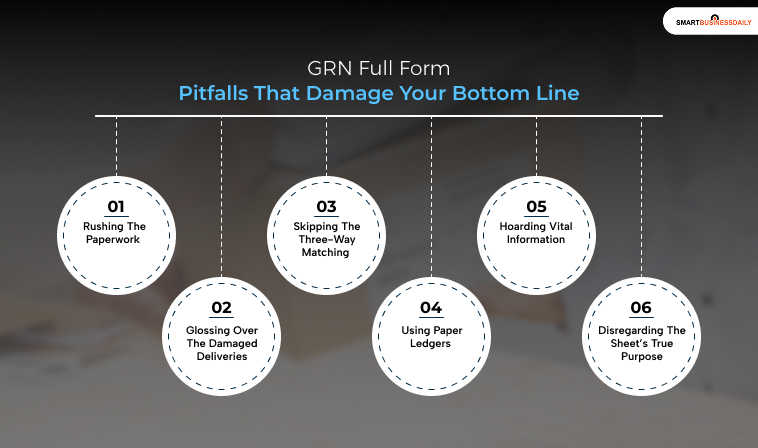
1. Rushing The Paperwork
Preparing the report before opening the boxes eliminates the chance to double-check the contents against the invoice.
This leaves no opportunity to ensure nothing is wrong before the bills are approved.
2. Glossing Over The Damaged Deliveries
Disregarding discrepancies in delivered products during unloading makes it impossible to argue later. The bill is likely to be approved, causing losses to the company.
3. Skipping The Three-Way Matching
Allowing bills to be processed without cross-checking with the warehouse makes invoices the key to cash disbursements. This can waste the company’s funds.
4. Using Paper Ledgers
Using paper-based ledgers or Excel sheets to record purchases makes it harder to match the data during the year-end audit.
5. Hoarding Vital Information
Withholding vital information from the purchasing and billing departments creates constant delays, as the former has no idea of the warehouse’s actual status.
6. Disregarding The Sheet’s True Purpose
Treating the form as a mere procedural formality undermines its potential as a financial lifesaver. In this case, the company fails to maximise its potential.
Smart GRN Habits For Smoother Retail Operations
Getting this process right helps ensure the right stock, fast payments, and supplier loyalty.
If you want to improve your retail operations, make sure to implement these four tips:
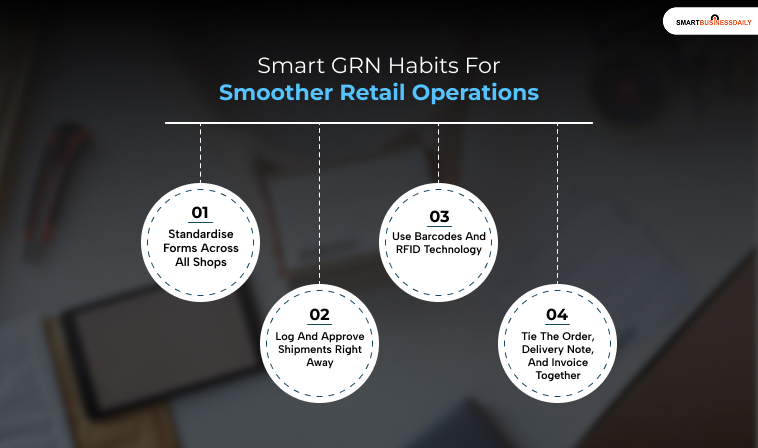
1. Standardise Forms Across All Shops
Orders and invoices have clear guidelines, but delivery notes are often neglected.
Letting managers and suppliers fill the documents on their own terms leads to chaos.
For example, one shop may write a delivery note with only a few fields filled in, another misses some product codes, and a third writes everything on a separate piece of paper.
This disorganisation causes several issues:
Inability to consolidate information correctly. The main office cannot accurately analyse data from multiple suppliers.
Insignificant fields get lost in the process, requiring extra time and effort to retrieve the information.
Extra work due to discrepancies. The buying, finance, and receiving departments waste time resolving misunderstandings about delivered products.
Standardising the format of all documents will help you eliminate most of these problems.
All shops will have a single reference point to find the necessary data. For example, the delivery note will contain the supplier’s name, original order number, product code, description, quantity, time of receipt, and item condition.
2. Log And Approve Shipments Right Away
A delivery report is only useful if your managers fill it in on time. Unfortunately, many shops keep their receiving notes unapproved for too long.
If an employee delays entering the information about received goods, the shop’s system will not recognize them as in stock.
This means the manager can refuse to sell a product to a customer that is actually in stock because the computer does not “know” about it.
Moreover, the finance department cannot pay the invoice until the delivery note is approved.
This also puts the supplier in a stressful position, making them call the manager to remind them about pending payments.
3. Use Barcodes And RFID Technology
Counting thousands of items is time-consuming and error-prone.
Modern retailers use barcode scanners or RFID readers to ensure that the products delivered match the information on the purchase order.
This way, you can quickly eliminate human errors during the receiving process.
For example, clothes retailers that use RFID technology to scan the GRN (Goods Received Note) ensure that their inbound processes are more than 90% accurate.
This simple step helps these companies save hours of tedious work on the receiving dock.
4. Tie The Order, Delivery Note, And Invoice Together
One of the most common ways a retail business loses money is by paying for goods that were never ordered or received.
To avoid this situation, always cross-reference the three key documents: the purchase order, delivery note (GRN), and supplier invoice.
These three items should always match to ensure you pay only for what you actually ordered and received.
Without this step, you risk paying for more products than expected or for the items that the supplier failed to deliver.
For example, a supplier can send you an invoice for about 1,000 shirts, but only 950 were actually delivered.
Or the supplier might replace some of the ordered products with other goods you did not request.
One missing box of goods can be a stressful discovery, but these issues can add up across multiple suppliers and warehouses, significantly impacting your profits.
Additional Resource: What Time Does Amazon Deliver? – Review of Its Shipping Timeline.




Related Articles