








The Ultimate Guide To Business Partnership Opportunities: How To Identify, Evaluate, And Build Strategic Alliances?
25 March 2026
7 Mins Read

- What Are Business Partnership Opportunities?
- 1. Strategic Partnerships
- 2. Channel Partnerships
- 3. Referral Partnerships
- 4. Co-marketing Partnerships
- 5. Joint Ventures
- How To Identify Business Partnership Opportunities?
- 1. Internal Indicators
- 2. External Indicators
- What Are The Different Types Of Business Partnership Opportunities?
- 1. Revenue And Growth Partnerships
- 2. Operational Partnerships
- 3. Strategic And Long-term Partnerships
- 4. Community And Ecosystem Partnerships
- How To Evaluate If A Partnership Is Right For Your Business?
- 1. Compatibility Check
- 2. Business Fit Assessment
- What Are The Red Flags You Should Avoid?
- What Are The Steps To Build A Successful Business Partnership?
- 1. Initial Approach
- 2. Negotiation And Alignment
- 3. Formal Agreement
- 4. Execution And Management
- The Scope For Business Partnership Opportunities Explained
As a fellow entrepreneur, I can confirm that the solopreneur or the isolated corporation is becoming a relic of the past.
I have seen firsthand that the most resilient businesses are those that treat growth as a team sport.
So, today I will talk about business partnership opportunities. Trust me, they are not just about sharing the workload.
Rather, they are about multiplying your impact. I have tried this firsthand, so basically, I will talk about my own experience today.
I just combined my strengths with another entity. And trust me, now I can reach my goals which I couldn’t have achieved alone.
Also, I can confirm that this is important for you, too, whether you are a
- Growing Brand
- Hungry Startup
- Service-Based Company
Therefore, I want you to understand how to navigate these alliances. In today’s world, this is vital.
So, In this guide, we will explore how to spot these openings. Additionally, I will also teach you how to evaluate their worth.
Then, we can all build a foundation for long-term success.
What Are Business Partnership Opportunities?
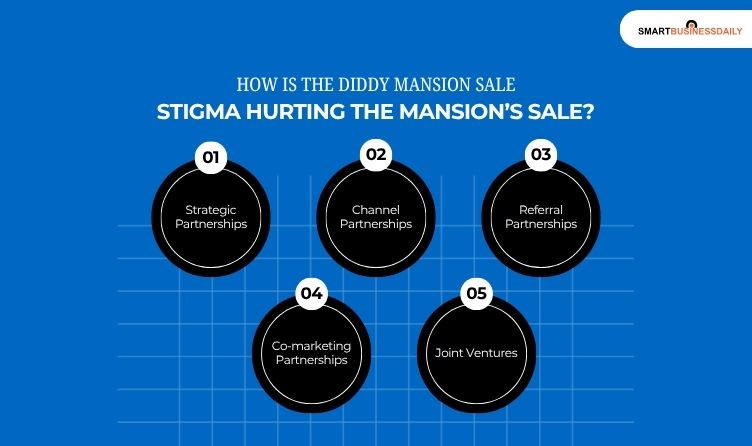
At its core, business partnership opportunities are a chance for two or more parties to collaborate.
This is very beneficial for mutual commercial benefit.
In addition, it is a strategic move where resources, expertise, or audiences are pooled together.
Then, you create one plus one equals three effects.
1. Strategic Partnerships
These are long-term agreements between two companies to help each other achieve a specific objective while remaining independent.
2. Channel Partnerships
In this model, one company acts as the distribution arm for another. It allows a business to sell its products through a third party’s established sales funnel.
3. Referral Partnerships
This is a simpler arrangement where one business recommends another to its clients in exchange for a commission or reciprocal leads.
4. Co-marketing Partnerships
Two brands with similar audiences collaborate on a campaign. This could be a joint webinar, a co-branded ebook, or a social media takeover.
5. Joint Ventures
This is a deeper legal commitment where two entities create a third, separate business entity to manage a specific project or entry into a new market.
Partnerships are the ultimate leverage.
They allow you to scale your operations. In addition, you also don’t have to carry the heavy capital investment.
You know, the one you usually require for new hires or massive infrastructure.
How To Identify Business Partnership Opportunities?
Finding the right partner requires a mix of internal reflection and external scouting.
1. Internal Indicators
Before looking outward, I always suggest looking inward to see where you are leaking potential.
- What do you do better than anyone else? This is your currency in a partnership.
- Where are you struggling? If your product is great but your sales team is small, a sales-focused partner is ideal.
- Understanding your target audience helps you find complementary businesses they already frequent.
- Identify departments that are primed for external help, such as marketing, delivery, or customer support.
2. External Indicators
Keep your eyes on the horizon for these signals.
- If the industry is moving toward green solutions, look for partners in the sustainability space.
- See who your competitors are shaking hands with. It often reveals a gap in the market.
- Pay attention to who is interacting with your social media. Also, keep an eye on who is writing content that aligns with yours.
- Trade shows and community groups remain gold mines for face-to-face connections.
What Are The Different Types Of Business Partnership Opportunities?
Partnerships fall into several functional buckets depending on your goals.
1. Revenue And Growth Partnerships
In this case, the sales teams from both companies work together to sell a bundled solution.
Additionally, you can also resort to co-branding. Therefore, you will have to create a product that carries both brand names.
Also, it has something I like a lot. Yes, I am talking about affiliate programs. Here, I will pay my partners for every lead or sale they generate.
Then, you also have the option of joint product launches. Basically, you are launching a combined service.
This will create a bigger splash.
2. Operational Partnerships
Firstly, here you have the option of shared services. So, you must use the same logistics or administrative back-end to save costs.
Also, you can go forward with outsourcing collaborations. This means that one partner handles fulfillment.
And the other? They handle the creative side.
I also like the option of technology integration. You are ensuring your software talks to another.
Therefore, you are making the product more valuable to the user.
3. Strategic And Long-term Partnerships
This involves the process of licensing. So, you are allowing a partner to use your intellectual property for a fee.
Additionally, you also have the option of franchise collaborations. How does it work?
You are working with franchisees to expand a brand footprint rapidly.
4. Community And Ecosystem Partnerships
Here, you are working with non-profits. That means that you are partnering with a cause.
This will boost corporate social responsibility.
Additionally, you can go forward with the option of local alliances.
I am talking about small businesses on the same street, cross-promoting each other.
How To Evaluate If A Partnership Is Right For Your Business?

One of the most important things I have realised so far is that not every handshake is a good deal.
Additionally, I have learned that a bad partnership is more expensive than no partnership at all.
So, I will give you two parameters that I use to analyse my business decisions with other companies. Here you go:
1. Compatibility Check
Do your values align?
Let’s say that one company prioritizes speed. But the other prioritizes perfection.
I don’t think we need an expert to say that there will be friction.
Therefore, I always check for audience overlap. This way, you can ensure you are talking to the same kind of person.
2. Business Fit Assessment
Additionally, I always look at the financial feasibility. Does the partnership require more money than it is likely to generate?
I will always recommend that you ensure your long-term goals are pointing in the same direction.
A partner who wants to sell the business in a year is a poor fit for someone looking to build a twenty-year legacy.
What Are The Red Flags You Should Avoid?
When I said red flags, I meant it! I always watch out for these, and the moment I see even one, I am out.
Just trust me, and follow these. You don’t even have to thank me later!
- Firstly, I keep a track of poor communication. You think they are slow to reply during the dating phase?
Trust me, they will be worse during the marriage.
- Secondly, I don’t play with undefined roles. If everyone is in charge, then no one is.
- Thirdly, I am wary of vague interests. If they cannot articulate what they want from you, walk away.
- Finally, I will always check my reputation. Which means I always research their history. A partner with a bad name will stain yours.
What Are The Steps To Build A Successful Business Partnership?
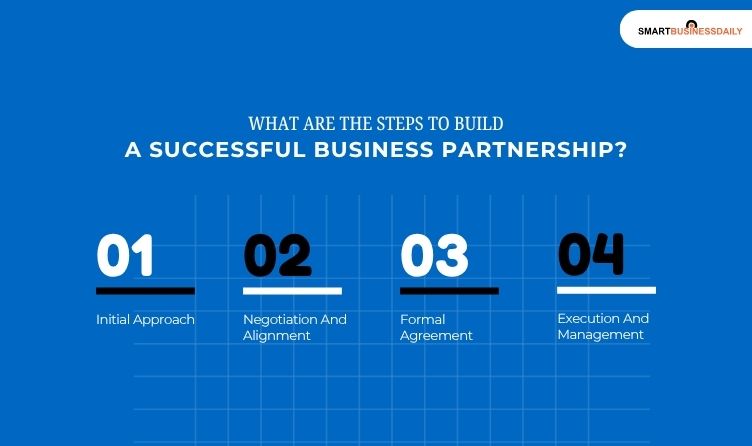
Once you have identified a potential ally, the transition from interested parties to active partners requires a deliberate process.
I have found that jumping into the deep end without a roadmap is where most collaborations fail.
1. Initial Approach
Your first touchpoint should be professional and focused on them, not just you.
I recommend crafting a value proposition that clearly states what they stand to gain.
A cold email or LinkedIn message works best when it references a specific synergy you have noticed in their recent work.
2. Negotiation And Alignment
This is the discovery phase. Sit down and set mutual expectations. You must define what success looks like for both sides.
Are you looking for 00 new leads, or is this about brand awareness?
Clarifying these Key Performance Indicators (KPIs) early prevents resentment later.
3. Formal Agreement
Even the friendliest partnerships need a prenup. Legal documentation is essential. This should cover:
- Revenue-sharing models: How is the money split?
- Ownership and Rights: Who owns the data or the intellectual property created?
- Obligations: Who is responsible for marketing, and who handles the fulfillment?
4. Execution And Management
A partnership is a living thing. It requires regular communication.
I suggest a monthly pulse check meeting to monitor performance.
Additionally, you must be ready to adapt. If a specific campaign isn’t working, don’t scrap the partnership.
Then, you pivot the strategy together.
The Scope For Business Partnership Opportunities Explained
So, I suggest that you start by identifying and nurturing business partnership opportunities.
Trust me, this is one of the fastest ways to unlock scalable growth.
In my experience, the businesses that thrive are the ones that realize they don’t have to own every resource to use it.
Additionally, partnerships allow you to remain lean while acting large.
Also, I encourage you to look at your current business goals today. Is there a gap in your expertise or a market you can’t quite reach?
There is likely a partner out there who is looking for exactly what you offer. Start the conversation.
The right handshake can change the trajectory of your entire company.




Related Articles



Comments Are Closed For This Article