








Social Media For Business. A Complete Guide To Growth, Engagement, And Sales
8 Mins Read
Published on: 05 February 2026
Last Updated on: 24 February 2026

- What Is The Importance Of Social Media For Business?
- Brand Awareness
- Customer Engagement
- Lead Generation And Sales
- Cost-Effectiveness
- Popular Social Media Platforms For Businesses
- Twitter (X)
- TikTok
- YouTube
- Other Platforms
- Creating A Social Media Strategy For Your Business
- Set Clear And Achievable Goals
- Understand Your Target Audience
- Select Your Platform With Intention
- Plan Your Content
- Engage And Interact With Your Audience
- Keep Analyzing And Optimizing
- Types Of Content To Share On Social Media
- Educational content
- Promotional content:
- Interactive content
- User-generated content and testimonials
- Behind-the-scenes and company culture posts
- What Are The Important Tools Used To Manage Social Media For Business?
- What Are The Best Practices For Business Social Media?
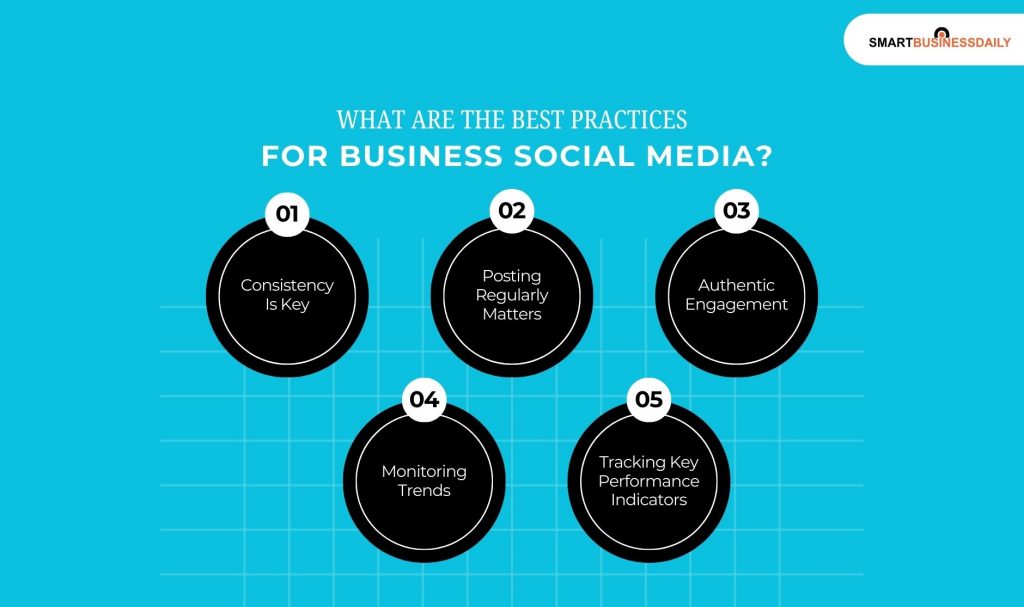
- Consistency Is Key.
- Posting Regularly Matters
- Authentic Engagement
- Monitoring Trends
- Tracking Key Performance Indicators
- What Are The Common Challenges? (+ Their Solutions)
Do you know what one of the biggest business moves I made last year was? Well, I never thought I would say this, but it’s social media for business!
If you were living under a rock like I was, let me give you a briefing. In this case, you just have to use your choice of social media platforms.
You can use it to promote products and services. Additionally, you can also connect with customers.
In fact, I have managed to build a strong brand presence online through this and helped my business a lot!
It is no longer optional. It is a core part of how modern businesses communicate.
Now, brands don’t discover customers. It’s the other way around. And trust me, as a customer, I am very keen about it!
I make an effort to read reviews and ask questions. To be fair, I make purchase decisions directly on social platforms.
Businesses of all sizes use social media to expand their reach beyond physical locations.
So basically, as an entrepreneur myself, I can assure you that social media is a more powerful weapon than you can imagine.
It allows me to have direct and real-time interaction. I didn’t have this from traditional marketing channels.
What Is The Importance Of Social Media For Business?
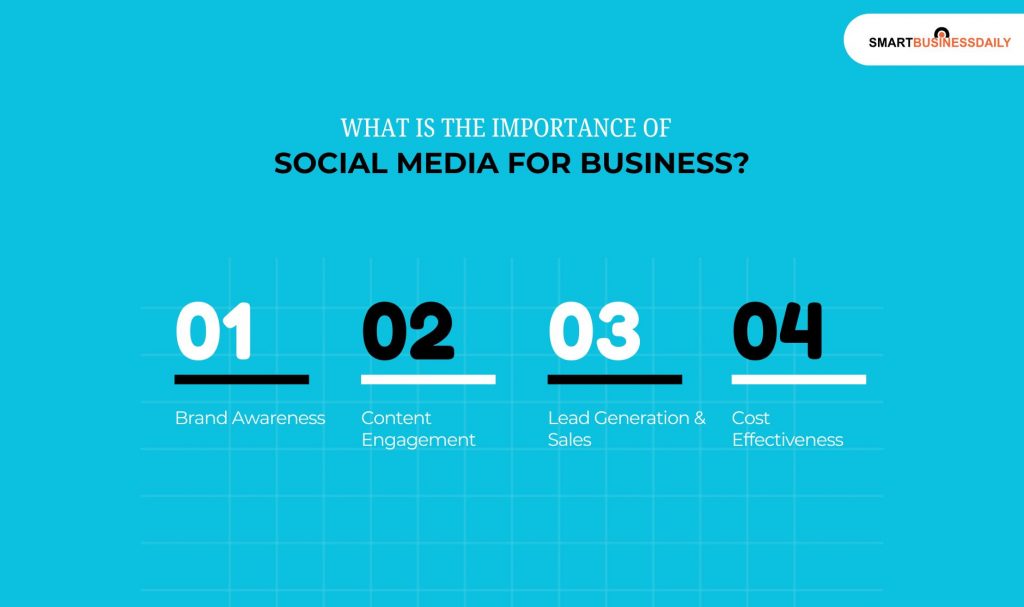
Social media for business plays quite an important role in business growth and sustainability.
But, for you to understand it in a better way, I have curated all the aspects into a few categories.
Let’s look into it:
Brand Awareness
Brand awareness is one of the biggest advantages. You can use social media to reach people who may not know the brand yet.
Additionally, your audience will often comment on your post/video. In fact, they will share it as well. So, this is a huge win-win for you!
In addition, you can try out paid advertising. It further amplifies this reach with precise targeting based on:
- Interests
- Demographics
- Behavior
Customer Engagement
Customer engagement is another key benefit. Social media creates two-way communication.
Customers can comment, ask questions, and share feedback instantly. Businesses that respond quickly and authentically build trust and loyalty over time.
This interaction humanizes the brand and makes customers feel heard.
Lead Generation And Sales
Social media also supports lead generation and sales. Businesses can drive traffic to websites.
Additionally, you can also push your traffic to the landing pages. In fact, it can also travel to the online stores.
There are many features that simplify the buying journey, like:
- Social Shopping
- Lead Forms
- Call-To-Action Buttons
Additionally, I as a customer, have always discovered new things on social media before visiting a website. And I am sure there are more customers like me.
Customer insights gained from social media are extremely valuable. Platforms provide data on
- Audience Preferences
- Content Performance
- Behavior Patterns
This information helps businesses refine products, messaging, and campaigns based on real user feedback.
Cost-Effectiveness
Cost-effectiveness makes social media attractive for businesses with limited budgets.
Compared to traditional advertising, social media ads are more affordable and flexible.
Businesses can start small, test campaigns, and scale what works. This efficiency makes social media suitable for startups and established brands alike.
Popular Social Media Platforms For Businesses
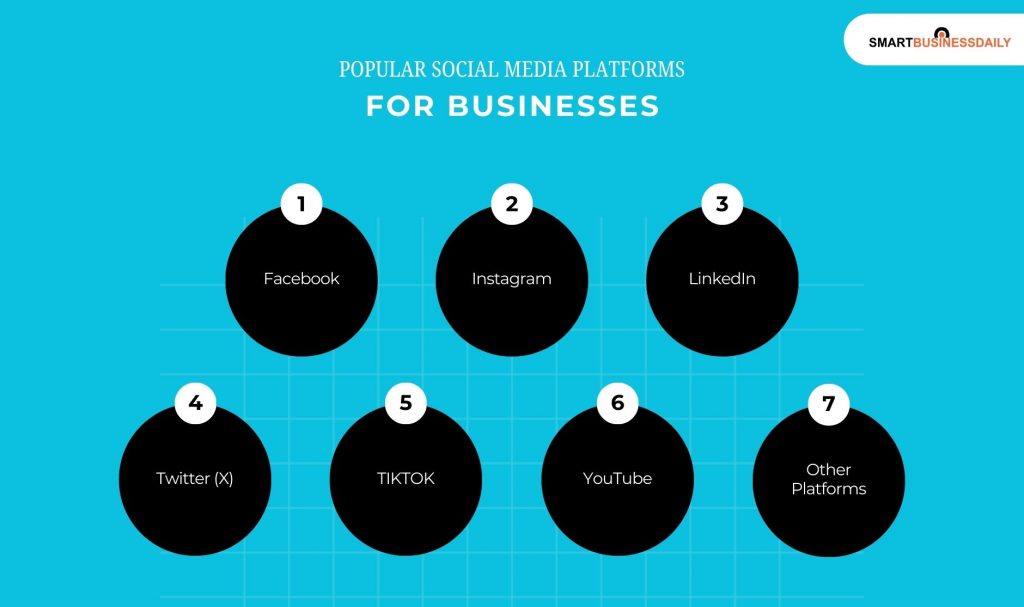
Choosing the right platform is important. Each platform reaches different audiences and helps meet various business goals.
Knowing how they work helps businesses focus their efforts effectively.
Facebook is one of the most popular platforms for businesses. It is great for:
- Building a community
- Engaging with customers
- Targeted advertising
Businesses can create Pages to share updates, promote products, and interact with followers.
Facebook Ads Manager allows businesses to target specific audiences based on
- Location
- Interests
- Age
- Online Behavior
This helps raise brand awareness and boost sales. Facebook Groups also help businesses create communities around shared interests or products.
Instagram is a visual platform that tells stories through images and videos. It is useful for lifestyle brands, creators, and businesses that rely on strong visuals.
Instagram lets brands showcase products. Additionally, brands can share behind-the-scenes content. Also, they can work with influencers.
In fact, I really like the features like Stories and Reels. It encourages short, engaging content, exactly what the larger audience is looking for!
Also, Instagram Shopping allows users to browse and buy products directly in the app.
So, this makes it easier for customers to purchase.
LinkedIn is the top platform for professional networking and B2B marketing.
It is perfect for businesses targeting professionals and decision-makers. LinkedIn helps with thought leadership.
Additionally, it also helps you with employer branding. In fact, you can use it for lead generation.
Businesses can use Company Pages to share updates. In addition, you can also share all the industry insights.
And of course, you can follow with the job postings. LinkedIn Ads allow targeting by:
- Job Title
- Industry
- Company Size
But then, why should you publish long-form content? Firstly, it builds authority. Also, it boosts credibility in specific fields.
Twitter (X)
Twitter, now called X, focuses on real-time communication and trending topics. It is useful for:
- Quick updates
- Customer support
- Developing brand voice
Businesses use it to join conversations, share news, and respond to customer concerns.
Concise messages work best on this platform. Hashtags help content reach larger audiences.
Engaging with followers boosts visibility and strengthens brand personality.
TikTok
TikTok has rapidly grown as a platform for short-form videos. It effectively raises brand awareness and can go viral, especially with younger audiences.
Businesses use TikTok to create entertaining, educational, or behind-the-scenes videos.
The algorithm favors creativity and authenticity, allowing smaller brands to compete based on content quality rather than budget.
YouTube
YouTube is the leading platform for long-form videos. Businesses use it for tutorials, product demonstrations, customer stories, and educational content.
Videos on YouTube show up in search engine results, increasing visibility. High-quality videos build trust and keep audiences engaged longer.
Businesses can monetize content and drive traffic to their websites through video descriptions and calls to action.
Other Platforms
Pinterest helps with visual inspiration and drives e-commerce traffic. It is popular among users searching for
- Ideas
- Products
- Solutions
Snapchat targets younger audiences and encourages creative engagement through filters and short videos.
These platforms can support specific strategies depending on the target audience.
Creating A Social Media Strategy For Your Business
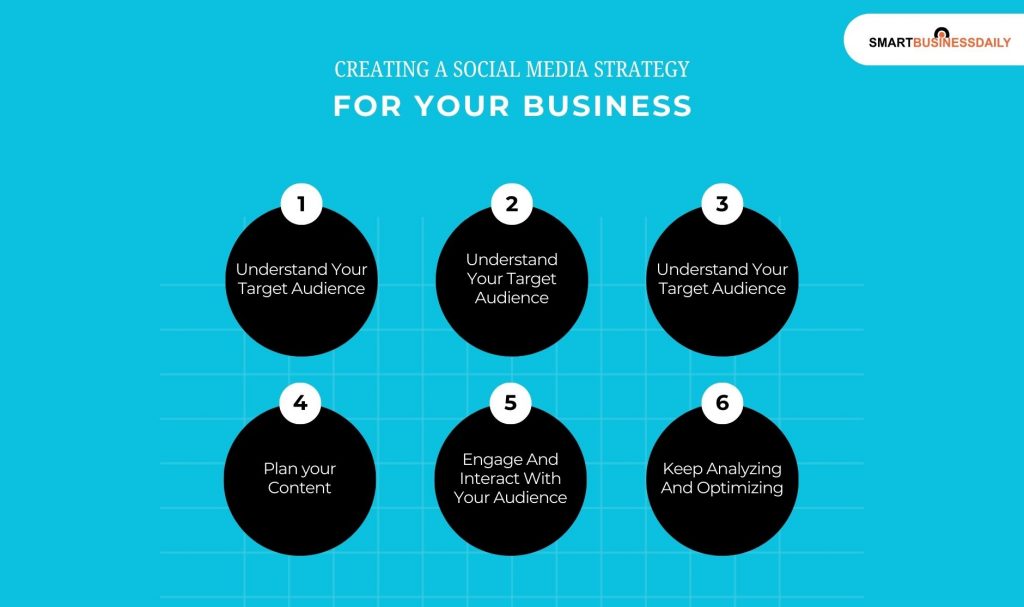
A successful social media presence starts with a clear strategy. Random posting rarely delivers consistent results.
Strategy ensures alignment with business goals and audience needs.
Set Clear And Achievable Goals
The first step is setting clear goals. Common goals include increasing brand awareness, generating leads, driving sales, or improving engagement.
Each goal requires different content and metrics.
Understand Your Target Audience
This is another key point I wish to focus on. You must have a good understanding of the target audience.
Trust me, it is very much essential. Your business should define demographics and interests thoroughly.
Additionally, you also need to cater to the challenges. In fact, you must also know online behavior.
This helps tailor content that resonates and adds value.
Select Your Platform With Intention
Platform selection should be intentional. Businesses should focus on platforms where their audience is most active rather than trying to be everywhere.
This improves consistency and content quality.
Plan Your Content
Content planning ensures regular and balanced posting. Also, a mix of formats works best, including:
- Images
- Videos
- Infographics
- Polls
- Text Posts
Additionally, I would suggest that you maintain a content calendar. It helps maintain consistency without last-minute pressure.
Engage And Interact With Your Audience
Do you know what else is important? Engagement and interaction. In fact, they are as important as posting.
So, in simpleterms, I am asking you to respond to comments. Also, try to respond to messages as much as you can.
Firstly, it will truly build trust. Additionally, it will also encourage ongoing conversations.
In addition, I suggest that you focus on user-generated content. It strengthens credibility and community.
Keep Analyzing And Optimizing
Guess what completes the strategy? A thorough analysis. Additionally, I must also mention optimization.
In addition, you need to keep tracking metrics like:
- Reach
- Engagement
- Clicks
Basically, I am asking you to keep at the conversions. It helps businesses understand performance.
Also, it will help you to improve future campaigns.
Types Of Content To Share On Social Media
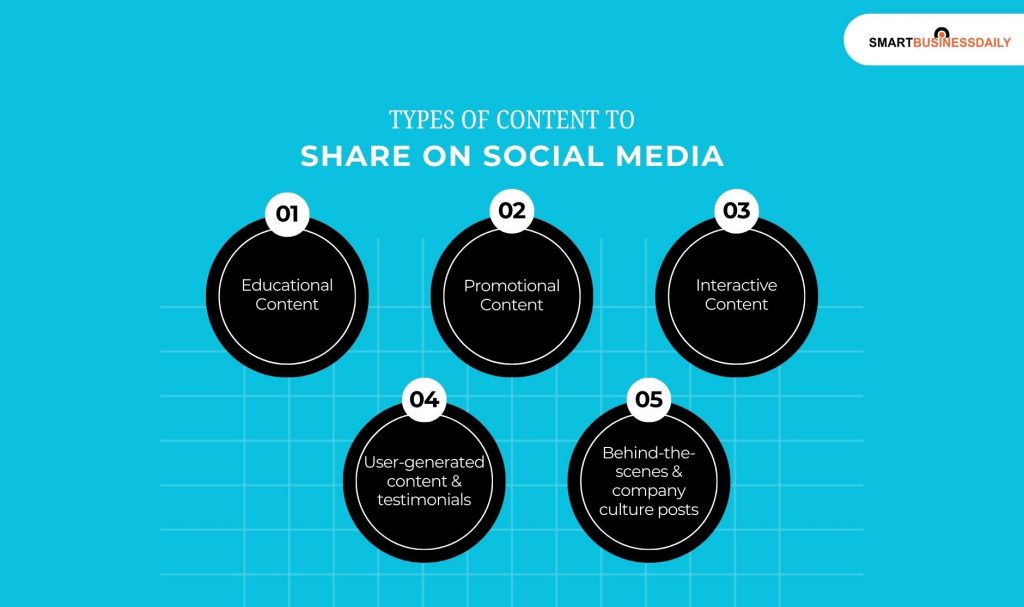
Content variety keeps audiences interested and engaged.
Educational content
Here, I am referring to content formats such as blogs and how-to videos. Also, you can include infographics.
These position the brand as helpful. In fact, your brand will come off as knowledgeable. This builds long-term trust.
Promotional content:
It highlights products and services. Additionally, you can choose this format for launches.
Also, this goes very well in case of discounts and offers. But it should be balanced with value-driven posts.
This is very important to avoid overwhelming the audience.
Interactive content
increases engagement.
Polls, quizzes, contests, and questions invite participation and feedback.
These formats often perform well due to algorithm preference.
User-generated content and testimonials
These provide social proof. Sharing customer reviews and experiences builds credibility and influences buying decisions.
Behind-the-scenes and company culture posts
These are very appropriate to humanize the brand. Additionally, they show the people behind the business.
In fact, this content format also strengthens emotional connection.
What Are The Important Tools Used To Manage Social Media For Business?
Managing social media efficiently requires the right tools.
- Scheduling and management platforms like Hootsuite, Ordinal, Buffer, and Sprout Social allow businesses to plan and publish content across multiple platforms from one dashboard.
- Analytics and reporting tools help measure performance. Platform native insights and Google Analytics track engagement, traffic, and conversions.
- Content creation tools such as Canva and Adobe Express simplify design for non-designers.
- Video editing software supports high-quality video production.
- Automation and customer support tools include chatbots and automated responses.
These improve response time and customer satisfaction, especially for growing businesses.
What Are The Best Practices For Business Social Media?
Consistency Is Key.
Basically, I am saying that you must maintain a consistent brand voice.
Additionally, you also need to pay close attention to the visuals. In fact, you can also try out messaging.
These actions build recognition and trust across platforms.
Posting Regularly Matters
Yes, I said it, but quality should always come first. Valuable content performs better than frequent low-quality posts.
Authentic Engagement
This factor strengthens relationships. Businesses should listen actively.
Additionally, they must respond honestly. Also, this will help them show appreciation for their audience.
Monitoring Trends
When you consistently monitor the trends, it helps brands stay relevant.
Additionally, you must always adapt content formats and topics. This keeps engagement high.
And the best part? You can do this without losing brand identity.
Tracking Key Performance Indicators
Tracking these indicators allows continuous improvement. Additionally, when you make data-driven decisions, it leads to better results over time.
What Are The Common Challenges? (+ Their Solutions)
Social media presents challenges alongside opportunities.
- Firstly, all these platforms and algorithms change frequently. So, you will need to practice constant learning and adaptation.
- Secondly, you will often see negative feedback. I understand that online reputation management can be difficult.
- But you must respond calmly and professionally. This will help maintain trust and credibility.
- Content creation workload can feel overwhelming. Planning, delegating tasks, and using automation tools reduce pressure.




Related Articles



Comments Are Closed For This Article