








Is E-Commerce Cost Optimization Easier Said Than Done? What Are The Correct Ways To Do It?
8 Mins Read
Published on: 05 February 2026
Last Updated on: 04 May 2026
- Why Is E-Commerce Cost Optimization Important?
- What Are The Key Areas Of Focus In E-Commerce Optimization?
- 1. Website Performance:
- 2. Customer Acquisition:
- 3. Inventory Management:
- 4. Shipping And Fulfillment:
- 5. Marketing:
- How To Practice E-Commerce Cost Optimization? (A Step-By-Step Guide)
- 1. Conduct A Cost Analysis
- 2. Set Cost Optimization Goals
- 3. Prioritize Cost-Cutting Opportunities
- 4. Use Data Analytics
- 5. Implement Automation And Technology
- 6. Streamline Supply Chain And Inventory Management
- 7. Optimize Shipping And Fulfillment
- 8. Refine Marketing And Customer Acquisition
- 9. Monitor And Adjust Regularly
- 10. Promote A Cost-Conscious Culture
- What Are The Challenges That Delay E-Commerce Cost Optimization?
- 1. Balancing Cost Reductions With Quality And Customer Experience
- 2. Navigating Regulatory And Compliance Issues
- 3. Maintaining Flexibility In A Changing Market Environment
- What Are The Future Changes In E-Commerce Cost Optimization?
- 1. AI Personalization:
- 2. Voice Search Optimization:
- 3. Social Commerce:
- 4. Sustainability Initiatives:
- 5. Subscription Models:
- 6. Chatbots And Conversational Commerce:
- The Tactics Of E-Commerce Cost Optimization Explained
Every e-commerce brand wants to save money. But why? Because it’s essential for making a profit.
Finding ways to cut expenses can be tough because of the following factors:
- Costs For Marketing
- Product Sourcing
- Staffing Rising
So, what can marketers do? The answer is e commerce cost optimization. E commerce cost optimization means improving different parts of an online store.
Also, this is very important to boost profits. This covers
- Website Performance
- User Experience
- Inventory Management
- Shipping
The goal is to make business processes smoother. Additionally, you can also cut unnecessary costs.
And guess what? You can still provide a good experience for customers.
By doing this, your business can attract visitors and keep customers. And while you’re at it, it keeps working efficiently.
Additionally, it increases revenue and average order value (AOV) while controlling costs.
Why Is E-Commerce Cost Optimization Important?
Managing costs is essential for successful commerce. You can just start tracking and controlling expenses.
Just by this small change, your business can increase profits without needing to sell more.
Let me tell you how I achieve it. Firstly, I created a budget. Then, I started monitoring my expenses closely.
Finally, I applied cost-saving strategies in my online store.
For example, finding ways to lower customer acquisition costs can free up money.
Additionally, it will enhance customer experience. Also, it can lead to greater profits in the long run.
What Are The Key Areas Of Focus In E-Commerce Optimization?
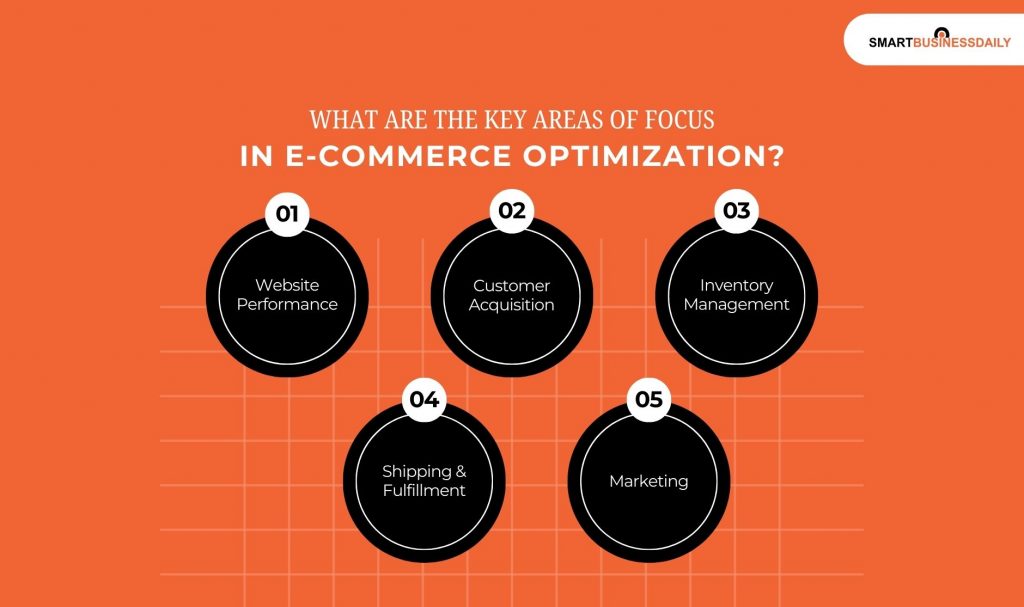
Effectivee-commercee optimization includes several key areas:
1. Website Performance:
A good e-commerce website is fast. Additionally, it is mobile-friendly and easy to use.
Slow loading times or a confusing checkout can push shoppers away. Additionally, it can increase bounce rates.
Also, it can lower conversions.
In fact, e-commerce sites that load in one second convert 2.5 times more visitors than those that take five seconds.
2. Customer Acquisition:
Bringing in new customers can be costly, but e-commerce optimization can help. By improving your strategies, you can lower your cost per acquisition (CPA), or what you spend to gain each new customer.
Optimize your paid ads, SEO, and email marketing to reach the right audience at a lower cost.
3. Inventory Management:
Having too much stock can hurt your business just like running out of products can.
E-commerce optimization includes managing your inventory, which helps meet product demand.
Additionally, it won’t even need you to tie up the extra money in stock.
4. Shipping And Fulfillment:
Shipping costs can add up for e-commerce businesses. For example, clothing retailers spend nearly 13% of their revenue on shipping.
Optimizing your shipping methods and fulfillment processes can greatly lower these costs and increase profits.
5. Marketing:
An optimized marketing strategy uses data to focus on high-return channels and cut wasteful spending.
By concentrating on what works, your brand can achieve better results at a lower cost.
How To Practice E-Commerce Cost Optimization? (A Step-By-Step Guide)
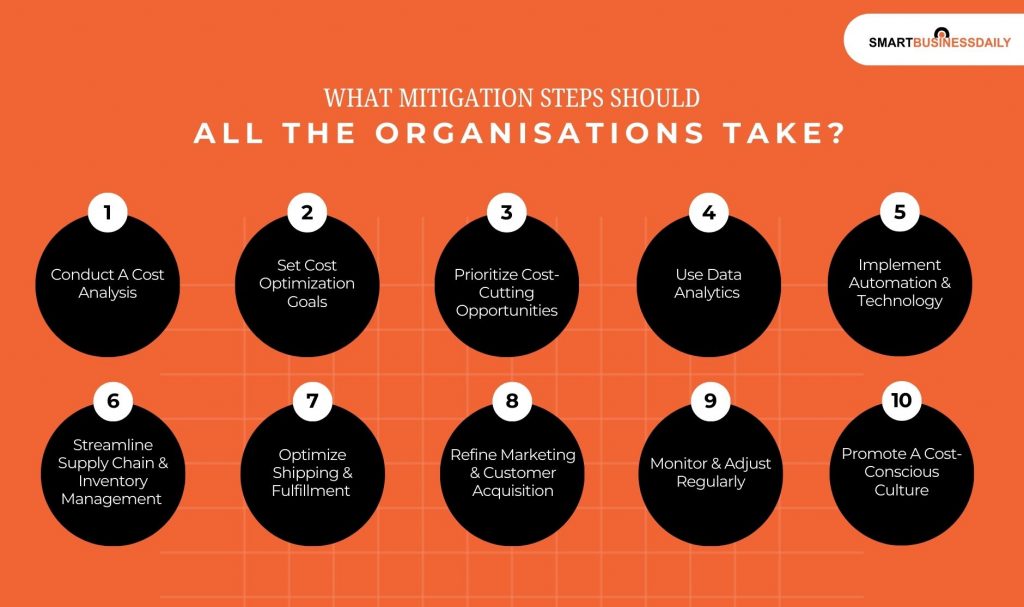
1. Conduct A Cost Analysis
Start by looking at the main costs in your e-commerce business. Use data to check expenses related to:
- Inventory
- Marketing
- Customer Acquisition
- Shipping
- Website Performance
This analysis will help you find areas where you can save money.
2. Set Cost Optimization Goals
After identifying cost-saving areas, ensure they match your overall business goals.
Clear goals will help you focus your cost-cutting efforts and support long-term growth instead of just quick fixes.
3. Prioritize Cost-Cutting Opportunities
Not all costs are equally important. Focus first on the areas where you can save the most, such as supply chain problems or high shipping costs.
This will help you free up resources more quickly.
4. Use Data Analytics
Data analytics can help you find ways to cut costs and make better decisions.
By looking at customer behavior, sales trends, and operations data, you can see where inefficiencies lie and create plans to fix them.
For more on using data analytics in e-commerce, check out our article on the topic.
5. Implement Automation And Technology
Automation can reduce repetitive tasks, minimize errors, and improve efficiency.
Tools like marketing automation can help you optimize email campaigns, improve customer targeting, and provide personalized content.
6. Streamline Supply Chain And Inventory Management
Effective supply chain and inventory management are key to reducing costs.
Improving how quickly you sell inventory and avoiding overstock can save money.
Use forecasting tools to predict demand better, and consider just-in-time inventory to keep your operations lean.
7. Optimize Shipping And Fulfillment
Shipping and fulfillment can be costly for e-commerce. So, firstly, you must use fulfillment optimization tools. These will help you to find the best shipping options.
Additionally, you will be able to negotiate better rates with carriers. Also, you will automate order routing to lower delivery times and costs.
In fact, I also feel like you should offer flexible shipping options. I am talking about ones like free shipping thresholds.
I genuinely believe that it can attract customers.
Almost 80% of shoppers are willing to spend more to qualify for free shipping.
So, I guess I was right! It really does make this strategy effective.
8. Refine Marketing And Customer Acquisition
Marketing and acquiring customers can be expensive. Look again at these areas, focusing on strategies that give high conversion rates at low costs.
Identify your ideal audience and tailor your campaigns to generate more revenue.
9. Monitor And Adjust Regularly
Cost optimization is an ongoing task. Regularly check your performance metrics.
This will help you to find new inefficiencies. Also, you will get to see more improvement opportunities.
Additionally, you need to adjust your strategies. This is because the significant factors keep shifting, such as:
- Market Conditions
- Customer Preferences
- Operational Needs Shift
10. Promote A Cost-Conscious Culture
I think this is a really important one! I have made cost optimization a company-wide effort. And I swear, it worked out so well!
So, I’ll tell you what I did. Firstly, I encouraged a cost-conscious mindset. Nothing too serious, I was just being open about financial goals.
Additionally, I was also rewarding cost-saving ideas.
So basically, I made sure that everyone understood the importance of managing costs.
Then, they are more likely to make decisions that improve efficiency and profits.
What Are The Challenges That Delay E-Commerce Cost Optimization?
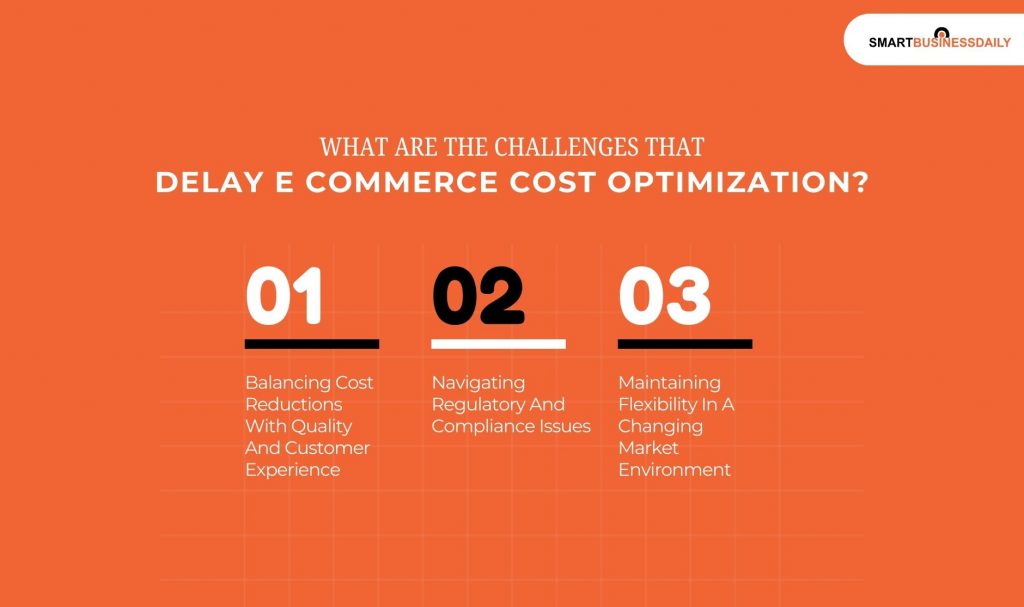
E-commerce optimization can help boost profits, but it also comes with challenges. Let’s look at some common problems businesses face in this area.
1. Balancing Cost Reductions With Quality And Customer Experience
Reducing costs is important for any e-commerce business. However, be careful about cutting costs in ways that affect the quality of your products or services.
Delivering value to customers is keytor keeping them loyal, so don’t sacrifice this just to save money.
For example, cheaper shipping options may take longer and frustrate customers who expect fast delivery.
Similarly, cutting back on customer service staff can lead to negative reviews and more returns.
The goal is to find ways to operate more efficiently without hurting the customer experience.
Use data analytics to identify areas where you can save money without impacting quality.
This approach helps maintain your reputation while lowering expenses.
2. Navigating Regulatory And Compliance Issues
Compliance can be a challenge for e-commerce brands, especially those selling globally.
Following local, national, and international regulations, such as GDPR in Europe or CCPA in California, can be complex and costly. Failing to comply can lead to expensive fines.
That’s why businesses should factor in regulatory costs when optimizing fore-commerce.
So, what does this mean? Firstly, you may have to work with legal and compliance experts. This will help you to stay updated on regulations.
Additionally, you can also start using technology to manage compliance more easily.
3. Maintaining Flexibility In A Changing Market Environment
Being agile is essential for successful e-commerce brands. The market is always changing due to shifting customer behavior.
Additionally, it is also due to the external factors like supply chain issues and economic changes.
So, you need to ensure that your cost structure is not too rigid. It could limit your ability to adapt to unexpected situations and affect profits.
For instance, let’s say you have signed long-term contracts with suppliers. Also, you thought that this would help you cut costs.
But I can give you a different analogy! It can be problematic if those suppliers experience issues or if market prices fall.
Instead, I suggest that you look for flexible solutions. Also, ensure that these will let your brand adjust quickly. In fact, these won’t require high expenses.
Flexibility also means being open to new technologies and methods that can improve your e-commerce website.
As technology evolves, make sure you use the latest tools for cost optimization.
What Are The Future Changes In E-Commerce Cost Optimization?
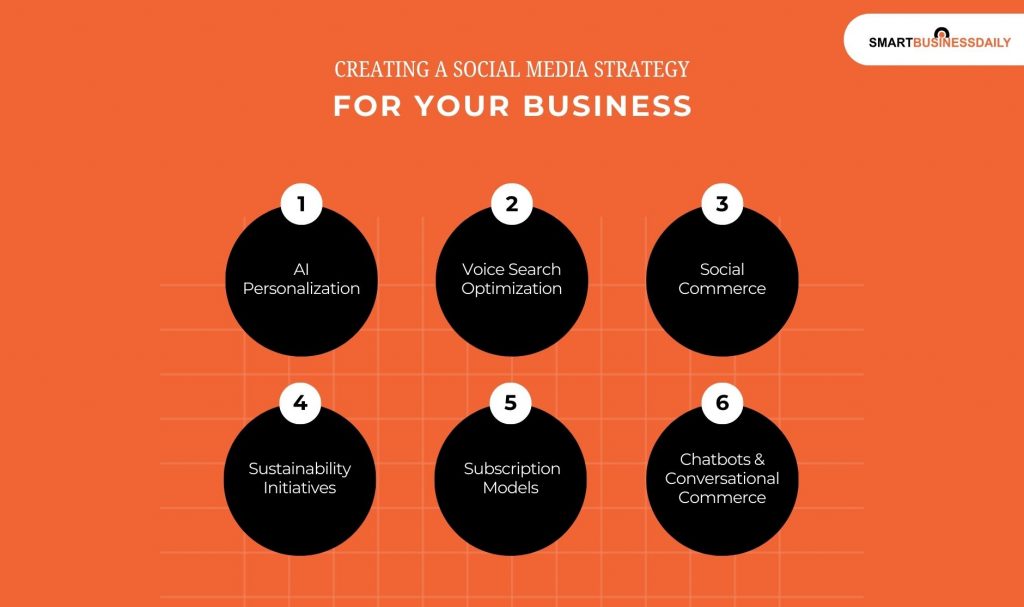
The e-commerce marketing world is changing quickly. New technologies and strategies are helping brands connect with customers and grow. Here are some key trends to watch:
1. AI Personalization:
I have seen many brands using AI. They mostly use this to create personalized shopping experiences. And, I LOVE the idea!
Of course, this personalization includes product recommendations. Also, it has prices that change based on customer behavior.
2. Voice Search Optimization:
I think you have already noticed how much voice assistants like Alexa and Google Assistant are becoming more common.
So, I feel like businesses need to optimize their websites for voice search.
This surely has a great chance at attracting new customers.
3. Social Commerce:
Now, we have platforms like Instagram and TikTok. And guess what? They are making it easy for people to shop directly from their apps.
Basically, they are turning social media into an important sales channel. Let me take some notes!
4. Sustainability Initiatives:
More brands are adopting eco-friendly practices in their marketing.
Additionally, they are responding to the growing consumer demand for sustainable products and packaging.
5. Subscription Models:
Many e-commerce businesses now offer subscription services that provide ongoing value and convenience, which helps increase customer satisfaction and loyalty.
6. Chatbots And Conversational Commerce:
Automated chatbots give customer support 24/7. So, this has helped users during their shopping journey.
Also, it offers personalized assistance.
Additionally, you must stay aware of these trends. In fact, you must keep up with the new technologies that support them.
This will help them keep up with customers’ growing expectations.
The Tactics Of E-Commerce Cost Optimization Explained
It’s all in the right strategy! But I have especially curated this guide for you because when you know the rules well, you make a good strategy.
Also, these are just mere guidelines. When you arein charge of a business like I am, we really have to THINK it hard!
E Commerce cost optimization has made many related businesses more efficient.
Additionally, it has ensured increased revenue and customer retention massively! So, let us see how much better we can get at this. Keep Planning!




Related Articles


Comments Are Closed For This Article