








Iot Remote Control For Industrial Applications: Streamlining Operations
6 Mins Read
Published on: 22 September 2023
Last Updated on: 30 March 2026
- The Power Of IoT Remote Control:
- What Is This Remote Control System All About?
- The Role Of Remote IoT Control Systems:
- Enhancing Efficiency And Productivity:
- Real-Time Monitoring:
- Predictive Maintenance:
- Remote Troubleshooting:
- Optimization:
- Ensuring Safety And Risk Mitigation:
- Safety In Hazardous Environments:
- Rapid Response In Emergencies:
- Compliance Monitoring:
- Applications Of IoT Remote Control In Industrial Settings:
- 1. Manufacturing:
- 2. Energy And Utilities:
- 3. Oil And Gas:
- 4. Agriculture:
- 5. Healthcare:
- Key Components Of An IoT Remote Control System:
- 1. Sensors:
- 2. Connectivity:
- 3. Control Software:
- 4. Data Analytics:
- Challenges And Considerations:
- IoT Remote Control Systems Are Essential In 2026!
In the ever-evolving landscape of industrial processes and automation, the advent of the Internet of Things (IoT) has brought about a paradigm shift. IoT remote control systems have emerged as a transformative force, streamlining operations, enhancing efficiency, and revolutionizing how industries operate.
In this comprehensive guide, we delve into the world of IoT remote control for industrial applications and explore how it is reshaping the industrial landscape.
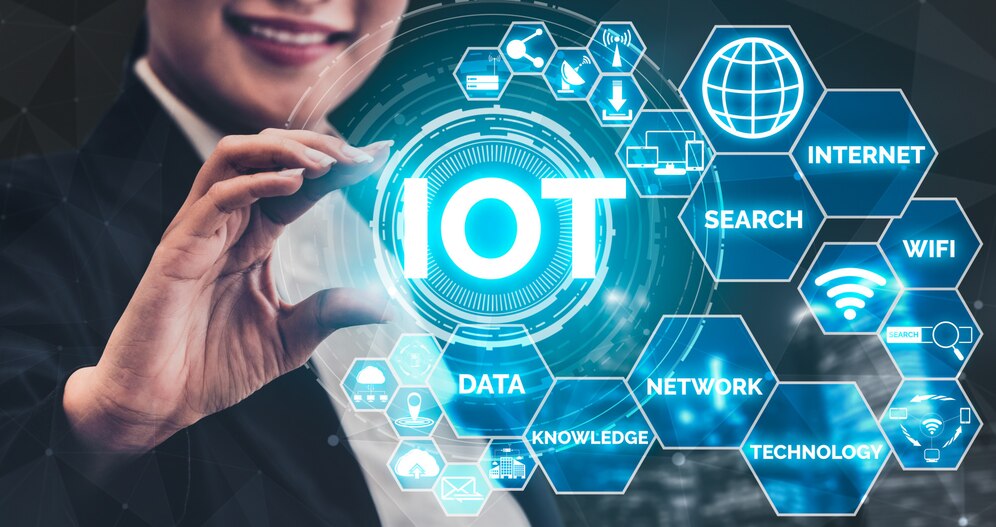
The Power Of IoT Remote Control:
Imagine a manufacturing plant where machines can be monitored, controlled, and optimized remotely through a centralized system.
Remotely accessing IoT devices enables users to monitor, manage, and control their interconnected smart devices from anywhere in the world, enhancing convenience and efficiency.
This is the power of IoT remote control. It enables industrial processes to be managed remotely, reducing the need for physical presence on the factory floor. But what exactly is remote control in IoT?
What Is This Remote Control System All About?
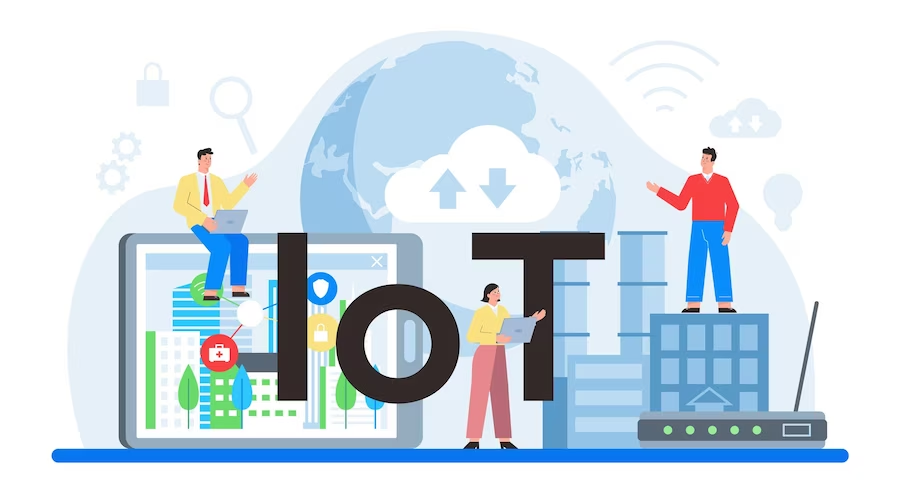
IoT remote control is a technology that empowers the supervision and operation of devices, machinery, and systems from a remote location using the Internet.
Moreover, it’s about seamlessly integrating sensors, data communication, and control systems. Also, this integration empowers operators to keep a real-time watch, analyze data, and take control of industrial processes, all from a distance.
The implications of this connectivity and control are profound and span industries worldwide.
The Role Of Remote IoT Control Systems:
Enhancing Efficiency And Productivity:
One of the standout benefits of using remote sensors and control in industrial applications is its knack for enhancing efficiency and productivity.
Let’s break down how it accomplishes this:
Real-Time Monitoring:
Thanks to IoT sensors and remote control systems, industrial operators can tap into live data streams regarding equipment performance, production rates, and process variables.
Moreover, this means they can spot issues as they happen and swiftly make necessary adjustments.
Predictive Maintenance:
This remote control takes maintenance to the next level with predictive capabilities. Sensors collect data on machinery conditions, and by analyzing this data, maintenance teams can anticipate when equipment might fail.
Also, this allows for proactive maintenance scheduling, reducing downtime headaches.
Remote Troubleshooting:
When glitches and hiccups occur, technicians can swoop in remotely to diagnose and resolve problems.
Moreover, this eliminates the need for on-site visits, which not only trims downtime but also conserves valuable time and resources.
Optimization:
Such remote control systems bring real-time optimization into play.
Moreover, they can fine-tune various factors, such as temperature, pressure, and flow rates, ensuring processes operate at peak efficiency. It’s all about doing things smarter, not harder.
Ensuring Safety And Risk Mitigation:
Safety takes center stage in industrial settings, and IoT remote control steps up to the plate by contributing to safety and risk reduction in several key ways:
Safety In Hazardous Environments:
In industries where workers might face hazardous conditions, remote control comes to the rescue.
It enables equipment operation from a safe distance, reducing risks to personnel and keeping them out of harm’s way.
Rapid Response In Emergencies:
When the unexpected strikes, IoT remote control systems act as a safety net.
They can swiftly trigger an emergency shutdown of equipment or processes, helping prevent potential disasters and safeguarding both assets and lives.
Compliance Monitoring:
IoT sensors play a vital role in keeping industries compliant with environmental regulations.
They diligently monitor environmental conditions and emissions, ensuring that industries comply with regulatory requirements and avoid hefty fines. It’s a win-win for both the environment and the bottom line.
Applications Of IoT Remote Control In Industrial Settings:
So without wasting time, let’s check out the different applications of IoT remote control in industrial settings:
1. Manufacturing:
In the realm of manufacturing, IoT remote monitoring and control systems are revolutionizing production lines.
So, imagine this: Manufacturers can keep a watchful eye on machine performance, tweak production rates, and promptly address issues in real time.
The result? Increased production efficiency, less downtime, and a significant uptick in product quality.
2. Energy And Utilities:
The energy and utilities sector taps into the power of IoT remote control to oversee power generation, distribution, and consumption.
Grid operators can take the reins from afar, steering substations, optimizing energy flow, and swiftly responding to any outages.
Also, it’s all about keeping the lights on and the power flowing seamlessly.
3. Oil And Gas:
In the oil and gas industry, IoT remote control takes center stage, overseeing drilling operations, pipelines, and refineries.
This meticulous supervision enhances safety, trims operational costs, and ensures compliance with strict environmental regulations.
Also, it’s the perfect blend of safety and efficiency in a high-stakes industry.
4. Agriculture:
Even the world of agriculture embraces the IoT revolution.
So, picture this: Farmers wield remote IoT control systems to expertly manage irrigation, keep a close eye on soil conditions, and effortlessly control farm equipment.
The result? Efficient resource utilization and bountiful crop yields.
5. Healthcare:
In healthcare, IoT remote control is used to monitor and control medical equipment, such as MRI machines and ventilators.
Also, healthcare providers can diagnose issues remotely and adjust equipment settings as needed, ensuring patient safety.
Key Components Of An IoT Remote Control System:
So without wasting time, let’s check out the different key components of an IoT remote control system:
1. Sensors:
Sensors are the backbone of IoT remote control systems. They collect data on various parameters such as temperature, pressure, humidity, and machine status.
This data is then transmitted to a central control system for analysis.
2. Connectivity:
To enable remote control, such remote systems rely on connectivity solutions such as Wi-Fi, cellular networks, or dedicated industrial networks like LoRaWAN.
The choice of connectivity depends on factors like range, data transfer rates, and coverage.
3. Control Software:
Control software plays a crucial role in this kind of remote control. Moreover, it allows operators to view real-time data, set parameters, and control equipment remotely.
User-friendly interfaces make it easy for operators to interact with the system.
4. Data Analytics:
Data analytics is at the heart of IoT remote control. Also, advanced analytics tools process the data collected from sensors, providing insights, trends, and predictions.
This data-driven approach enables informed decision-making and process optimization.
Challenges And Considerations:
While IoT remote control offers numerous benefits, it also presents challenges and considerations:
- Security: Protecting remote control systems from cyber threats is paramount. Robust cybersecurity measures are essential to safeguard sensitive industrial operations.
- Scalability: As industrial processes grow, the scalability of IoT systems becomes a concern. Systems must be designed to accommodate expansion.
- Integration: Integrating IoT remote control with existing industrial systems and legacy equipment can be complex, but it is essential for seamless operations.
- Maintenance: Regular maintenance of sensors and control systems is necessary to ensure reliable performance.
IoT Remote Control Systems Are Essential In 2026!
IoT remote control is a game-changer in industrial applications, offering unprecedented control, efficiency, and safety.
Moreover, as industries continue to adopt IoT technologies, remote control systems will play an increasingly vital role in streamlining operations and driving productivity.
Also, with the right sensors, connectivity, and control software, businesses can unlock the full potential of IoT remote control, ensuring a brighter, more efficient industrial future.
IoT remote control systems are at the forefront of industrial innovation, offering enhanced efficiency, safety, and productivity.
So, by harnessing the power of IoT, industries can streamline operations, optimize processes, and stay competitive in an ever-evolving landscape.
Additionally, with technology continuing to advance, the potential applications of IoT remote monitoring and control in industrial settings are limited only by our imagination.
Read Also:
- Top Benefits Of IoT In Healthcare
- How To Choose The Best IoT Development Kit?
- Essential Tips For Securing Your Iot Devices: A Guide To Vulnerability Management




Related Articles



Comments Are Closed For This Article