








Last Mile Delivery: The Final 50 Feet That Make or Break Your Business
17 Mins Read
Published on: 11 May 2026
Last Updated on: 29 May 2026
- What Is Last Mile Delivery?
- What Is Last Mile Delivery, From A Business Pov?
- How Last Mile Delivery Differs From The Rest Of The Journey?
- Last Mile Delivery Is The Costliest Part Of Logistics!
- Why Last Mile Delivery Is So Expensive?
- Argument #1
- Argument #2
- Argument #3
- The Last Mile Delivery Process: Step By Step
- Step 1: Package Arrives At The Local Hub
- Step 2: Sorting By Delivery Zone
- Step 3: Route Planning
- Step 4: Loading And Dispatch
- Step 5: The Delivery Attempt
- Step 6: Confirmation And Closure
- How Does Same-Day Delivery Work?
- How Micro Fulfillment Centers Help Small Businesses With Same-Day Last-Mile Delivery?
- Lessons For Small Businesses
- The Carrier Landscape: UPS, Fedex, Usps, And Beyond
- USPS
- UPS & FedEX
- Regional Carriers
- Amazon's Last Mile: Changing The Rules For Everyone
- How Does Amazon Fulfil Their Last Mile Delivery?
- Common Last Mile Delivery Challenges And How To Fix Them
- The Failed Delivery Loop
- Urban Congestion
- How Small Businesses Suffer?
- How Can Small Businesses Win In This Scenario?
- Rural Coverage Gaps
- Sustainable Last Mile: Electric Vans, Cargo Bikes, & The Green Push
- Is Last Mile Delivery Becoming More Sustainable?
- Technology Solutions Reshaping Last Mile Delivery In 2026 And Beyond
- Autonomous Delivery Vehicles And Robots
- Predictive Logistics And AI
- Frequently Asked Questions (FAQs)
- Make The Last Mile Delivery Your Competitive Advantage
I have been observing how small businesses make and break for quite some time now. There is one trend that I cannot overlook now.
A small business owner spends months building a beautiful Shopify store. Great product photos. Solid ad spend. Five-star product reviews, above all.
After that, a customer places their order from that store. But that order comes three days late. Not only that! There are zero tracking updates.
Then one day, the delivery guy dropped the order on a wet doorstep. Now that’ll earn you nothing more than a one-star review. Done.
That is the last mile delivery problem in real life. But it is not a small business problem. In fact, it is almost everybody’s problem.
What Is Last Mile Delivery?
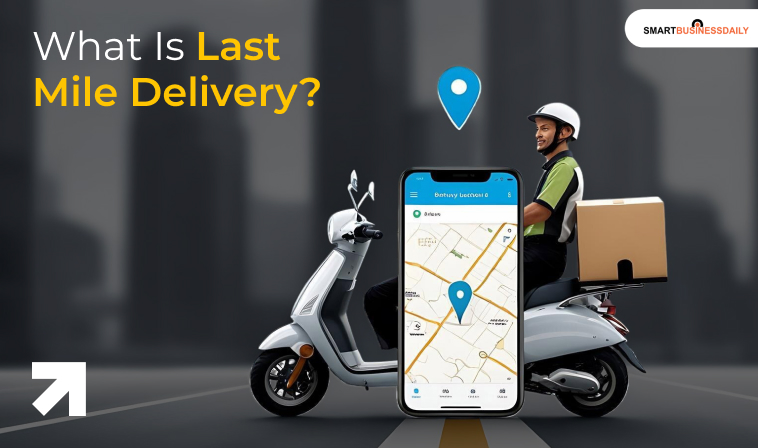
Last mile delivery is the final leg of a shipment’s journey from a distribution hub to the customer’s front door. However, it is the most expensive, most complicated, and most talked-about piece of the modern supply chain.
It is also the piece that most directly touches your customer. Every other step in ecommerce fulfillment is invisible to the person who bought from you. However, the last mile is not.
Do you know why it costs so much? Again, how the smartest operators are solving it. But the question most people ask is: what does the future look like? Especially for businesses selling into the US market.
What Is Last Mile Delivery, From A Business Pov?
The term sounds simple. It is the last mile, right? Technically, yes. But in practice, “last mile” rarely means one mile. In rural Montana, it could mean 40 miles from the nearest distribution center to someone’s front porch.
Again, in downtown Manhattan, it might mean 0.3 miles through gridlock that takes a delivery driver 90 minutes to navigate.
The ASCM Supply Chain Dictionary defines last mile delivery as the transportation of goods from a distribution hub to the final delivery destination.
Now, that hub could be a massive Amazon fulfillment center. Similarly, it can be a micro fulfillment center tucked inside a Walmart. Or a regional last mile sorting and distribution center that sorts parcels by ZIP code before sending drivers out on local routes.
How Last Mile Delivery Differs From The Rest Of The Journey?
| Metric | Statistic | Year |
| Share of total shipping cost | 53% | 2024 |
| U.S. last mile market size | $35.6B | 2025 |
| Projected U.S. market size | $93.5B | 2035 |
| Consumer expectation for tracking | 93% | Current |
The actual journey of your package before that final step is quite long. In simple words, you can understand the difference in this scenario.
Imagine a customer in Chicago orders a pair of boots from a brand based in Texas. At first, those boots move from a manufacturer’s warehouse to a freight carrier. After that, it goes to a regional hub in, say, Memphis. Next, it will reach a last mile sorting and distribution center in Chicago.
Finally, it reaches a delivery vehicle that drops them at an apartment door. The last mile is that final vehicle trip to the customer’s address. But it is the costliest part of the whole chain.
Last Mile Delivery Is The Costliest Part Of Logistics!
According to data from SmartRoutes, last-mile delivery now accounts for 53% of a shipment’s total cost. What’s important is that it is up from 41% in 2018. But what does this big jump tell you?
Above all, it shows how much harder and more expensive the final step has become as more and more people order online in the US.
Why Last Mile Delivery Is So Expensive?
I see someone or the other asking this question online. I understand it is hard to believe that a simple road transit is costlier than the rest of the freight. Yes, you got it right. For long-haul logistics as well.
“Why does the last bit of the journey cost the most?”
The answer makes sense once you see the math.
Argument #1
Long-haul freight is efficient. You load 10,000 packages onto one truck, drive it 800 miles, and unload it at a hub. So, what is your cost per package now?
Maybe a dollar or two. However, your last mile delivery flips that logic entirely. In that final step, you have one driver and one van. On the other hand, there are maybe 150 packages, and 150 different addresses.
But what does that one man have to do? He has to stop, knock, wait, deliver, and walk back. Maybe he has to drive an extra 200 yards that were uncharted. But the worst part is that he has to repeat that frequently for all orders. That’s it. The equation shows how the cost per package skyrockets.
Key Takeaways For Small Online Vendors
On average, US businesses spend around $10.10 per order on last mile delivery, according to the AMCS Group. For a brand selling $35 products, that is a brutal number to absorb, especially when customers expect free shipping.
Research consistently shows that over 90% of online shoppers abandon their carts when they see high shipping costs. A McKinsey & Company research confirms that.
So you eat the cost. Or you find smarter ways to cut it.
Argument #2
Failed deliveries make it worse. When a delivery attempt failed because no one was home, the carrier had to try again.
Now, please note that each re-delivery attempt can add $3 to $10 in additional cost. Again, you multiply that across thousands of orders per month.
After that, you can see why last mile delivery optimization is a survival strategy. Without it, you will run in losses for decades. Even if the rest of your business model is fail-safe.
Argument #3
There is also the density problem. Urban areas have high delivery density but brutal traffic. At the same time, the suburban routes have manageable traffic but low density.
In other words, delivery guys face more miles between stops. But what about the rural routes? That’s even worse. There you will face both problems at once. Plus longer drives. To sum up, no route type is easy.
The Last Mile Delivery Process: Step By Step
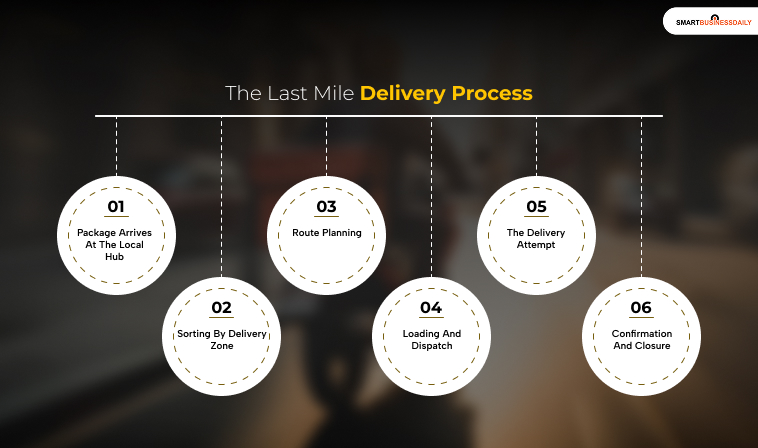
Last mile delivery begins the moment a package arrives at the local distribution hub. Everything before that is upstream logistics. Here is what actually happens from that point to the customer’s door.
Step 1: Package Arrives At The Local Hub
An inbound freight truck delivers a large batch of parcels to a last mile sorting and distribution center. That center serves a specific metro area or ZIP code cluster. This is the handoff point. Long-haul freight ends here. Local delivery begins.
Step 2: Sorting By Delivery Zone
Every inbound parcel gets scanned and sorted by neighborhood or driver route. In these local fulfillment centers, delivery vendors use conveyor belts, barcode scanners, and automated divert systems to manage the parcels.
A busy US hub processes tens of thousands of parcels per shift. Here, speed and scan accuracy are 2 crucial things that determine whether the right package ends up on the right truck.
Step 3: Route Planning
Before drivers load up, AI route optimization software plans each stop in the most efficient order. To clarify,, it focuses on factors like traffic, delivery time windows, address density, and vehicle capacity.
A driver covering the Chicago suburb area might have 130 stops. Getting the sequence wrong by even 15% adds an hour to the route and burns unnecessary fuel.
Step 4: Loading And Dispatch
At this stage, handlers load packages onto delivery vans in reverse stop order. In simpler words, the last delivery goes in first, and the first stop loads last.
Drivers receive their route on a handheld device or app. Then they are out the door. In high-volume US markets, morning dispatch waves typically leave between 8 and 10 a.m.
Step 5: The Delivery Attempt
The driver arrives, scans the package, and completes the drop. If no one is home and a safe location exists, the package is left with a photo as proof.
However, if access is blocked or the address is incorrect, a delivery attempt failed status is triggered automatically. As a result, the customer gets notified instantly and can reschedule or redirect.
Step 6: Confirmation And Closure
Successful delivery scan closes the order in the system. In the same vein, a confirmation is sent to the customer’s phone. At the same time, ecommerce tracking software shows “delivered.”
The carrier logs proof of delivery. That data feeds back into performance dashboards. The logistics partners check stats such as on-time rate, failed delivery rate, and cost per stop in the dashboards. Certainly, they use that to improve the next day’s routes.
How Does Same-Day Delivery Work?
You click “buy” on a website at 9 a.m. Your order shows up at 3 p.m. I know it seems almost magical. In other words, why does last mile delivery not seem like a major issue in same-day delivery?
The reason is that the mechanics behind same-day delivery are actually quite logical. But you need to understand the infrastructure required.
The same day delivery depends on three things working in near-perfect sync:
- Inventory positioned close to the customer
- A fast order management system that triggers picking
- Packing the order, the moment a purchase is made
- A carrier network with enough local capacity to pick up and deliver within hours
Amazon is the clearest example. They have spent over two decades building a network of fulfillment centers placed strategically near major US population centers.
When you order something Prime-eligible, the warehouse handling your order is often within 20-30 miles of your home. In addition, the item is already there. What’s best, the system prints the label before the page even loads. Finally, a driver picks it up within the hour.
But for smaller brands, same day is harder. But let me tell you, it is not impossible. A brand that uses a micro-fulfillment center in its target city can achieve this. But what is a micro fulfillment center?
A micro fulfillment center is essentially a small, hyperlocal warehouse. Most importantly, it is inside or attached to a retail store. But what kind of store?
How Micro Fulfillment Centers Help Small Businesses With Same-Day Last-Mile Delivery?
That’s the game-changing part. The store usually holds a curated inventory of fast-moving SKUs.
Instead of shipping from a central distribution center in another state, the order ships from that local node. I feel that’s the best way for small businesses to fulfill last-mile delivery in the same-day model.
This is increasingly how grocery and pharmacy delivery works in US cities. Instacart, DoorDash, and Gopuff all rely on some version of hyperlocal inventory nodes.
Lessons For Small Businesses
One thing is still worth mentioning here. The same day is still a premium. Surveys show that while 80% of consumers consider same day delivery a standard expectation in ideal terms.
At the same time, over 95% will choose free standard shipping over paid expedited shipping when forced to pick. The bottom line is that speed matters. In fact, price matters more.
The Carrier Landscape: UPS, Fedex, Usps, And Beyond
Most ecommerce businesses in the US rely on some combination of UPS, FedEx, and USPS for their last mile delivery. But each has its own strengths, cost structure, and role in the ecosystem.
USPS
USPS has an unmatched advantage. They deliver to every residential address in the United States, every single day. That density makes them extraordinarily efficient for last mile residential delivery.
In fact, UPS and FedEx frequently hand packages off to USPS for the actual final delivery leg. In the US, we call this model “last mile injection” or “parcel select.” To clarify, the big carriers move freight in bulk. After that, USPS handles the neighborhood routes they already run.
UPS & FedEX
UPS has been investing heavily in AI-powered routing and has expanded its delivery windows to compete on speed. FedEx, similarly, has been restructuring to become leaner and faster in residential delivery.
Meanwhile, both carriers have also built pickup point networks. Again, the network includes lockers, access points, and retail pickup locations to reduce failed delivery rates.
Speaking of UPS, I have a question: can you buy stamps at UPS? Yes, you can. UPS Store locations typically carry USPS stamps.
In fact, many also offer USPS shipping services. It is one of those practical details that matter when you are doing multi-carrier shipping from a retail location.
Regional Carriers
Regional carriers like OnTrac, LSO, Spee-Dee, and others are also a legitimate part of the US last mile picture. They often deliver faster and cheaper in specific geographic markets than national carriers can.
Simply put, smart shippers mix carrier options based on destination zone, package type, and required service level.
Amazon’s Last Mile: Changing The Rules For Everyone
You cannot talk about last-mile delivery in the US without mentioning Amazon. Last year, Amazon delivered more than 8 billion items via same-day or next-day globally.
Nearly 60% of Prime orders in the top 60 US metro areas arrived within one or two days. That is an extraordinary operation.
How long does Amazon take to deliver? For Prime members in major metro areas, one to two days is now standard. For same-day eligible items, sometimes under four hours.
That speed has reshaped customer expectations across the entire ecommerce industry. Every other brand, from a $1B retailer to a five-person DTC startup, is now measured against what Amazon does.
How Does Amazon Fulfil Their Last Mile Delivery?
Amazon achieves this through its Amazon Logistics network. What comprises that network? its own fleet of delivery vehicles, contracts with Amazon Delivery Service Partners (DSPs), and, in some markets, uses independent contractors through Amazon Flex.
They have also been aggressively testing drone delivery through Amazon Prime Air in select US markets, with commercial operations running in College Station, Texas, and Tolleson, Arizona.
The lesson for other brands is not to beat Amazon at its own game. It is to pick your battles. If you are selling a product with a passionate niche customer base, delivery experience, personalization, and product quality matter more than one-day shipping.
But if you are selling commodities competing on price, you need to get as close to Amazon’s delivery speed as your economics allow.
Related Resource: When Does Amazon Stop Delivering? A Complete Guide To Amazon Delivery Hours
Common Last Mile Delivery Challenges And How To Fix Them
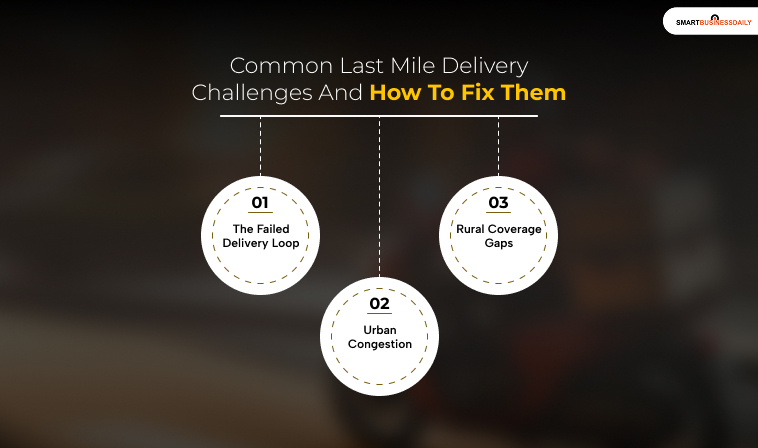
Last mile delivery is still a major issue. These major problems still have no viable solutions. But let’s check out unique solutions that current market players are using.
The Failed Delivery Loop
A delivery attempt failed. It often happens that we are not at home. And the delivery guys fail to deliver the parcel. The rider left a notice that says, “We will attempt the delivery again, the next day.” After that, the customer has to reschedule. The driver comes back. Maybe no one is home again. This loop is expensive and frustrating for everyone.
So, what’s the fix? Big merchants use the flexible delivery options. For example, USPS Informed Delivery, UPS My Choice, or FedEx Delivery Manager. All of these give the recipient control over scheduling, redirect, or pickup alternatives.
However, customers also play a significant role in mitigating failed deliveries. How? Firstly, I want to discuss a solution I have seen implemented in some societies.
I am talking about smart locker networks in apartment buildings and neighborhoods. These lockers eliminate the problem for a large percentage of residential deliveries.
Urban Congestion
Cities are not getting less congested. So, delivery vendors won’t benefit from using bigger vehicles. Instead, they need to switch to smarter deployment.
At the same time, they need consolidation hubs at city edges. In these centers, multiple carriers hand off packages to hyperlocal last mile operators. As a result, you need lesser number of large vehicles entering city centers.
In dense areas, cargo bikes, electric scooters with cargo boxes, and on-foot couriers are mostly helpful. However, it is a messy, multi-modal problem with no single solution.
How Small Businesses Suffer?
A single van covering last-mile delivery in a large, dense area is profitable for a small company. That may increase the delivery time for the customer. However, it significantly reduces the last-mile delivery cost for the merchant. But how?
- The merchant has to bear the cost of one driver and maybe one helper, rather than a fleet of riders making deliveries in the same region.
- Expenses like fuel, servicing, and back-and-forth costs for multiple vehicles are always higher. However, a single van covering all deliveries means lower cost.
How Can Small Businesses Win In This Scenario?
Well, if you ask me, they can’t win. But every business was once small. That means there must be at least some disruptive strategy. A few small merchants are focusing more on branding and product differentiation.
For example, they market their products as gourmet or luxe products that mass merchants don’t make. Their next appeal:
“We sell less, and hence we can afford to make artisanal products that mass manufacturers cannot.”
Or you can categorically choose to deliver in areas where you can set up a certain level of demand. For that, you need to focus on either branding or marketing first.
Initially, you will barely break even and won’t have a net profit. But keep investing the revenue in branding, and you will see results soon.
Rural Coverage Gaps
The rural last mile is expensive and slow by nature. The addressable solutions are limited. In this connection, USPS remains the most reliable rural carrier in the US.
Some rural communities are starting to see drone delivery as a genuine option for pharmacy and grocery items. I also believe that it is a practical response to geography.
Sustainable Last Mile: Electric Vans, Cargo Bikes, & The Green Push
Sustainability has moved from a nice story to a business requirement for many US brands. But why? Above all, customers, regulators, and increasingly investors care about it.
The last mile delivery sector has a real environmental footprint. For instance, urban delivery vans are a significant source of NOx and particulate matter emissions in American cities.
You name it. New York, Los Angeles, Chicago, and every major metro area are dealing with congestion and air-quality pressures. It goes without saying that delivery traffic plays a significant role.
Is Last Mile Delivery Becoming More Sustainable?
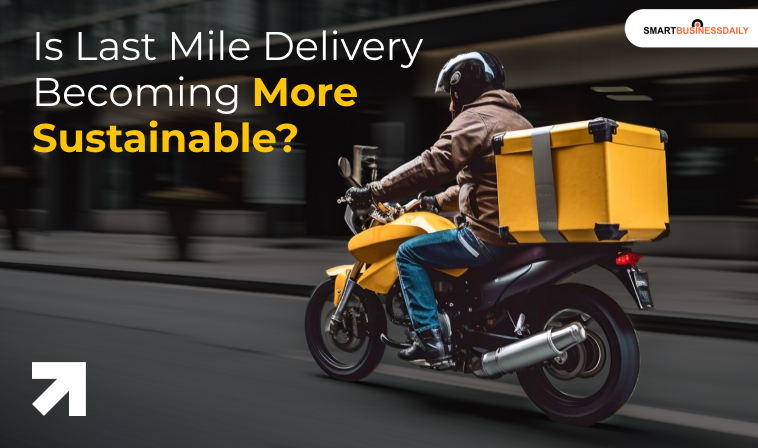
The response is happening, though slowly. Amazon has committed to deploying 100,000 electric delivery vans by 2030. At the same time, they are currently testing GM BrightDrop vehicles alongside their existing Rivian fleet.
On top of that, UPS has a target of 40% of its vehicles to be alternative-fuel or advanced-technology vehicles by 2025. In the same vein, FedEx aims to have an all-electric pickup-and-delivery fleet by 2040.
In dense urban cores, cargo bikes are genuinely competitive with vans in terms of cost and speed. For example, UPS runs cargo bike delivery programs in several US cities.
Meanwhile, note that for short-range urban routes with small packages, a cargo e-bike can do 80 stops a day in a city center, faster than a diesel van stuck in traffic.
However, I feel that the best part is that the consumers are noticing. A ResearchGate study found that over 61% of consumers would pay a premium for deliveries made by autonomous robots.
However, not just because it is novel, but because it signals eco-conscious, low-impact logistics.
Technology Solutions Reshaping Last Mile Delivery In 2026 And Beyond
To fix last mile delivery and mke it sustainable economically and environmentally, these technologies will play a decisive role:
Autonomous Delivery Vehicles And Robots
The autonomous last mile delivery market is projected to reach $228.74 billion by 2035. That’s a staggering 23.33% CAGR. That number reflects genuine momentum, not hype.
First off, Starship Technologies robots are already making autonomous deliveries on college campuses. Also in select suburban neighborhoods across the US.
Meanwhile, Nuro’s self-driving delivery pods operate in commercial deployments. Again, Serve Robotics handles sidewalk delivery in Los Angeles. Again, none of these are pilots anymore. They are live businesses.
Drones tell a similar story. The drone delivery market is expected to hit $4.67 billion by 2030. Already, Wing (Google’s parent Alphabet) and Amazon Prime Air have active commercial delivery programs in the US.
But what’s sad is that range and weather limits still constrain drones. They can deliver lighter packages in lower-density suburban areas. But the good thing is that technology is maturing fast.
Predictive Logistics And AI
Modern last mile operations are highly data-based. They use software to trace traffic patterns, customer availability windows, and weather forecasts.
The best ones also track the historical delivery success rates by neighborhood. In 2026, the AI route optimization tools exist precisely to make sense of this data in real time.
The most advanced systems do more than optimize routes. They predict demand surges before they happen. That’s how they are automatically adjusting safety stock formula calculations and helping in the pre-positioning of inventory.
Moreover, they flag customers with a history of delivery failures. So drivers can call ahead. At the same time, AI helps in rerouting in response to accidents, road closures, or a driver running behind schedule.
Ecommerce businesses can integrate this predictive intelligence into the platforms they already use. Take the example of Shopify, WooCommerce, and their connected fulfillment partners.
Here’s something you must know. If Sendle USA is your partner, stop all bookings now! At the same time, remove their name from the shipping options on your website. They ceased all operations from 11 Jan, 2026.
The best part is that the technology is becoming more accessible, not less, even for smaller operators.
Also Check: Is Your Sendle Package Lost? Track It Down NOW With Sendle Tracking Number
Frequently Asked Questions (FAQs)
Scanning common search queries from small businesses, I found that most of them are eager to learn about advanced logistics tech to reduce costs or manage large-scale last-mile delivery. Here are the specific questions they ask, answered in simple language:
Last-mile delivery is the final step in the product delivery process. In this stage, the parcel reaches the local distribution center. From there, the delivery guy takes it to your door.
Unlike bulk delivery, last mile delivery involves one driver making dozens of individual stops. As a result, the main challenges here are high labor costs, fuel, failed delivery attempts, and low package density per route.
If you consider everything, last-mile delivery accounts for 53% of the total shipping cost.
Most US last-mile deliveries take 1 to 3 business days. Same-day delivery is available in major metro areas through Amazon and select retailers.
However, in rural areas, we see longer delivery times. The main challenges here are long distances and lower route density.
The carrier logs a failed attempt and usually tries the next business day again. Also, the customer receives a notification to reschedule or redirect the package.
However, repeated failures may result in the parcel being held at a local facility for pickup.
They can use multi-carrier shipping software to compare rates or partner with a 3PL to access bulk discounts. But I feel the easiest is to implement route optimization tools for own-fleet deliveries.
A fulfillment center stores inventory and processes orders. In other words, this center is responsible for picking, packing, and labeling.
However, a last-mile distribution center receives already packed parcels and sorts them by local delivery route. One prepares the order, while the other dispatches it locally.
The main US last mile carriers are USPS, UPS, FedEx, and Amazon Logistics. At the same time, the regional carriers like OnTrac and LSO serve specific markets.
Make The Last Mile Delivery Your Competitive Advantage
The big brands in the US right now are the ones treating last mile delivery as a competitive advantage. In other words, they are trying to reduce costs as much as possible.
In addition, they are investing in AI route optimization, distributed inventory, carrier diversification, and proactive ecommerce tracking. Another solution is partnering with 3PLs that understand the complexity.
Simply put, they are paying attention to what happens when a delivery attempt fails and fixing the root cause, not just the symptom.




Related Articles



Comments Are Closed For This Article