







Sustainability And Innovation In The Plumbing Sector
6 Mins Read
Published on: 11 January 2024
Last Updated on: 08 August 2026
- The Evolution Of Plumbing:
- Innovative Plumbing Technologies:
- Sustaining Water Resources:
- Energy-Efficient Plumbing Systems:
- Role Of Plumbers In Sustainability:
- Green Certifications For Plumbers:
- Advanced Plumbing Materials:
- Challenges In Sustainable Plumbing:
- Government Regulations And Policies:
- Public Perception Of Sustainable Plumbing:
- To Summarize:
Modern plumbing faces an imperative to balance precision with conservation.
As climate change and water scarcity highlight the precariousness of freshwater globally, the sector recognizes a responsibility to promote efficient usage and leak reduction.
This article explores how technology innovations, regulation, and shifting mindsets are driving a sustainability transition across plumbing.
The Evolution Of Plumbing:
The history of plumbing dates back thousands of years, showcasing human creativity in solving the age-old challenge of transporting water efficiently.
Ancient Mediterranean and Middle Eastern civilizations developed elaborate irrigation methods for agriculture and aqueducts to direct water flows into growing cities.
Plumbing systems evolved over centuries from clay and stone to more durable materials such as cast iron and lead.
During the 19th century, rising industrialization led cities to build extensive plumbing networks to serve denser populations, setting the foundation for modern indoor water supply and sanitation.
Today, plumbing underpins public health, agriculture, industry, and more – silence intricacies that impact every facet of human progress.
Innovative Plumbing Technologies:
Technology has unlocked promising opportunities to align plumbing with sustainability goals. Dual flush toilets allow variable water volumes to match needs.
Tankless heaters instantly supply hot water without standby energy losses from stored reserves.
Smart sensor networks detect leaks and assess pipe conditions in real time, while connected fixtures enable monitoring and control from anywhere.
Beyond household benefits, these technologies optimize usage across districts and cities through automation.
Innovation has also improved materials — plastic pipes resist corrosion and outlast metal equivalents.
Combined with less invasive trenchless installation methods, this delays replacement cycles and repairs. Looking ahead, digitization and the Internet of Things will expand coverage of smart infrastructure.
With computing power in the loop, AI-driven analytics could dynamically operate plumbing for peak efficiency.
As a leading supplier of plumbing products, Ferguson spearheads the promotion of efficient, green solutions – from HVAC systems to low-flow toilets and showers.
Ferguson persists in offering high-performance, eco-friendly customer options globally.
Sustaining Water Resources:
The planet’s surface water scarcely exceeds 1% of its total volume, underlying the importance of intelligent usage.
Beyond moral motivations, growing populations and development constraints could compound the risks of water scarcity over time.
Sustainable plumbing eases such pressures by promoting conservation at the tap. Low-flow fixtures reduce water volume for bathing, laundry, and more without affecting lifestyle.
Smart irrigation tech maintains lawn health while leveraging meteorological data to avoid unnecessary watering.
Water recycling systems filter select household outflow for reuse in flushing and landscaping. Expanding such adoptions can significantly cut reliance on municipal reserves.
Conservation tech also often slashes energy demands from reduced heating and pumping needs. Through well-designed modern plumbing, people intersect sustainability with public welfare and future-proofing.
Energy-Efficient Plumbing Systems:
Space heating and cooling loads also closely connect to the plumbing infrastructure. As homes and buildings become more air-tight, properly sized and zoned hydronic radiators maintain comfort efficiently.
Solar thermal systems employ panels to generate high-temperature fluids that drive heating devices.
Geothermal heat pumps transfer heat to buildings in winter and vice versa in summer by harnessing the energy stored in the shallow ground.
Modern boilers and water heaters extract over 95% of input fuel value, restricting jacketing losses, and condense moisture to recover latent heat.
Efficient plumbing layouts locate fixtures close together, minimizing pipe runs and catalyzing rapid hot water delivery.
Integrated system data guides predictive maintenance and operational optimization. When well implemented, such technologies slash bills by over half while minimizing environmental impact.
Role Of Plumbers In Sustainability:
The plumbing industry’s green transition relies heavily on its workforce embracing change.
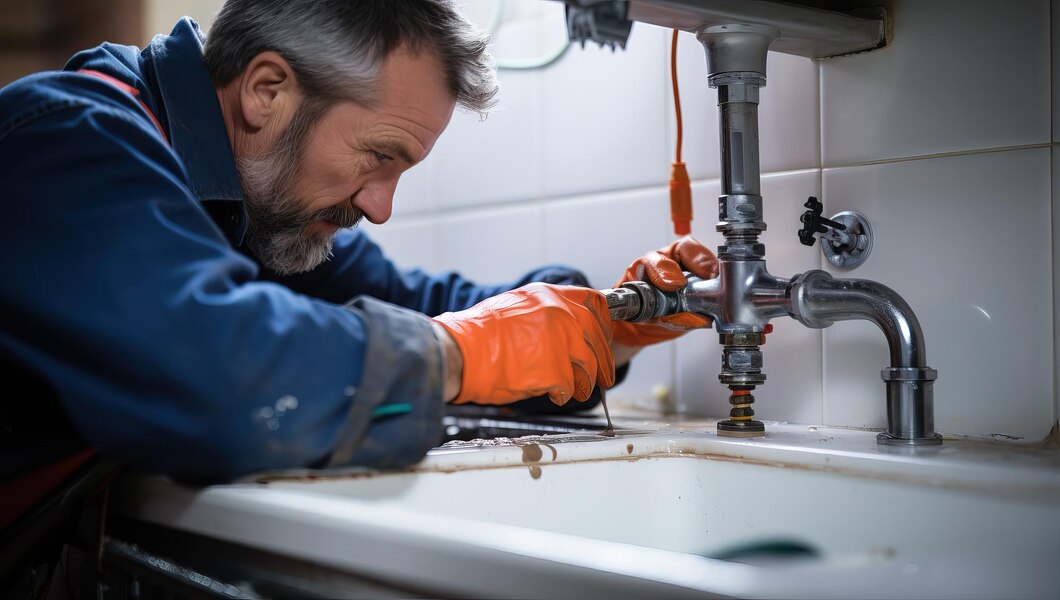
Frontline plumbers must advocate for sustainable choices to consumers and policymakers while advising on options such as efficiency upgrades or the integration of renewables.
Mastering eco-friendly fixtures and smart systems can distinguish their services in a developing marketplace.
Sustainability-linked vocational training should form a key knowledge pillar alongside technical prowess.
Plumbing firms must also track sustainability progress through monitored benchmarks, conveying a commitment to clients and the public.
By understanding their pivotal role, plumbers can drive the adoption of conservation-oriented development, influencing society’s relationship with water and energy.
Green Certifications For Plumbers:
Voluntary sustainability certification allows plumbers to formalize green expertise.
Programs like GreenPlumber offer rigorous training in areas such as water auditing, alternative water source modeling, efficiency troubleshooting, and stormwater management planning.
Testing verifies technical knowledge combined with environmental awareness. For more information, you can learn how to do stormwater sampling.
Certified plumbers on this site enjoy industry recognition in addition to qualifying for utility and state incentives.
For companies, having certified staff indicates progressive character and qualifies them to bid for contracts with green building projects.
Rising consumer consciousness has created a demand for demonstrable sustainability credentials across trades. For environment-centric plumbers, obtaining such certifications seems a logical next step.
Advanced Plumbing Materials:
Materials science innovations have boosted plumbing sustainability by enhancing durability and reducing ecological footprints.
PEX and PVC pipes last over 50 years, avoiding the repeat embodied energy costs of manufacturing and transport associated with frequent copper and galvanized iron replacements.
Plastic materials also withstand corrosion from aggressive water chemistries.
ABS, PVC, and PP reduce the risk of bioaccumulation from heavy metals leaching from degraded pipes into potable sources. Composite gasket-ring SPD couplers minimize leaks caused by vibration.
Lead has been fully eliminated from modern plumbing components, improving health safety.
While longevity remains crucial, future material breakthroughs may enable real-time condition diagnostics or self-healing from abrasions.
Challenges In Sustainable Plumbing:
Advancing sustainable plumbing has its share of roadblocks.
Many sustainable technologies carry premiums over traditional equivalents, hampering adoption even with compelling return-on-investment projections.
Homeowners may lack contextual knowledge or prioritize aesthetics over ethics. Infrastructure inertia around existing unsustainable assets persists.
Misplaced perceptions about utility trade-offs also shape public opinion — education can underscore how smarter options exceed conventional choices.
Policy spaces feature competing interests; the absence of conservation advocates keeps green considerations sidelined.
Also, through constructive community engagement, the industry can debunk myths and demonstrate the societal benefits of sustainability commitments.
Government Regulations And Policies:
Governments wield immense power to steer the plumbing sector’s sustainability transition through codes and standards.
Mandating efficiency metrics aligns industry output with policy targets, overcoming cost-related inhibitions that hinder voluntary choice.
Tax incentives reduce barriers to acquisition for consumers while appeasing manufacturers who fear lost sales.
Progressive regions lead the way – California requires all new residential construction to include solar panels or be “solar-ready”.
Singapore’s water agency subsidized smart shower systems, allowing usage-based billing.
Also, forward-looking proposals suggest embedding sustainability in public procurement criteria and linking property taxes to building water efficiency grades.
Still, more interventionist actions, such as restricting unsustainable plumbing products, could face industry challenges.
Ultimately, aligned regulatory signaling and behavioral nudges should constructively accelerate progress.
Public Perception Of Sustainable Plumbing:
Public awareness campaigns play a key role in driving the adoption of sustainable plumbing through elucidating associated personal and social benefits.
People increasingly recognize virtues like long-term cost savings, leak risk reduction, ease of monitoring/control, and resource conservation from smart upgrades.
Still, the industry must dispel misconceptions that efficiency trades off experiences or reliability.
Customized messaging that emphasizes health, safety, and preparedness for events such as storms or outages can make sustainability goals more tangible for the average household.
As climate consciousness seeps into popular culture, sustainable plumbing may turn into a social status symbol much like efficient cars have.
Grassroots community partnerships should facilitate experiential exposure and knowledge diffusion, further democratizing access.
To Summarize:
Fundamentally, plumbing aims to deliver water safely and on demand. In a resource-constrained world facing climate disruptions, this mandate makes efficiency and conservation paramount.
Moreover, beyond crisis mitigation, sustainable plumbing promises societal co-benefits from resource security to economic savings and environmental dividends.
The industry thus finds itself at a pivotal juncture to align its historical innovation with emerging challenges through a sustainability lens.
Also, policy, technology, and shifts in collective behavior will shape the roadmap ahead.
By embracing change, plumbing can continue fulfilling human needs while restoring balance in humanity’s relationship with nature.
Read Also:
- Preventing Plumbing Nightmares: Maintenance Tips For Homeowners
- Workplace Wellness Initiatives In Plumbing Businesses
- YouTube Plumbing Tutorials For Startups




Related Articles



Comments Are Closed For This Article