








What Is A Retirement Community? Features, Benefits, And Costs Explained
7 Mins Read
Published on: 14 January 2026
Last Updated on: 06 July 2026

- What Is A Retirement Community?
- Types Of Retirement Communities (At A Glance):
- Key Characteristic Of A Retirement Community:
- 1. Age-Restricted:
- 2. Maintenance-Free Living:
- 3. Social And Recreational Amenities:
- 4. Housing Variety:
- Different Types Of Communities:
- Benefits Of Living In A Retirement Community:
- What To Look For In A Retirement Community?
- 1. Personalized Living Experiences For Greater Autonomy:
- 2. Technology As A Support System Of Security And Ease:
- 3. Body, Mind, And Spirit Holistic Wellness:
- Questions To Ask Before Choosing A Retirement Community:
- Evolving Payment And Ownership Models For Affordability:
- Community Engagement And Lifelong Learning In Retirement Community:
- What Is The Financial Consideration For A Retirement Community?
- The Future Of Retirement Living Is Vibrant And Empowering
Choosing the right retirement community is about more than simply finding a new place to live.
Today’s retirement communities are designed to help older adults enjoy an active, independent, and fulfilling lifestyle through thoughtfully planned housing, wellness programs, social activities, and varying levels of support.
As a result, whether you’re planning your own retirement or helping a loved one explore available options, understanding what retirement communities offer is the first step toward making an informed decision.
From independent living and assisted living to continuing care retirement communities, each option provides unique benefits based on an individual’s lifestyle, health needs, and long-term goals.
In this guide, we’ll explain what a retirement community is, explore the different types available, discuss the key features to look for, and help you understand the financial considerations before choosing the right community.
Stay tuned.
What Is A Retirement Community?
A retirement community is a residential community designed primarily for adults aged 55 and older.
Unlike nursing homes, these communities focus on independent living while providing amenities, social activities, maintenance services, and varying levels of support based on residents’ needs.
Overwhelmingly, these oldest people in the community are quite independent and able to manage their own lives, but they choose to live among their peers in a simpler and more comfortable place.
The differences between retirement communities and nursing homes are substantial. The intensive medical care provided at the latter contrasts greatly with the independence, social life, and lifestyle amenities of the former.
Types Of Retirement Communities (At A Glance):
| Community Type | Best For | Medical Support | Independence |
|---|---|---|---|
| Independent Living | Active seniors | Low | High |
| Assisted Living | Daily assistance | Moderate | Medium |
| CCRC | Long-term planning | High | Flexible |
| Active Adult Community | Healthy retirees | Minimal | High |
Key Characteristic Of A Retirement Community:
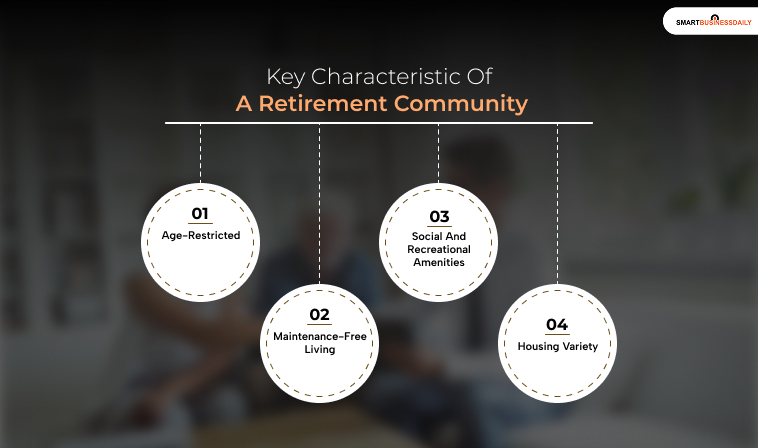
The following are some of the key features that characterize a retirement community:
1. Age-Restricted:
Most retirement communities are designed for adults aged 55 or older, creating a quieter environment with residents in similar life stages.
2. Maintenance-Free Living:
Most retirement communities handle routine maintenance tasks such as landscaping, exterior repairs, housekeeping, and property upkeep.
This allows residents to spend less time managing a home and more time enjoying their hobbies, travel, and social activities.
3. Social And Recreational Amenities:
Modern retirement communities offer a wide range of amenities that encourage an active and engaging lifestyle.
These may include fitness centers, swimming pools, walking trails, community clubs, libraries, dining venues, hobby groups, and organized events that help residents build meaningful social connections.
4. Housing Variety:
Retirement communities typically offer different housing options to suit various lifestyles and budgets.
Residents can choose from apartments, cottages, villas, townhomes, or condominiums, depending on the community and the level of independence or support they require.
Different Types Of Communities:
You should familiarize yourself with these types of retirement communities, as they are the most typical ones:
1. Independent Living Communities: Ideal for active seniors who want a maintenance-free lifestyle without needing daily medical care.
2. Assisted Living Facilities: Designed for older adults who need help with daily activities such as bathing, dressing, or medication management.
3. Continuing Care Retirement Communities (CCRCs): Provide multiple levels of care so residents can transition from independent living to assisted living or nursing care without moving elsewhere.
4. Active Adult (55+) Communities: Designed for healthy, active adults aged 55 and older, these communities focus on independent living with recreational amenities, social activities, and low-maintenance homes.
Benefits Of Living In A Retirement Community:
- Maintenance-free living, allowing residents to spend more time enjoying their interests instead of managing household chores.
- Greater opportunities for social interaction through community events, clubs, and shared recreational spaces.
- Enhanced safety and security with features such as gated access, emergency response systems, and on-site staff.
- Easy access to wellness programs, including fitness classes, healthcare services, and mental well-being activities.
- Convenient transportation services for shopping, medical appointments, and local outings.
- Opportunities for lifelong learning through workshops, educational programs, and cultural events.
- Fewer household responsibilities, giving residents more freedom to focus on hobbies, travel, and personal well-being.
What To Look For In A Retirement Community?
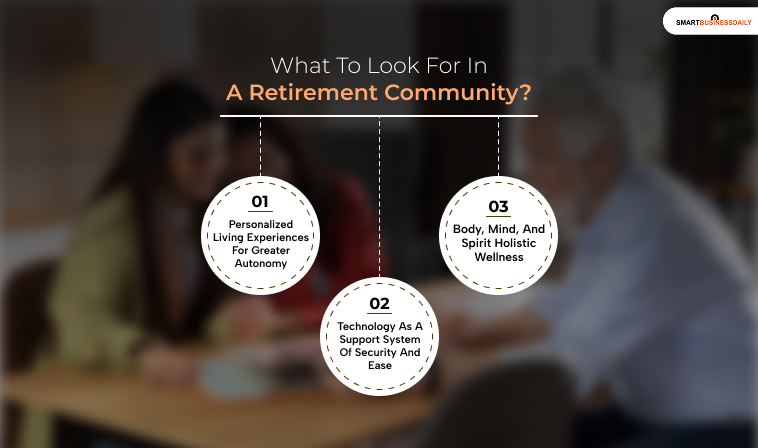
When it comes to a retirement community, there are a few qualities that it must have. Some of them are as follows:
1. Personalized Living Experiences For Greater Autonomy:
One of the most significant trends shaping the best retirement communities is a shift away from rigid, one-size-fits-all models toward highly personalized, flexible living options.
These communities have abandoned exteriors that categorize their inhabitants as either living independently or assisted and instead have adopted a new model of care that is continuous and adapts to the changing needs and likes of the residents.
The elders are left with the option to have their main meals, transport, and other services, such as cleaning and nursing, according to their needs and preferences.
This, in turn, helps to prolong the independence and dignity of seniors.
The small and stylish retirement communities are becoming increasingly popular due to their very chic, community-oriented atmosphere.
In such settings, the bonding that comes with having deep ties and friendships becomes the norm, while isolation gets lessened.
Therefore, it is all the more commendable, given the significant mental health benefits of maintaining meaningful relationships and staying socially active in old age.
2. Technology As A Support System Of Security And Ease:
Currently, the integration of modern technology is a requirement in the top retirement communities rather than just an option.
Living in a smart house provides comfort through features such as voice-controlled assistants, automatic lighting, and temperature control.
AI-based fall-detection devices, together with health-monitoring wearables, have improved the situation. They enable continuous monitoring of health and safety without infringing on seniors’ privacy.
The use of telemedicine is quickly becoming the new norm, enabling virtual doctor consultations and health check-ups without the need for patients to visit clinics in person.
This kind of technology not only gives confidence to the inhabitants but also to the relatives who see healthcare as preventive and management as more assured and secure.
3. Body, Mind, And Spirit Holistic Wellness:
What wellness looks like today in the top retirement communities is very different from the usual gym and jogging track.
Holistic Health has now included not only the physical but also the emotional and cognitive domains through a wide range of activities, programs, and events.
Engaging in meditation, yoga, nutrition counseling, and art therapy improves physical health and also strengthens one’s mental condition.
The use of biophilic design involves incorporating elements such as sunlight, plants, water, and a pleasing color scheme into the interior environment for the dual purpose of elevating one’s mood and reducing stress levels.
Besides meeting areas, community gardens, coffee shops, and cultural events offer opportunities for social and intergenerational communication, hence leading to a lifestyle that is both socially dynamic and meaningful.
Questions To Ask Before Choosing A Retirement Community:
Before choosing a retirement community, you need to include questions like:
- What services are included in the monthly fee?
- Is healthcare available on-site?
- Can residents age in place?
- What social activities are offered?
- Are meals included?
- How are emergencies handled?
- Are pets allowed?
- Can family members visit overnight?
Evolving Payment And Ownership Models For Affordability:
The best retirement communities understand that financial flexibility is crucial to accessibility.
Many have shifted away from high upfront costs toward subscription-based or membership pricing models, allowing retirees to choose services and durations tailored to their financial situations.
This evolution opens the door for a broader array of seniors to access quality retirement living that can evolve as their needs and preferences change.
Community Engagement And Lifelong Learning In Retirement Community:
Innovative retirement communities emphasize purpose and engagement through opportunities for volunteerism, mentorship, and lifelong learning, fostering a sense of community and well-being.
Intergenerational programs connect older adults with younger generations, bridging gaps and expanding social networks. This integration combats loneliness and fosters a richer, more connected experience.
Many communities partner with local cultural institutions, educational centers, and wellness providers to offer a diverse range of programming and events, keeping residents intellectually engaged and culturally connected.
What Is The Financial Consideration For A Retirement Community?
When it comes to the financial considerations for the case of a retirement community, here are a few things that you need to keep in mind:
- Ownership Models: The residents can either rent their units or buy them, just like a regular house or condominium.
- Costs: The fees are very different from place to place. They usually consist of a monthly service charge that pays for maintenance, security, and amenities. Additionally, CCRCs might also require a hefty upfront entrance fee.
- Healthcare Access: Most offer emergency response systems, but if you want to have close access to specific medical services, you will need to choose an assisted living or CCRC model.
The Future Of Retirement Living Is Vibrant And Empowering
The ideal retirement communities reflect a future in which older adults are inspired to live vividly. One can achieve this through the right balance of the following things:
- Personalized support.
- Technological innovation.
- Wellness offerings.
- Financial approaches.
The best retirement community is one that matches your lifestyle, health needs, budget, and long-term goals.
So, by comparing different community types, understanding the costs involved, and evaluating available services, you can choose a community that supports independence today while providing peace of mind for the future.
Whether it’s searching for an intimate, boutique-style community or a larger, campus-style setting with amenities, today’s retirement living landscape gives retirees more choices.
These choices can help support independence, wellness, and engagement at every stage of life.




Related Articles



Comments Are Closed For This Article