








TheJavaSea AIO-TLP370 Leak: What Was Reportedly Exposed And Why It Matters?
7 Mins Read
Published on: 02 February 2026
Last Updated on: 02 July 2026
- What Does The Javasea.me Leaks Aio-tlp370 Mean?
- What Are The Potential Threats And Risks From The Javasea.Me Leaks Aio-Tlp370?
- Why Leaks Like This Matter?
- Why Did The The Javasea.Me Leaks Aio-Tlp370 Happen?
- 1. Hardcoded Secrets In Code
- 2. Insider Leak Or Malicious Actor
- 3. Insecure Infrastructure/Misconfiguration
- 4. Vulnerability Exploitation
- 5. Phishing And Social Engineering
- What Was The Impact Of Thejavasea.Me Leaks Aio-Tlp370?
- · Individual Users
- · Organizations
- What Are The Steps To Mitigate The Javasea.Me Leaks Aio-Tlp370 For Individual Users?
- What Mitigation Steps Should Organizations Take? Precautionary Measures:
- 1. Rotate All Credentials And Keys:
- 2. Audit System Logs And Access Patterns:
- 3. Patch And Harden Systems:
- 4. Network Segmentation And Zero Trust:
- 5. Deploy Detect/Prevent Tools:
- 6. Perform Forensic Investigation:
- 7. Incident Response Readiness And Tabletop Exercises:
- 8. Security Audits And Penetration Tests:
- Key Lessons From The Reported Incident:
- Enhance Your Cybersecurity Defenses:
Data leaks remain one of the most significant cybersecurity challenges facing organizations today.
While some incidents expose only limited information, others may reveal credentials, source code, system configurations, and internal documentation that could be valuable to attackers.
One incident that has generated discussion across various online communities is the alleged TheJavaSea AIO-TLP370 leak.
According to reports circulating online, a file known as aio-tlpfullv7.3.zip was reportedly made publicly available and may contain a large collection of technical assets, including source code, configuration files, system logs, and authentication credentials.
However, independent verification of the complete contents and scope of the alleged leak remains limited. As a result, it is important to distinguish between confirmed information and reported claims.
This article examines what has been reported about the leak, the potential security implications, who could be affected, and the steps individuals and organizations can take to reduce their exposure to similar incidents.
What Does The Javasea.me Leaks Aio-tlp370 Mean?
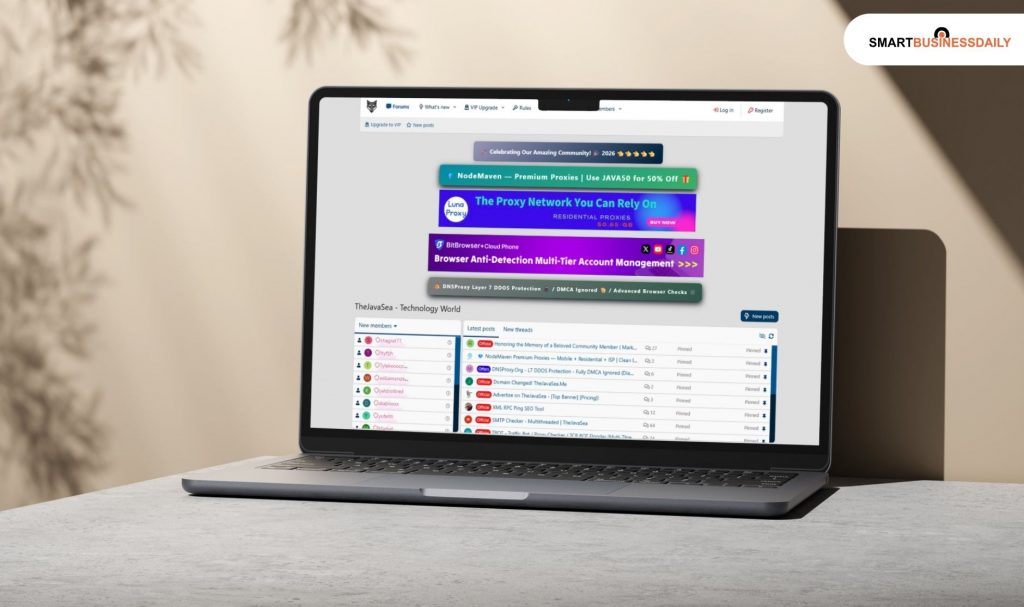
On March 22, 2025, a file named aio-tlpfullv7.3.zip was published on TheJavaSea.me.
It is about 1.2GB in size. The archive reportedly includes:
- Source code
- Configuration settings
- System logs
- Internal documents
Also, it includes over 2,000 sensitive items like API keys and credentials.
“AIO” usually means “All-In-One,” suggesting that this package is made for multiple tasks.
“TLP” might refer to a classification method, often used in discussions around leaks.
The “370” label likely means a version or variation.
What Are The Potential Threats And Risks From The Javasea.Me Leaks Aio-Tlp370?
A leak like this doesn’t come without risks. If the reported leak contains active credentials, attackers could attempt unauthorized access to connected services.
Moreover, if active API credentials were exposed, attackers could potentially attempt access to associated cloud resources.
The actual risk depends on the permissions assigned to those credentials and whether they have already been revoked.
They can also try to use tokens for this purpose and may succeed in hacking into databases.
It is common for attackers to target sensitive internal operations after such leaks.
Attack planning and reconnaissance are also significant risks. Internal documents and logs provide attackers with a deep understanding of system infrastructure.
This information helps them identify timings, weaknesses, and vulnerabilities.
Why Leaks Like This Matter?
The exposure of technical assets can create risks that extend beyond the initial disclosure.
Modern systems are highly interconnected. A single credential, configuration file, or internal document can sometimes provide attackers with enough information to move deeper into an environment.
Potential consequences include:
- Unauthorized access to systems
- Data theft
- Service disruption
- Privilege escalation
- Supply-chain attacks
- Increased phishing activity
Even when exposed credentials have already been revoked, source code and infrastructure details can still provide useful intelligence for future attack attempts.
Why Did The The Javasea.Me Leaks Aio-Tlp370 Happen?
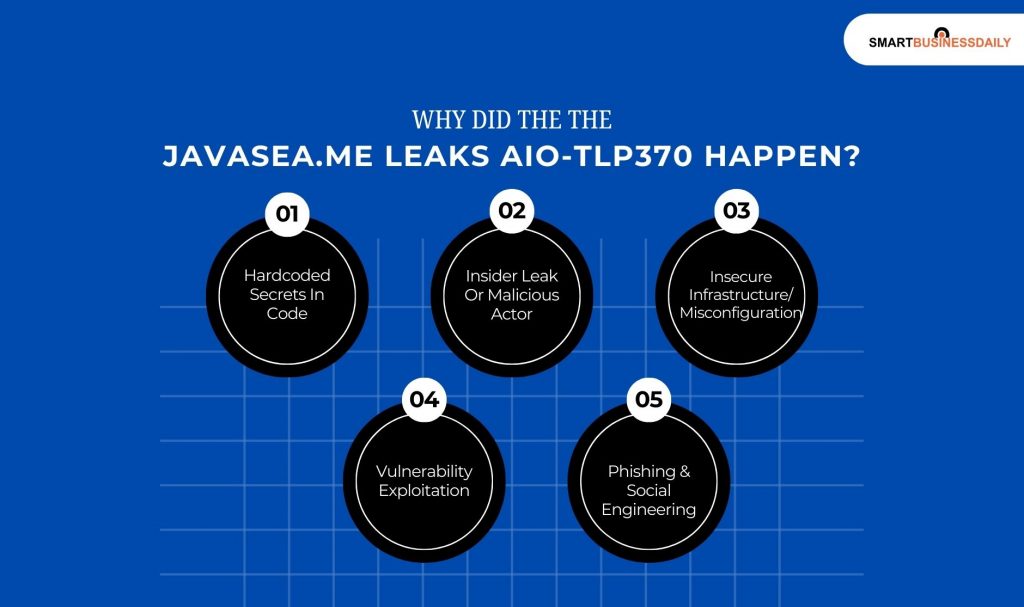
While we don’t know for sure, there are several likely reasons:
1. Hardcoded Secrets In Code
Sometimes, the developers include sensitive information directly in the source code.
Then, it’s easy for someone who gains access to extract and misuse it.
So, you must keep sensitive data out of the codebase. You have to use secure storage methods.
2. Insider Leak Or Malicious Actor
There’s always a chance that someone with legitimate access may leak confidential information. It can happen either intentionally or accidentally.
This could be a disgruntled employee. Also, it could be a contractor mishandling data.
So, always ensure to use strong internal security and monitoring to help reduce this risk.
3. Insecure Infrastructure/Misconfiguration
Sometimes, the problem is due to the poor setup of cloud storage or servers.
Misconfigured systems, like open S3 buckets, can expose important data.
What to do? Start with conducting regular audits. Plus, you need to ensure proper configuration.
It can hugely protect our systems, especially in development and backup scenarios.
4. Vulnerability Exploitation
Attackers often exploit known weaknesses to gain access. Techniques like SQL injection or remote code execution can take advantage of flaws in software.
Keep systems updated with security patches and implement strong defenses against these threats.
5. Phishing And Social Engineering
Attackers may trick staff or contractors into giving access credentials through phishing emails or deceptive messages.
Cybersecurity training can help employees recognize and avoid these tactics.
What Was The Impact Of Thejavasea.Me Leaks Aio-Tlp370?
The recent AIO-TLP370 leaks affected many users, but the impact varies by individual and industry.
· Individual Users
If your email or login details were linked to AIO-TLP370, your accounts might be in danger.
Hackers can use this stolen information to launch phishing attacks, pretend to be legitimate services, or access your accounts through credential stuffing.
Even if your information wasn’t directly leaked, the release of system blueprints can make other systems you use less secure.
· Organizations
Companies using AIO-TLP370 modules could have hidden weaknesses in their systems.
If they reuse API keys or passwords across different services, they become even more vulnerable.
They might face harm to their reputation, legal issues, and financial losses. Attackers can use information from the leak to access more sensitive areas within these companies.
What Are The Steps To Mitigate The Javasea.Me Leaks Aio-Tlp370 For Individual Users?
It’s important to act now that we understand the risks. Here are the steps you should take:
- Change passwords immediately for any accounts that may be affected.
- You must use strong, unique passwords. And don’t reuse any!
- Thirdly, you have to enable two-factor authentication (2FA). This should be on all accounts where you can.
- You must keep an eye on your account activity for any signs of unauthorized access.
- Also, you must use breach-notification services. This will help you to check if your email has been leaked.
What Mitigation Steps Should Organizations Take? Precautionary Measures:
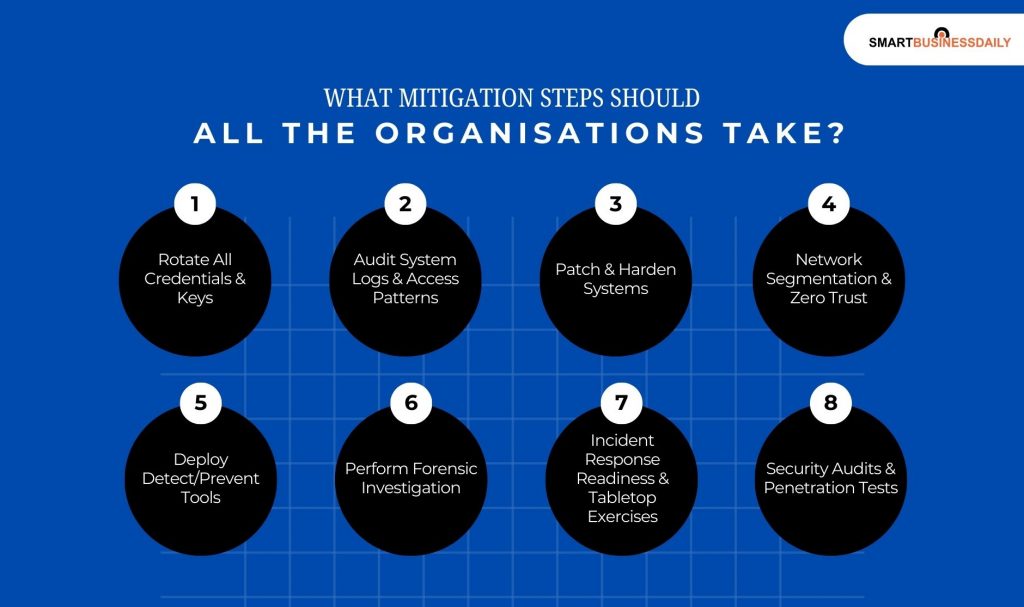
Just as the impact was different, the cure has to be as well, right? So, now we will take a detailed look at the mitigation measures:
1. Rotate All Credentials And Keys:
It’s important to revoke and reissue any API keys, tokens, or passwords that might have been compromised, especially those tied to the leaked package.
Taking these measures helps to minimize the potential for unauthorized access.
Regularly updating your credentials not only secures your environment but also reinforces good security hygiene.
2. Audit System Logs And Access Patterns:
Investigate logs for any unusual login attempts, failed access incidents, or odd system calls that can indicate a security breach.
Look for signs of lateral movement within your network; any strange patterns should raise red flags.
This thorough review can help you catch potential threats before they escalate.
3. Patch And Harden Systems:
You must make it a priority to implement updates. In fact, you must also emphasize configuration changes.
It has to be particularly in systems critical for:
- Logging
- Monitoring
- Infrastructure Services
Staying on top of patches not only protects your systems but also fortifies your defenses against future vulnerabilities.
Regular hardening efforts ensure that your systems remain resilient to attacks.
4. Network Segmentation And Zero Trust:
To limit lateral movement across your network, isolate subsystems like your logs, management interfaces, and user systems, enforcing strict access controls.
This approach significantly reduces opportunities for attackers to wander through your environment undetected.
Adopting a zero-trust model means that verification is a constant, enhancing your overall security posture.
5. Deploy Detect/Prevent Tools:
You need to start implementing tools like intrusion detection systems (IDS).
Also, you can reach out to tools like endpoint detection and response (EDR) and SIEM.
These can provide important insights into unusual behavior on your network.
In addition, you must also implement behavior-based alerts. This can further help in identifying potential threats before they cause harm.
Also, investing in these technologies strengthens your proactive response capabilities.
6. Perform Forensic Investigation:
It’s essential to investigate thoroughly for any signs of intrusion to understand the extent of a security breach.
Identifying the scope, cleaning up any remnants, and ensuring that no backdoors exist is key to restoring security.
This process not only helps to mitigate current risks but also enhances your understanding of potential future vulnerabilities.
7. Incident Response Readiness And Tabletop Exercises:
Running simulations and tabletop exercises to test your incident response plan is vital for preparedness.
These exercises improve communication and help refine your playbooks and recovery strategies.
Now, why should you practice your responses? Firstly, you can ensure that your team is ready to act swiftly.
Additionally, you will help them to take steps effectively in the event of a real incident.
8. Security Audits And Penetration Tests:
You must conduct regular security audits. Also, you must see through the penetration tests.
These are essential for uncovering residual vulnerabilities within your systems.
A thorough code review and external audits come together to provide a comprehensive picture of your security landscape.
In addition, these proactive measures significantly enhance your defenses. They identify and address weaknesses before they can be exploited
Key Lessons From The Reported Incident:
Whether the reported details surrounding AIO-TLP370 are fully accurate or not, the discussion highlights several important cybersecurity lessons.
Organizations should avoid storing secrets directly in source code, regularly audit cloud infrastructure, monitor for credential exposure, and maintain strong incident response capabilities.
Moreover, security controls should assume that exposure is possible and focus on limiting the impact when incidents occur.
Also, for individuals, good security hygiene remains essential.
As a result, strong passwords, multi-factor authentication, account monitoring, and awareness of phishing tactics continue to provide meaningful protection against many common threats.
Enhance Your Cybersecurity Defenses:
The reported TheJavaSea AIO-TLP370 leak serves as a reminder of how valuable technical assets can become when they are exposed publicly.
While many details surrounding the alleged leak remain unverified, the broader security lessons are clear.
Sensitive credentials, source code, configuration files, and operational data should always be treated as high-value assets.
Also, organizations that prioritize secure development practices, access control, continuous monitoring, and incident preparedness are significantly better positioned to reduce the impact of future security incidents.
In cybersecurity, prevention is important, but preparedness is often what determines the outcome when an incident occurs.




Related Articles



Comments Are Closed For This Article