







Sustainable Living: Optimal Waste Management Strategies
6 Mins Read
Published on: 09 May 2024
Last Updated on: 08 August 2026

- The Importance Of Sustainable Living:
- Community-Based Waste Management Solutions:
- Role Of Recycling And Composting:
- Advancements In Waste Treatment Technologies:
- Benefits Of Zero-Waste Lifestyles:
- Legislative Measures For Waste Management:
- Challenges In Implementing Waste Management:
- Future Directions In Sustainable Waste Management:
- Find Out About Effective Waste Management Strategies For Sustainable Living:
You’re probably concerned about the present environmental situation and climate change, and pondering how you can improve.
Integrating sustainable living practices into your lifestyle can be an excellent starting point and an effective way to change.
The waste management sector can be a laboratory of experimentation. Hence, adequate waste management strategies are the need of the hour.
So, let’s explore this further.
The Importance Of Sustainable Living:

Sustainable living primarily focuses on reducing the need to use Earth’s resources.
At the same time, it requires concerted effort by individuals or communities to curb their carbon footprint and adopt sustainable consumption methods.
With everyone’s awareness and earnest efforts, including implementing waste management strategies, the environmental impact decreases significantly.
To illustrate, let’s assume you’re from Melbourne, Australia. Melbourne is a bustling urban city, but sustainability is also at the top of its priority list.
There are significant service areas across Melbourne that promote sustainability practices such as recycling, waste disposal, and composting.
The goal isn’t to usher in a complete change in people’s lifestyles all at once. However, the changes can take place with simple, small changes.
Thus, it gradually adds up over time. However, take an example: replacing plastic bags with reusable shopping bags significantly reduces plastic waste.
The shift towards sustainable living requires persistent efforts to recycle and reuse products.
Thus, the mantra helps reduce the amount of trash that ends up in landfills, leading to optimal waste management.
Community-Based Waste Management Solutions:
Community involvement is another key aspect of promoting waste management solutions.
Moreover, local neighborhoods and communities can demonstrate this by regularly collecting recyclable materials, such as electronics and household hazardous waste.
They are not usually accepted in regular recycling bins.
In addition, the local communities create composting systems where everyone can contribute directly to their biodegradable waste.
The compost can be used in local parks or for the area’s landscaping requirements.
Promoting second-hand markets or organizing swap meets within society not only extends the product life-cycle but also fosters a culture of reuse.
Additionally, communities should advocate for schools to educate children about waste management strategies.
Consequently, the next generation will be much more aware, which can lead to more sustainable lifestyles.
Role Of Recycling And Composting:
Recycling and composting play vital roles in waste management.
Recycling diverts waste away from landfills and incinerators by transforming it into new items, which requires fewer resources and energy than manufacturing from raw materials.
Composting decomposes organic waste like kitchen scraps and yard trimmings into nutrient-rich humus, substituting the need for chemical fertilizers.
Additionally, it contributes actively to soil health and carbon sequestration while reducing methane emissions from landfills.
Implementing waste management strategies like recycling and composting together yields incredible results.
Moreover, it reduces pollution, saves energy, decreases water usage, and reduces greenhouse gas emissions, ultimately bettering the environment.
Ultimately, integrating recycling and composting strategies comprehensively into your waste management plans is crucial if people are to move closer to reaching a sustainable existence on Earth.
Advancements In Waste Treatment Technologies:
Technological advancements have introduced revolutionary ways to treat waste and achieve sustainable living.
The conversion of organic waste into bio-energy is a prominent example. Anaerobic Digestion (AD) is the process that breaks down the microorganisms into biogas and digestate.
It turns into a nutrient-rich soil conditioner.
Other successful innovation targets are non-biodegradable wastes. A technology called pyrolysis is used to convert plastic waste into fuel.
The process involves heating the waste material in the absence of oxygen.
Ultimately, it forms a chemical reaction that transforms the material into bio-oil, syngas, and char.
Technological Waste Recycling (TWR) is the methodology used for electronic waste.
The methodology prevents chemicals such as lead and chromium in electronic waste from contaminating soil and water resources.
A machine helps recover metals such as silver and gold, as well as reusable plastic, from e-waste.
The Environmental Protection Agency also promotes diverse technologies that convert landfill gas (LFG) into an energy source.
This not only helps reduce harmful greenhouse gases but also contributes actively to the production of renewable energy.
Benefits Of Zero-Waste Lifestyles:
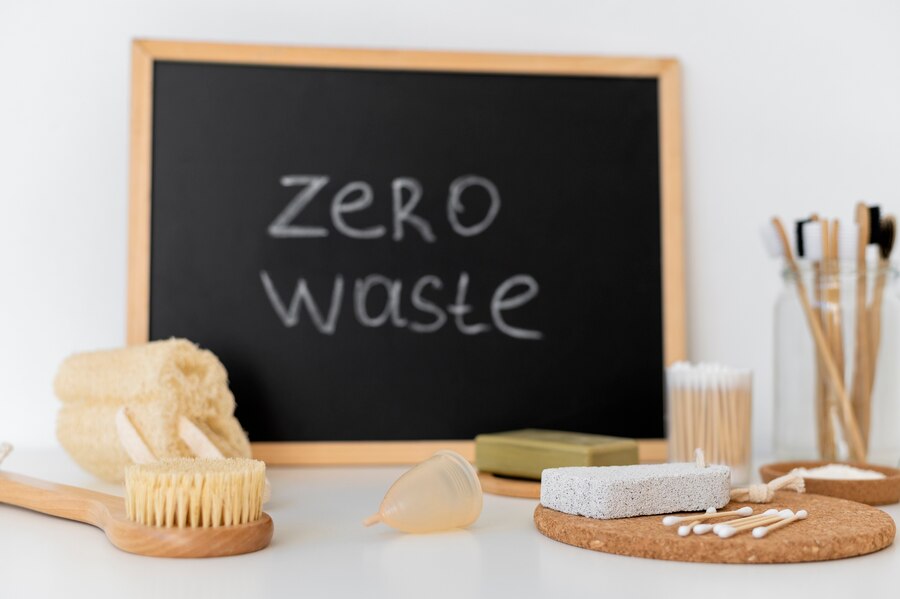
Adopting a zero-waste lifestyle can significantly influence the environment’s health.
Some benefits include:
🌿 Reduced pollution: Discarding less waste reduces the amount of litter that ends up polluting the environment – whether it’s land, sea, or air.
🌿 Saved resources: By reducing, reusing, and recycling, you lower demand for new products. Consequently, fewer natural resources are used for production and packaging.
🌿 Economic gains: With conscious purchasing decisions and practicing waste control at home, people can save a considerable amount of money.
🌿 Lasting change: A zero-waste lifestyle can be useful for both individuals and communities. It helps create and sustain a culture that respects resources and values conservation.
Individuals actively embarking on a zero-waste journey can drive a paradigm shift in this realm by sending a clear signal to industries about their sustainability responsibilities, thereby encouraging corporations to take bold steps and embrace greener choices.
Legislative Measures For Waste Management:
Legislation plays a crucial role in shaping waste management systems. Governments across the globe are acknowledging the severity of the waste crisis and enacting laws to mitigate its negative implications.
In the U.S., regulations such as the Resource Conservation and Recovery Act (RCRA) establish a framework for managing hazardous and non-hazardous waste.
It emphasizes waste prevention and the conservation of energy and natural resources.
The European Union (EU) implemented the Landfill Directive, which sets stringent rules for landfill management to prevent or reduce harmful effects on water, air, soil, flora and fauna, and human health.
Another remarkable regulation is the Waste Electrical and Electronic Equipment Directive (WEEE), steering e-waste away from landfills towards recycling centers.
The EU Waste Framework Directive has even set an ambitious target: by 2030, at least 70% of municipal waste should be either reused or recycled.
A focus on strict regulatory frameworks is undoubtedly required to advance optimal waste management globally.
Related: What is A Waste Management Consultant?
Challenges In Implementing Waste Management:
Despite promising efforts and methods, several challenges impede the full-scale implementation of sustainable waste management systems.
The foremost challenge is building efficient infrastructures that support the reduction, recycling, and responsible disposal of waste.
Lack of public awareness about the gravity of waste issues, proper disposal methods through services like Same Day Rubbish Removal, and the benefits of reduced consumption also hinder success.
Moreover, financial constraints often lead to trade-offs between ecological concerns and economic viability.
In developing countries, uncontrolled dumps are prevalent due to weak regulations and management systems.
The improper disposal of hazardous wastes poses significant environmental and health threats to these regions.
Lastly, fast-paced lifestyles foster a throwaway culture in which convenience is prioritized over sustainable action.
Changing consumer behavior is a real challenge that requires concerted effort and a complete overhaul of education.
Future Directions In Sustainable Waste Management:
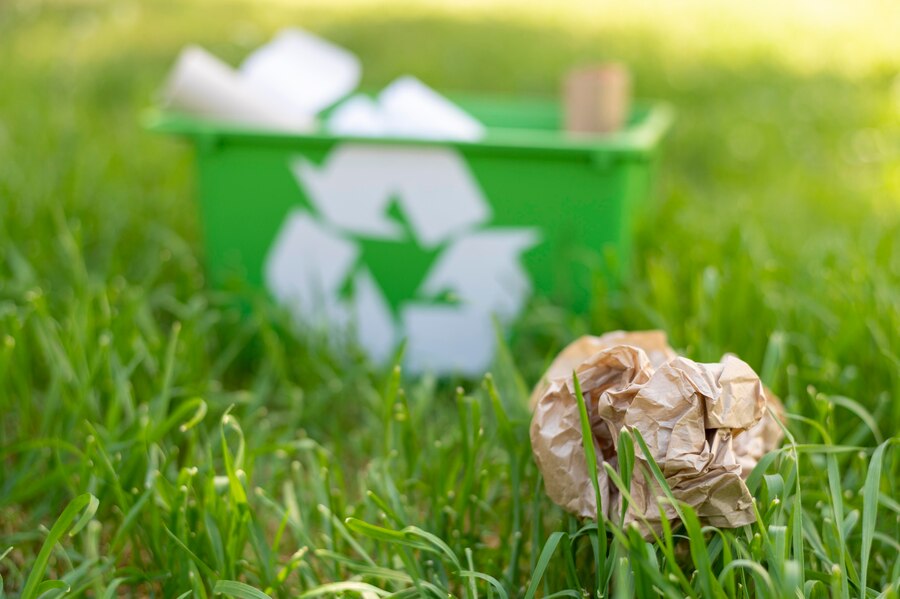
As the waste crisis intensifies, people will have an opportunity to reshape waste-handling practices toward more sustainable ones.
Future directions in waste management should focus on moving up the waste hierarchy – favoring prevention and minimizing disposal.
Emphasizing circular economy principles like designing out waste, keeping products and materials in use, and regenerating natural systems can revolutionize current management systems.
Pairing these principles with state-of-the-art technology could increase recycling rates, reduce landfilling, and provide sustainable energy sources.
Moreover, legislative bodies should commit to stringent regulations and provide incentives for businesses moving towards sustainable practices.
Enterprises should disclose their waste footprint – a transparency that might lead to less waste production.
Find Out About Effective Waste Management Strategies For Sustainable Living:
It is indispensable to address people’s existing attitudes towards waste generation.
Rethinking traditional methods and introducing advancements towards sustainability is a call to action for everyone.
As major stakeholders of this world, it is your duty to learn and implement optimal strategies for managing waste.
In doing so, you move towards a sustainable existence on Earth.
Read Also:
- Five Ways To Achieve Zero-Waste Business Operations
- Proven Manufacturing Strategies: How To Minimize Production Waste
- How To Find A Good And Efficient Rubbish Removal And Disposal Company




Related Articles


Comments Are Closed For This Article