







Blueflamepublishingblog.com: Helpful Blog Or SEO Trap? Learn Here!
31 August 2026
6 Mins Read

- The Big Illusion vs. The Reality
- Classic Red Flags Of An SEO Content Farm
- 1. The "Everything Bagel" Content Strategy
- 2. Promoting Other Post Networks
- 3. Missing Professional Identity
- Understanding Google's Standards: E-E-A-T And Helpful Content
- The Danger Of Automated Health Advice
- The "Helpful Content" Deficit
- Should You Trust Or Use This Site?
- Scenario A: You Are A Reader Looking For Genuine Advice
- Scenario B: You Are An SEO Professional Or Business Looking For Backlinks
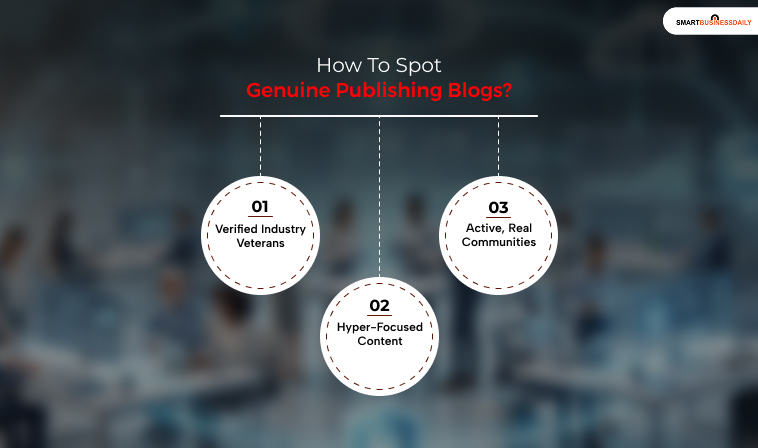
- How To Spot Genuine Publishing Blogs?
- 1. Verified Industry Veterans
- 2. Hyper-Focused Content
- 3. Active, Real Communities
If you spend any time browsing online spaces for writers, you have probably run across a site called blueflamepublishingblog.com.
At first glance, it might sound like a perfect place for creators. The online descriptions or promotional articles paint a beautiful picture.
They tell you it is a dedicated platform where you can:
- Learn about book publishing,
- Pick up creative writing tips,
- Find digital content strategies to grow your audience.
However, a completely different reality stares back at you if you actually open the homepage and look past the shiny tagline.
You might look for a masterclass of dialogue or maybe guides on how to pitch literary agents. However, you might end up spotting a chaotic mix of articles.
You will see posts about lowering cholesterol, backpacking through India, managing obsessive-compulsive disorder (OCD), and taking wine tours in Bordeaux.
So, what is actually going on here? Why is there such a massive disconnect between what this website claims to be and what it actually publishes?
Let us take a deeper look at the website. As it turns out, this site is a textbook example of a modern Search Engine Optimisation (SEO) phenomenon: the Private Blog Network (PBN) or “link farm.”
The Big Illusion vs. The Reality
When a website states its mission is to support authors, humans naturally expect to read content tailored to that niche.
Meanwhile, search engines expect a site to have a clear topical focus.
Let us look at how blueflamepublishingblog.com presents itself versus what it actually delivers:
- The Claim: A thriving community sharing easy and informative articles on publishing, writing tips, and creative growth for authors.
- The Reality: A digital billboard publishing random, generic content on health, travel, finance, and technology.
This happens because the website is not built for human readers who want to learn how to write a novel.
Instead, it is designed to attract search engine traffic across dozens of different industries.
The site can sell “guest posts” or backlinks to businesses looking to artificially inflate their own search rankings by ranking random search terms.
Classic Red Flags Of An SEO Content Farm
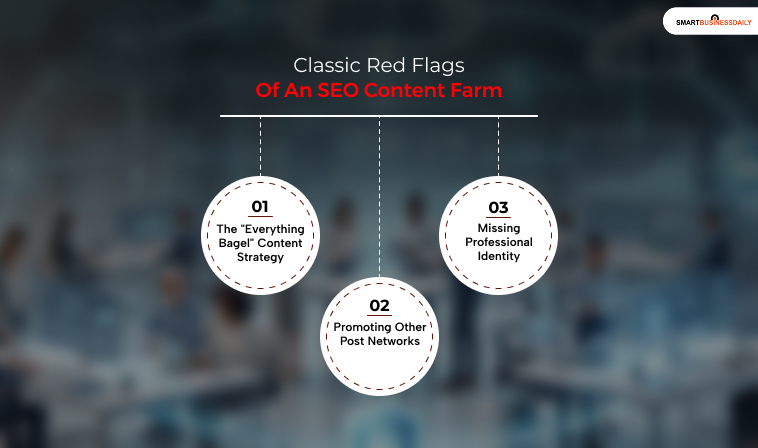
To the untrained eye, a blog is just a blog. However, if you know what to look for, content farms leave a massive paper trail. Let us break down the specific red flags that prove blueflamepublishingblog.com is prioritizing search algorithms over real human beings.
1. The “Everything Bagel” Content Strategy
An authentic blog grows by building authority in a specific niche. A food blog talks about food. A tech blog reviews gadgets.
On the other hand, a link farm publishes everything. On this single domain, you can find a guide on human anatomy right next to budget backpacking tips for India.
No editorial vision connects these pieces. The only common denominator is that someone, somewhere, wanted a link back to their website using those specific topics.
2. Promoting Other Post Networks
If you look closely at the site’s recent content, you will find detailed guides promoting platforms like “Wallpostmedia.”
These platforms are openly known in the digital marketing world as marketplaces for buying and selling blog placements.
When a blog heavily features content about how to use these automated posting tools, it is a clear sign that the blog itself is part of that very same network.
3. Missing Professional Identity
Trustworthy digital publishers proudly display who they are. They feature author bios, links to legitimate editorial teams, and professional email addresses.
Consequently, when you look at the contact details for this site, you do not find a professional corporate domain.
Instead, you find a generic, personal Gmail address (emeliehyde@gmail.com).
This lack of transparency is incredibly common among low-cost PBNs managed by anonymous network operators.
Understanding Google’s Standards: E-E-A-T And Helpful Content
To understand why this matters, we need to talk about how modern search engines evaluate websites.
Google uses a strict framework known as E-E-A-T which means Experience, Expertise, Authoritativeness, and Trustworthiness.
Furthermore, Google enforces YMYL (Your Money or Your Life) standards. This means that if a website provides advice on topics that can drastically impact a person’s health, financial stability, or physical safety, Google holds that site to an incredibly high standard of truth and accuracy.
Let us look at how a content farm risks violating these principles:
The Danger Of Automated Health Advice
The site features articles on deeply sensitive medical topics, such as “How to Get Rid of Intrusive Thoughts in OCD Without Medication” and “Vitamin D Deficiency: Early Signs and Symptoms.”
When an anonymous blog with no medical review board gives psychiatric or physiological advice, it creates a massive trust issue.
Real people seeking medical relief might follow unverified advice written by an outsourced writer or an AI tool.
This directly violates Google’s core mission to protect users from unauthoritative YMYL content.
The “Helpful Content” Deficit
Google’s Helpful Content System looks for one primary thing: visitor satisfaction.
Let’s say a user clicks on a link, reads the article, and immediately has to go back to the search results to find a better answer. This means the content has failed.
Sites like these often scrape existing information from the web and rephrase it into short, punchy paragraphs.
It looks like an article. However, it adds zero new value, unique data, or first-hand experience to the conversation.
Should You Trust Or Use This Site?
The answer depends entirely on what you are looking to get out of it. Let us break down the two most common scenarios.
Scenario A: You Are A Reader Looking For Genuine Advice
You can look elsewhere if you have stumbled upon this site looking for deep, insightful informations may be:
- How to publish a book
- How to treat a health condition.
The articles are surface-level overviews designed to hold keywords rather than offer deep insights.
You will get far better information from established, dedicated industry publications, because the content is manufactured to hit search metrics rather than help human beings.
Scenario B: You Are An SEO Professional Or Business Looking For Backlinks
You need to weigh the risks carefully if you are a digital marketer looking to buy a guest post on blueflamepublishingblog.com to boost your site’s SEO.
In the past, buying links on random blogs with decent domain stats worked beautifully.
However, search engine algorithms have become incredibly smart.
Modern updates are designed to specifically identify and devalue sites that display “site reputation abuse” or act as obvious link networks.
While a link here might give you a brief, temporary bump in rankings, it carries a long-term risk.
Google flags the network. All the black-hat or grey-hat authority you bought could vanish overnight, or worse, drag your main website down with it.
How To Spot Genuine Publishing Blogs?
If you are a writer who genuinely wants to learn about the publishing industry, do not let content farms discourage you.
Amazing, high-authority spaces are run by real human experts who care deeply about the craft.
When searching for real publishing resources, look for these three pillars of authenticity:
1. Verified Industry Veterans
True publishing blogs are run by literary agents, established authors, or veteran editors. You may also find some new authors who have just entered the market.
You can easily find their professional portfolios and histories online.
2. Hyper-Focused Content
A real publishing blog stays in its lane. It will talk about manuscript formatting, self-publishing platforms, book marketing, and cover design.
Moreover, it will never randomly pivot to a tutorial on lowering blood pressure.
3. Active, Real Communities
You can check the comment sections and social media channels.
Authentic blogs have active discussions, real questions from authors, and thoughtful responses from the creators.
Content farms usually have completely dead comment sections or are filled with automated spam links.



Related Articles