








How To Create An Impactful Online Identity With Powerful Web Design?
6 Mins Read
Published on: 25 April 2025
Last Updated on: 04 September 2026

- Essential Elements Of Effective Web Design
- 1. Layout:
- 2. Color Schemes:
- 3. Typography:
- 4. Imagery:
- Why User Experience Matters In Web Design?
- How Accessibility Improves Web Design
- Using Multimedia Without Overloading The Page:
- Web Design Trends Worth Watching:
- 1. Minimalist Design:
- 2. Dark Mode:
- 3. Immersive Visuals:
- 4. Personalized Experiences:
- 4 Brands That Use Design Effectively:
- 1. Apple
- 2. Starbucks
- 3. Disney
- 4. Google
- How To Build A Stronger Web Design Strategy?
- Creating An Online Identity That Lasts:
Your website is often one of the first places people encounter your brand. Before they read your copy or contact your business, they form an impression from what they see and how easily they can navigate the page.
That makes web design about more than choosing attractive colors or adding a recognizable logo. A strong website combines visual design, usability, accessibility, responsive layouts, and consistent branding to create a better experience for visitors.
The right design can also make a brand easier to recognize and help users find the information they need without unnecessary friction.
Whether you’re building a new website or improving an existing one, understanding the core principles of effective web design can help you create a stronger digital presence.
Essential Elements Of Effective Web Design
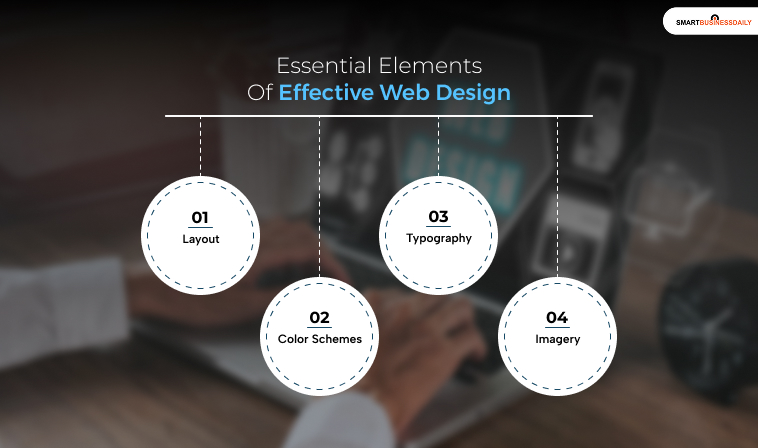
A successful website brings several design elements together rather than relying on one visual feature.
1. Layout:
Layout determines how information is arranged on a page. A clear structure helps visitors understand what they are looking at and where they should go next.
For example, a product page might place the product image, description, pricing, and call to action in a logical sequence. A service page may use headings, supporting information, testimonials, and contact options to guide visitors toward an enquiry.
A well-planned layout also provides the foundation for responsive design. Content should remain usable whether someone visits the website from a phone, tablet, laptop, or desktop computer.
2. Color Schemes:
Color influences how people perceive a brand and can help establish visual consistency across its digital presence.
A carefully selected color palette can highlight important elements, distinguish different sections, and support readability. It should also complement the brand’s personality rather than simply follow the latest design trend.
Think about brands such as Cadbury and Airbnb. Their distinctive use of color contributes to their visual identities and makes their marketing materials easier to recognize.
However, color choices should always account for accessibility. Text needs sufficient contrast against its background so that users can read it comfortably.
3. Typography:
Typography affects both readability and brand identity.
The fonts used on a website should be easy to read across different screen sizes. Font size, spacing, line height, and the contrast between headings and body text all influence how easily visitors can scan a page.
Typography should also reflect the character of the brand. A financial institution, children’s brand, and creative agency may require very different visual approaches.
4. Imagery:
Images can communicate information quickly and make pages more engaging. Product photography, illustrations, diagrams, and other visual elements can also break up long sections of text.
However, more images do not automatically create better design.
Large or poorly optimized images can slow down a website, particularly on mobile connections. Businesses should therefore use relevant, high-quality images while keeping file sizes under control.
Why User Experience Matters In Web Design?
Good visual design means little if visitors struggle to use the website.
User experience (UX) focuses on how people interact with a website, from their first visit to completing an action such as finding information, making a purchase, or submitting a contact form.
A user-focused website should make common tasks straightforward. Navigation should be predictable, buttons should be easy to identify, and important information should not be buried beneath unnecessary design elements.
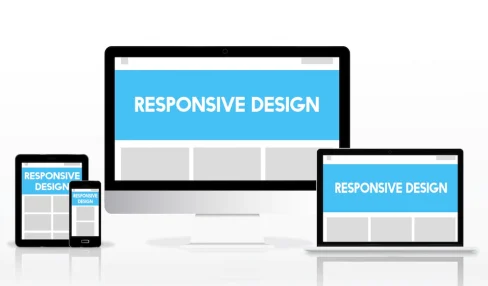
Responsive design is also essential. A website should adapt its layout and content to different screen sizes instead of forcing mobile visitors to zoom, scroll horizontally, or navigate an awkward desktop layout.
A smoother experience can make visitors more likely to explore the website and engage with the business.
How Accessibility Improves Web Design

Accessibility should be considered during the design process rather than added as an afterthought.
Websites should be usable by people with different abilities and ways of interacting with digital content.
Some practical measures include:
- Providing meaningful alternative text for informative images
- Making interactive elements accessible through a keyboard
- Maintaining sufficient color contrast
- Using clear and descriptive headings
- Providing captions or transcripts where appropriate
- Avoiding design elements that can cause accessibility problems
Following established accessibility practices can make a website easier to use for a wider audience while improving the overall experience for everyone.
Using Multimedia Without Overloading The Page:
Videos, animations, illustrations, and interactive elements can add depth to a website.
A short product demonstration, for example, may explain a feature more effectively than several paragraphs of text. An animation can also help users understand a complicated process.
The key is to use multimedia with a purpose.
Too many animations, autoplay videos, or interactive elements can distract visitors and make pages slower to load. Every visual element should contribute something to the user’s experience rather than exist simply because it looks impressive.
Web Design Trends Worth Watching:
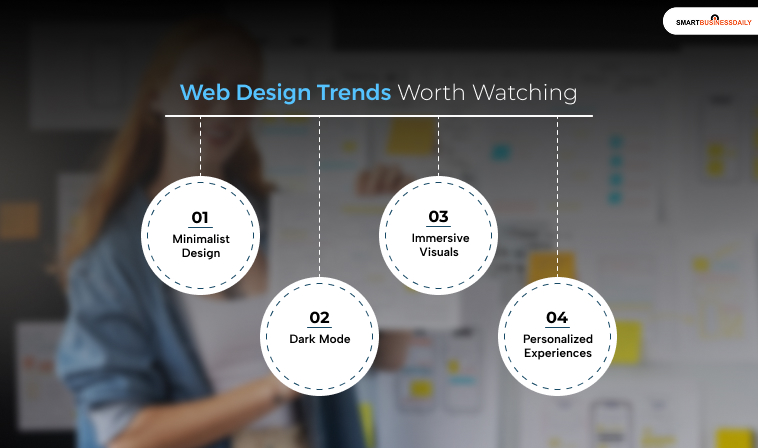
Web design continues to evolve as technology and user expectations change. However, following every new trend isn’t necessarily the right strategy for every business.
Some trends that continue to influence modern websites include:
1. Minimalist Design:
Minimalist websites use whitespace, simple layouts, limited visual elements, and clear typography to reduce distractions.
The approach can work particularly well for brands that want visitors to focus on specific products, services, or messages.
2. Dark Mode:
Dark-mode interfaces can offer an alternative viewing experience and may be particularly useful for certain applications and content-heavy websites.
However, dark mode should be implemented carefully. Text contrast, images, icons, and interactive elements still need to remain clear.
3. Immersive Visuals:
Three-dimensional graphics, animations, and interactive experiences can help brands create memorable websites.
These features work best when they support the site’s purpose. Adding complex visual effects simply to appear modern can make navigation more difficult.
4. Personalized Experiences:
Websites can increasingly adapt content and experiences based on user behavior, preferences, location, or other available signals.
Personalization can make websites more relevant, but businesses should balance convenience with transparency and responsible data practices.
4 Brands That Use Design Effectively:
Some of the world’s best-known brands demonstrate how consistency and thoughtful design can strengthen recognition.
1. Apple
Apple’s digital presence is strongly associated with simplicity. Its websites typically use generous whitespace, clear typography, large product imagery, and focused calls to action.
The design allows products to remain the visual focus while limiting unnecessary distractions.
2. Starbucks
Starbucks has built a recognizable visual identity around its logo, colors, packaging, stores, and digital experiences.
Its website and digital platforms extend that identity rather than treating web design as a separate branding exercise.
This consistency helps customers recognize the brand across different touchpoints.
3. Disney
Disney demonstrates how visual design can support storytelling.
Its recognizable typography, imagery, characters, colors, and other visual assets create an identity that audiences can recognize across websites, entertainment platforms, merchandise, and physical experiences.
The lesson for smaller businesses is not to imitate Disney’s visual style, but to create recognizable design elements that consistently reinforce their own brand.
4. Google
Google provides another example of design consistency at scale.
Its Material Design system provides guidelines and components that help create consistent digital experiences across different products and platforms.
For businesses, the broader lesson is valuable: establishing consistent design rules can make websites and digital products feel more connected and recognizable.
Also Check: Why Local Expertise Matters When Building A High-Converting Website?
How To Build A Stronger Web Design Strategy?
Effective web design starts with understanding the people who will use the website.
Before choosing fonts, colors, or animations, determine what visitors need from the site. Identify the most important actions you want them to take and structure the experience around those goals.
Then build a consistent visual system that covers typography, colors, imagery, layouts, buttons, and other recurring elements.
Test the website across different devices and browsers before launch. Pay particular attention to mobile usability, loading performance, navigation, forms, and accessibility.
Most importantly, don’t treat web design as a one-time project. User expectations, technology, and business goals change over time. Reviewing performance and making improvements regularly can keep the website useful and relevant.
Creating An Online Identity That Lasts:
A strong online identity isn’t created by adding more visual elements to a website. It comes from making deliberate choices about how a brand looks, communicates, and interacts with its audience.
Clear layouts, readable typography, thoughtful color choices, useful imagery, responsive design, and accessibility all contribute to that experience.
The strongest websites also understand that design and usability need to work together. A beautiful website that frustrates visitors will struggle to achieve its purpose.
By putting users at the center of the design process and maintaining consistency across digital touchpoints, businesses can create websites that look professional, communicate their identity clearly, and make it easier for visitors to engage with them.




Related Articles


Comments Are Closed For This Article