








How Much Does It Cost To Start An LLC? This Blog Explains The Steps In Detail. Give It A Read!
7 Mins Read
Published on: 02 February 2026
Last Updated on: 08 July 2026

- How Much Does It Cost To Start An LLC?
- 1. LLC Filing Fees
- 2. State Filing Fees
- 3. Publication Requirement Fees
- 4. LLC Business Licenses and Permits
- What Are All The Unavoidable Ongoing LLC Costs?
- 1. Business License Renewal Fees
- 2. Annual Reports
- 3. Franchise Tax
- How Much Does It Cost To Form An LLC: Calculating The Additional LLC Optional Fees?
- 1. Registered Agent
- 2. Operating Agreements
- 3. Applying For An Ein
- 4. Reserving Your LLC Name
- 5. Applying For A Fictitious Business Name Application (Dba)
- How Much Does It Cost To Start An LLC? Now You Know!!
Once you decide on a business idea, one of the first steps is to form a limited liability corporation (LLC).
An LLC protects you from personal liability in case of lawsuits against your business. Also, it allows you the freedom to be an entrepreneur.
In the U.S., the costs to set up an LLC vary by state due to different:
- Filing Fees
- Laws
- Licensing Costs
The costs can be significantly reduced if you choose to start a business in Costa Rica, for example.
The average cost is around $1,000.
Common costs for starting an LLC include the LLC filing fee, any required additions to meet state laws, and additional services that can help your business run smoothly.
Expanding into Germany requires a more structured corporate setup, and many entrepreneurs choose a GmbH due to its strong legal protection and credibility in the European market. Those exploring opening a GMBH in Germany should be aware of the documentation, capital requirements, and regulatory steps involved in the incorporation process.
We recommend working with lawyers in Germany, as Professional Services can help ensure the GmbH formation is handled correctly and in full compliance with German corporate law.
To understand what you might pay, let’s take a closer look at these costs.
How Much Does It Cost To Start An LLC?
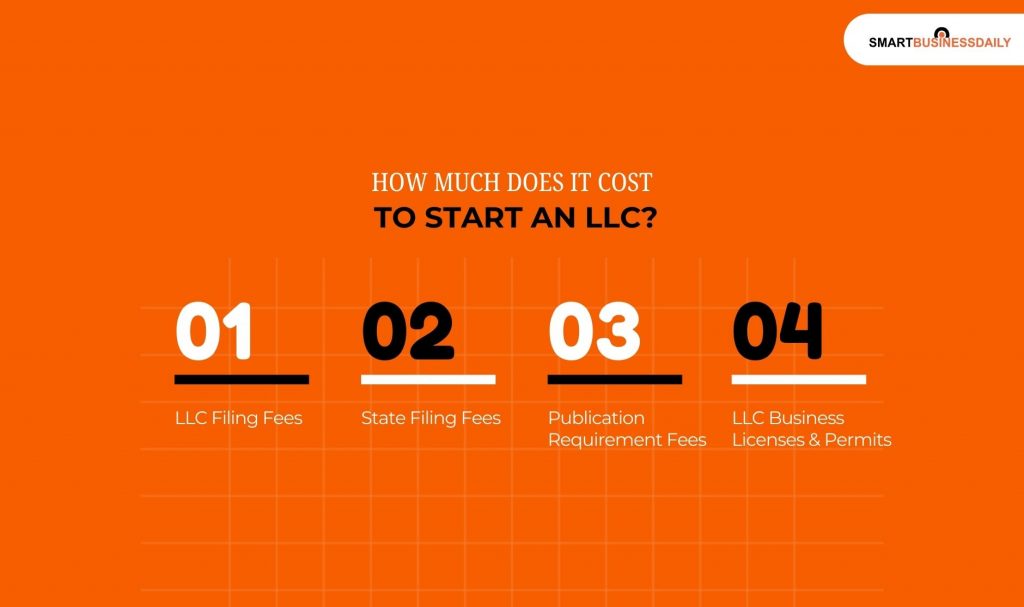
This is a very common query. So, let’s put an end to this confusion once and for all.
Here are the costs to start an LLC. Let’s check these out:
1. LLC Filing Fees
To set up an LLC, you need to register it as a legal business by filing Articles of Organization with your state’s Secretary of State. Sometimes, these are called:
- Articles of Formation
- Certificate of Organization
- Certificate of Formation
Regardless of the name, they all serve the same purpose: to legally create your LLC.
The Articles of Organization are a one-time document, and your state charges a fee to form your business as a legal entity.
You can usually download this form for free from your Secretary of State’s website.
In addition to the article filing fee, there is often a processing fee, which varies by state. Check the specific fees for your state in the table provided.
If you want to set up a foreign LLC (operating in a state where you don’t live), the filing fees are usually higher. We list these fees on each state’s LLC cost page.
2. State Filing Fees
Filing fees range from $35 in Montana to $520 in Massachusetts (this includes a $500 state fee and a $20 expedited processing fee).
Most states allow you to pay these fees online, by mail, or in person, but Maine is the only state without online filing.
Formation times also differ by state, and you might need to pay extra for expedited processing if you’re in a hurry.
In some states, you must have a notary witness and sign your Articles of Organization before you submit them.
Notary fees can range from $2 to $16 per signature. States like Arizona, Nevada, and Texas may require notarization.
Before you file, make sure your chosen LLC name is available. If it isn’t, your state may reject your application, and filing fees are usually nonrefundable.
3. Publication Requirement Fees
If your state requires it, you must publish your LLC’s formation in a local newspaper for three consecutive weeks.
States that have this requirement include Arizona, Nebraska, and New York.
The publication costs can range from $300 to $4,500, based on where your LLC is located and local newspaper advertising rates.
4. LLC Business Licenses and Permits
Most businesses need licenses and permits to operate in the U.S., regardless of what they sell.
The requirements for licenses and permits depend on two factors:
1. Your location: Each state, county, or local government may have different rules.
2. Your industry: You may need specific permits or licenses, either at the state or federal level, for certain products or services.
Here are some common licenses you might need and their general costs:
- Sales tax ID: This is free in most states, but some charge $20.
- Business license: Costs between $20 and $500, depending on the state.
- Industry-specific licenses: Costs vary widely, from $50 to thousands.
- Certificate of occupancy: Typically around $100, but it can vary by property size and location.
- Occupational license fee: Usually ranges from $10 to $20, but can be as high as $250.
Also, keep in mind your ongoing costs while you wait to make a profit. If you don’t, you risk running out of funds, which I hope doesn’t happen to you!
What Are All The Unavoidable Ongoing LLC Costs?
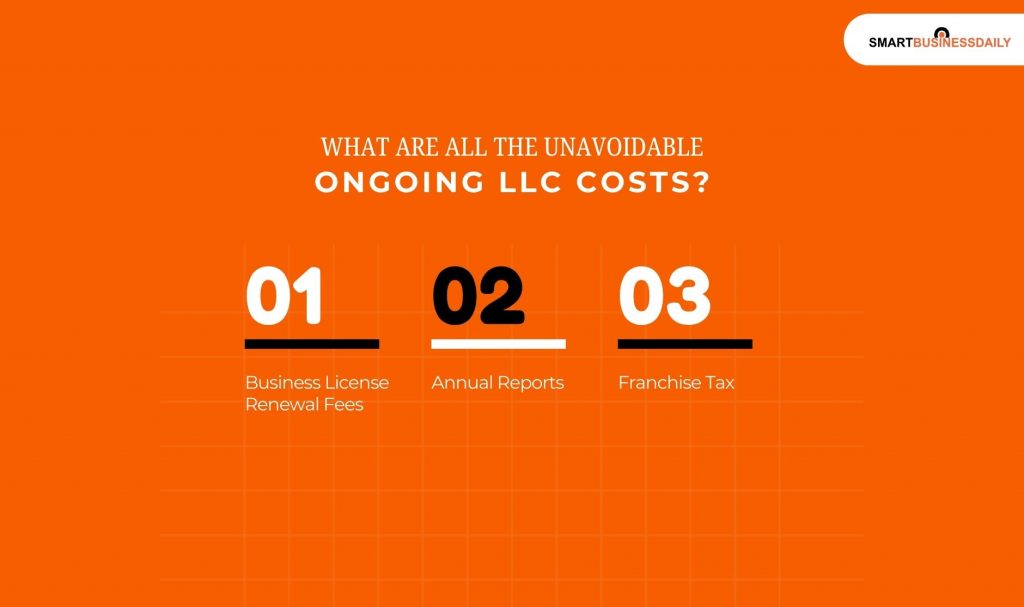
Once your LLC is set up, you need to check with your state about renewing licenses, filing reports, and paying any necessary taxes to operate.
The good news is that most ongoing costs for an LLC are reasonable.
1. Business License Renewal Fees
Most states do not require a business license to form an LLC, but you need one to operate.
A business license shows that you are approved to conduct business in your area and comply with local and state rules.
States require you to renew your local and state business license. The costs vary by state, ranging from $16 every 2 years in Colorado to $287.50 annually in Alabama.
2. Annual Reports
An annual report, also known as a Periodic Report or Statement of Information, outlines your LLC’s activities from the past year.
It provides details about current owners and managers, your registered agent’s address, and any changes since your last report.
Filing an annual report keeps your LLC compliant with state regulations and helps maintain your protection and tax status.
Most states require annual reports, while some require them every 2 years or every 10 years, and a few do not require them at all.
Some states send reminders, but if yours doesn’t, you can hire a service to file the report for you.
3. Franchise Tax
Every year, you must pay an annual LLC franchise tax, also called an annual fee, to your state.
This tax is due regardless of whether your LLC made a profit. If you don’t pay it, your state will dissolve your LLC.
Some states do not have a franchise tax, while others charge fees that range from $150 in Arkansas to $800 in California.
How Much Does It Cost To Form An LLC: Calculating The Additional LLC Optional Fees?
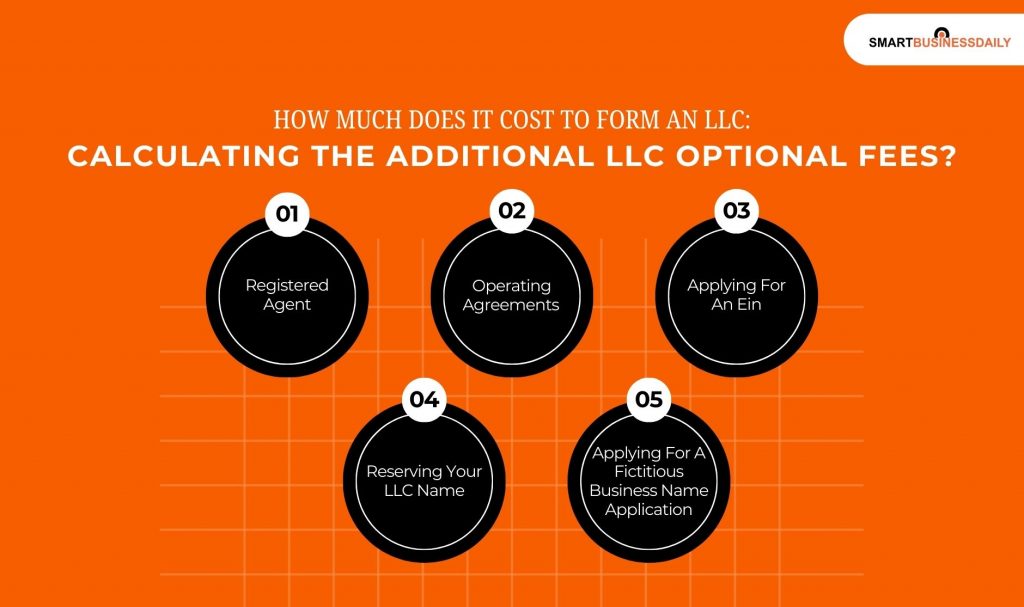
Starting an LLC can come with extra costs that you might not need, but some can help your business run better.
Here are some optional services you might consider:
1. Registered Agent
A registered agent is a person who will accept the legal documents for your LLC. Firstly, you must be at least 18 years old.
Additionally, you need to have an address in the state where your LLC is formed. Also, you must be available during regular business hours.
You don’t have to hire a registered agent service. But it can help keep your home address private, especially if you work from home or don’t have regular business hours.
If your LLC doesn’t have a physical address in your state, you must hire a registered agent. You can act as your own agent for free or hire someone for $199 to $400 per year.
2. Operating Agreements
An operating agreement is optional, and you can create one yourself for free.
However, these documents can be complicated, so you might want to get help from a professional.
A well-written operating agreement explains how your LLC will operate, covering the company structure, management roles, fund distribution, and business purpose.
Here’s why you might need one:
- Single-member LLCs: It helps you avoid being seen as a sole trader, which can protect your limited liability.
- Multimember LLCs: They can clarify roles and responsibilities and resolve any internal disputes.
Here are the four options for obtaining an operating agreement:
- Write it yourself: Free to write and file.
- Purchase a template: Buy one online for $50 to $200.
- Hire a lawyer: Costs can range from $300 for a single-member LLC to over $3,000 for multimember LLCs.
- Use an incorporation website: Pay as little as $99 for a company to write and submit it for you.
3. Applying For An Ein
To open a business bank account, apply for credit, get financing, and pay taxes, you need an Employer Identification Number (EIN).
You don’t have to pay someone to get this; you can apply for it yourself at the IRS website or through your state’s office.
4. Reserving Your LLC Name
You don’t need to reserve your LLC name before filing the articles of organization.
However, if you’ve found the perfect name but aren’t ready to start your business, you can reserve it.
This costs between $10 and $50 and can hold the name for up to 120 days.
5. Applying For A Fictitious Business Name Application (Dba)
If you don’t want to use the name you filed in your articles of organization, you can use a different name, also known as a DBA (doing business as).
This can help with branding if your LLC name isn’t ideal. The requirements for registering a DBA vary by state.
Sometimes you register with the state, and other times at the county level.
You may also need to announce your intent in a local paper. Filing fees range from $10 to $200.
How Much Does It Cost To Start An LLC? Now You Know!!
Starting an LLC can come with many fees, which might feel overwhelming. Costs can vary depending on your state and any necessary licenses for your business.
However, many small business owners believe these costs are worthwhile for the benefits an LLC provides.
Now you have the information you need to move forward with forming your LLC.




Related Articles



Comments Are Closed For This Article