






Last Mile Delivery Optimization: What Small Businesses Actually Need To Know
20 May 2026
7 Mins Read
- What Is Last Mile Delivery?
- Why The Ecommerce Boom Made This Harder?
- The Biggest Problems Small Businesses Face
- 1. Bad Route Planning
- 2. No Real-Time Visibility
- 3. Inventory Problems That Start Way Before Shipping
- Strategies That Actually Work
- Ship Smarter, Not Just Faster
- Use Carriers That Fit Your Size
- Consider A Micro Fulfillment Center
- A Numbers Breakdown: Where Costs Come From
- How Same Day Delivery Actually Works For Small Businesses?
- A Real Example Of Good Last Mile Delivery Optimization
- A Quick Comparison: Small Business Carrier Options
- How Can You Make Last Mile Delivery Easy?
My neighbor runs a small candle business out of her garage in Austin. She started selling on Etsy, then set up her own site.
For two years, everything was fine. After that, her business started growing quickly, and revenue increased rapidly. Orders jumped from 40 a week to nearly 200.
But at the same time, her nightmare started. To clarify, she was facing issues such as lost packages and angry customers.
What was worse was a handful of “delivery attempt failed” notifications with no explanation. Her products were good. At least the customer reviews said that. However, her last mile delivery was pathetic. As a result, customers were agitated on many occasions.
But that’s not the story of a single small business. For small ecommerce businesses in the US, last mile delivery optimization is the difference between growing big and slowly becoming irrelevant.
What Is Last Mile Delivery?
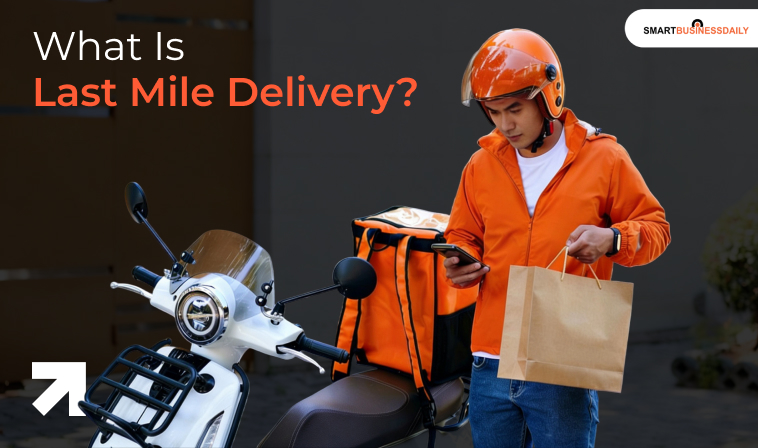
Last mile delivery is the final leg of a shipment’s journey. In simpler words, your product reaches from a hub, warehouse, or last mile sorting and distribution center to your front door.
It sounds simple, right? But it isn’t. This last leg accounts for more than 53% of total shipping costs. SmartRoutes Research confirms that.
The challenge is density. A truck delivering to a suburban neighborhood might make 80 stops in a day. Each stop increases fuel consumption, time, and labor required in the process.
Even if you miss one, it would result in a failed delivery, a re-attempt, a frustrated customer, or an incoming refund request. For a big retailer, this is painful but manageable.
However, for a small business, 2 to 3 bad weeks mean a month’s revenue is already lost. That is why last-mile delivery optimization matters most to them.
Why The Ecommerce Boom Made This Harder?
When the pandemic pushed people to shop online, ecommerce fulfillment demands exploded overnight. As a result, the carriers become more efficient at handling bulk orders. So what happened as a result?
The delivery windows, like 3 to 5 days, that once felt normal suddenly seemed outdated. At the same time, customers started demanding same day, 2 day, and delivery within minutes.
To sum up, customers started seeing how long does Amazon take to deliver as a benchmark. But that created a major problem for the small independent sellers.
To sum up, Amazon has warehouses, algorithms, and billions of dollars. However, you have a spreadsheet and two part-time employees.
So what’s needed for last mile delivery optimization when it comes to a small business?
The Biggest Problems Small Businesses Face
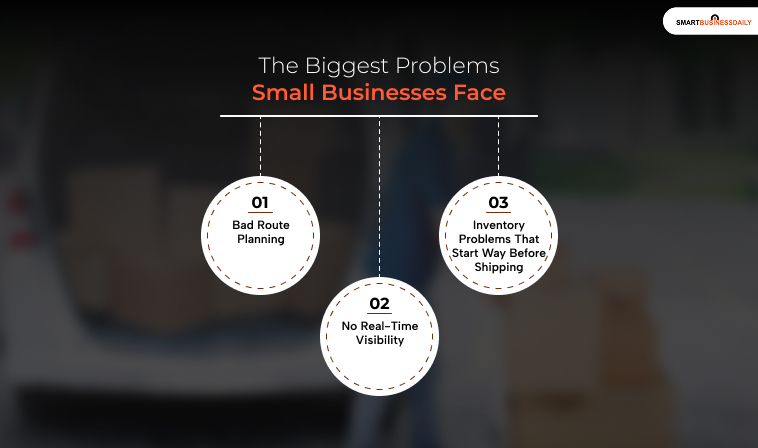
To ensure smooth last mile delivery optimization, you need to go into the depths of the main challenges at first:
1. Bad Route Planning
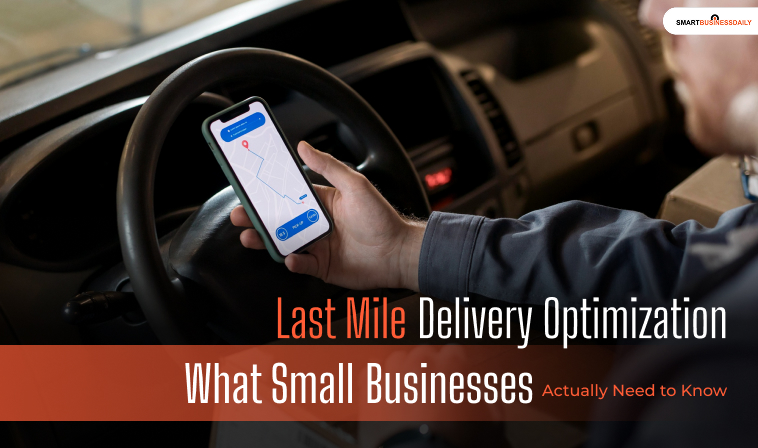
When a driver leaves a warehouse without optimized stops, they’re burning time and fuel on a route a computer could fix in seconds.
To clarify, AI route optimization tools like OptimoRoute, Circuit, or even Google Maps with multi-stop planning can cut drive time by 20–30%.
I recently talked with a florist in New Jersey. She said that after switching to AI route optimization, her driver went from 18 deliveries a day to 27.
Guess what, she did not increase her delivery hours. Meanwhile, she kept using the same delivery van, too.
2. No Real-Time Visibility
Customers expect ecommerce tracking. They want to see where their package is. Instead, they do not want to get a vague email that says “your order is on its way.”
Without real-time tracking, customers usually call the service to check the status. To address that challenge, most modern carriers, including regional ones, offer tracking APIs that integrate with Shopify and WooCommerce stores.
3. Inventory Problems That Start Way Before Shipping
Here’s something most delivery guides skip. Your last mile problem often starts in the warehouse.
Simply put, if you don’t know what you have, you can’t ship accurately. At the same time, running out of stock can reduce customers’ trust.
Whenever a customer sees an item out of stock, they switch vendors. Usually, they dont come back again soon. What’s worse is that this logic mostly applies in the case of small businesses.
As a result, the smart sellers use a safety stock formula to buffer against demand spikes. Let me help you understand that with a basic version:
Safety Stock = (Max Daily Sales × Max Lead Time) − (Average Daily Sales × Average Lead Time).
Remember that this simple formula can save more time than a few small businesses from scrambling during a holiday rush.
Another inventory principle that helps is FIFO. Simply put, it is the philosophy of first-in, first-out in the context of inventory management.
Rotating older stock to the front of your picking queue ensures there are no expired items on the shelf. In addition, you ensure your customers aren’t getting old inventory. So, this is a simple method. But it is effective also.
Another effective approach is managing backorders. But what is a backorder? In simple terms, you accept pre-bookings for your orders, even when the product is not in stock. But you ensure it’s delivered ASAP.
Again, as a small business, tell customers correctly how long they need to wait for the delivery. That’s an important part of building trust.
Strategies That Actually Work
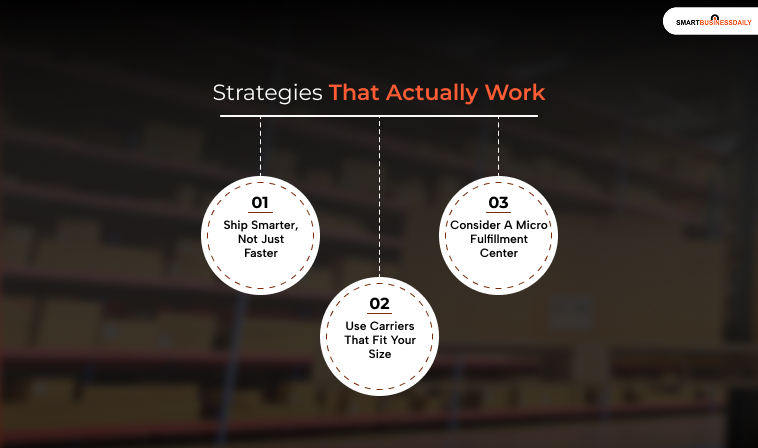
As a small business, your last-mile delivery optimization depends on several factors, not just the last mile.
Ship Smarter, Not Just Faster
Expedited shipping costs more and isn’t always necessary before you offer a default two-day air delivery for everything, audit which products actually need it and which customers actually care.
A candle about it, the buyer might be happy to wait five days. But what about someone ordering a birthday gift they forgot about? That’s where expedited shipping helps you keep customers’trust.
To sum up, your goal is matching thto matchshipping option to the right order. Not applying one rule to everything.
Use Carriers That Fit Your Size
The big three, FedEx, UPS, and USPS, aren’t always the best fit for small volumes. Regional carriers and platforms built for small sellers can offer competitive rates without minimum volume requirements.
For example, Sendle USA is a carbon-neutral carrier built specifically for small ecommerce businesses. Again, with no minimum volumes and flat-rate pricing that competes directly with USPS for parcels under 20 lbs. Worth comparing before you default to the familiar.
Here, let me answer a common question small business owners ask when bootstrapping their shipping: Can you buy Stamps at UPS? The answer is yes.
UPS Store locations sell USPS stamps, which matters if you’re mixing carriers or handling some orders manually.
Consider A Micro Fulfillment Center
A micro fulfillment center is a small, automated or semi-automated warehouse. But the best part is that it is located close to urban customers.
Rather than shipping everything from one central warehouse, you keep smaller stock in multiple locations. As a result, your delivery time drops. At the same time, the cost per delivery also drops.
This isn’t just for Amazon. Third-party logistics providers (3PLs) now offer micro fulfillment arrangements that small businesses can tap into for a monthly fee.
However, the best part is that no warehouse ownership is required. Companies like ShipBob and Deliverr have built their entire model around this.
A Numbers Breakdown: Where Costs Come From
| Last Mile Cost Factor | Estimated Share of Delivery Cost |
| Driver labor | 40–50% |
| Fuel & vehicle | 20–25% |
| Failed deliveries / re-attempts | 10–15% |
| Technology & tracking overhead | 5–10% |
| Packaging & handling | 5–8% |
Source: Estimates based on industry benchmarks from Capgemini and McKinsey logistics research.
Failed deliveries can damage your reputation and result in losses. Each re-attempt can cost $10–$15 per package.
How Same Day Delivery Actually Works For Small Businesses?
People often wonder how does same day delivery works. To Clworksy, what’s the last mile delivery optimization formula that works best for the same day delivery?
You know, big players like Amazon have a massive infrastructure that lets them manage everything. But how do small businesses ensure last mile delivery optimization and achieve same day delivery successfully? Note that they often don’t have their own fleet and drivers, too.
The short answer is that you simply outsource it. Platforms like DoorDash Drive, Instacart for retail, and Shipt now offer on-demand delivery APIs for small businesses.
Again, you pay per delivery. The driver picks up from your location and drops off on the same day. In other words, there’s no fleet, no logistics manager, and no investment in infrastructure.
The catch is that it only works if you’re physically close to your customers. Which is exactly why micro fulfillment works for your small business.
But how does the micro fulfillment centers work? They help in getting your inventory closer to population centers. As a result, you can directly enable same-day delivery at a small-business scale.
A Real Example Of Good Last Mile Delivery Optimization

Grove Collaborative, before it grew into a major brand, ran a tight direct-to-consumer model. The business was known for shipping cleaning and personal care products.
Their early competitive edge was delivery predictability and customer communication. However, they did not focus on the fastest shipping.
Instead, the business built the most reliable tracking and the cleanest messaging when something went wrong. At the same time, they turned ecommerce fulfillment into a trust signal, not just a logistics function.
Small businesses can do the same. You don’t need to be the fastest. You need to be consistent, transparent, and easy to deal with when things go wrong.
A Quick Comparison: Small Business Carrier Options
| Carrier / Platform | Best For | Key Benefit |
| USPS Priority Mail | Packages under 5 lbs, residential | Nationwide reach, affordable |
| Sendle USA | eCommerce parcels, small sellers | No minimums, carbon-neutral |
| UPS Ground | Heavier packages, commercial | Reliability, broad network |
| DoorDash Drive | Local same-day delivery | Fast setup, no fleet needed |
| ShipBob (3PL) | Growing DTC brands | Micro fulfillment network |
How Can You Make Last Mile Delivery Easy?
Last mile delivery optimization isn’t about buying the most expensive software or chasing same-day delivery for every order.
For small businesses, it’s about cutting waste. For example, you need to fix the bad routes, unnecessary re-attempts, and bloated inventory. Also, stop picking the wrong carrier for the wrong package.
Fix the basics first. Audit your failed delivery rate. Look at your route efficiency. Make sure your inventory practices (FIFO, safety stock, backorder clarity) aren’t creating downstream problems.
These issues will intensify the shipping problems further. Then layer in technology like AI optimization techniques. That’s it.




Related Articles

Comments Are Closed For This Article