








Delivery Attempt Failed: What It Really Costs Small Businesses (And How To Fix It)
20 May 2026
7 Mins Read
- What Does "Delivery Attempt Failed" Actually Mean?
- Why This Keeps Happening?
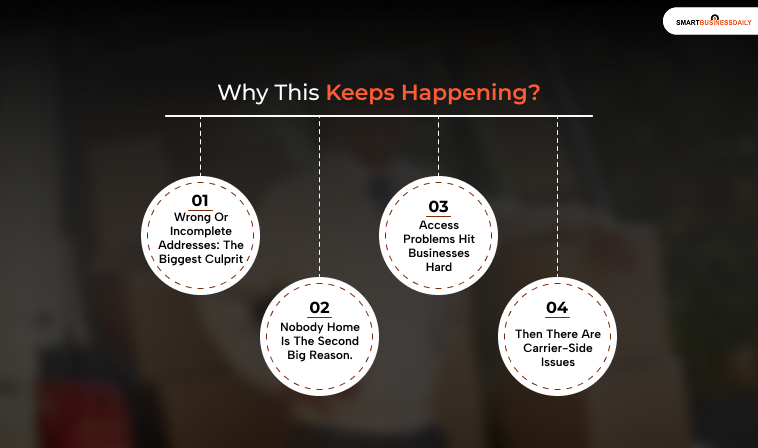
- Wrong Or Incomplete Addresses: The Biggest Culprit
- Nobody Home Is The Second Big Reason.
- Access Problems Hit Businesses Hard
- Then There Are Carrier-Side Issues:
- The Real Impact On Small Business Operations
- What Happens After The Failed Attempt?
- Best Practices To Actually Reduce Failed Attempts
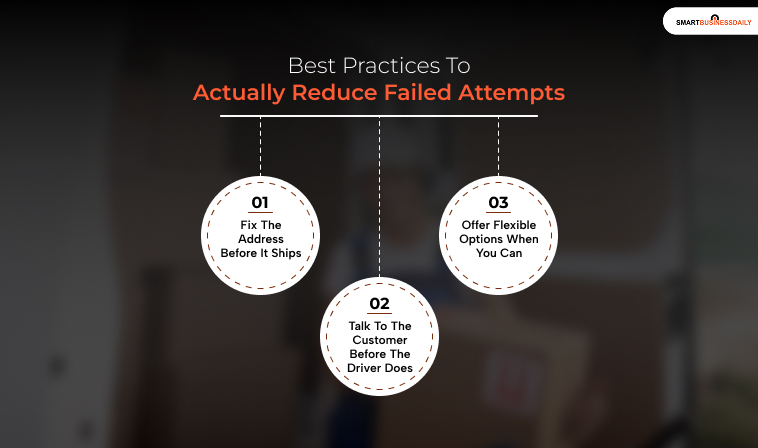
- Fix The Address Before It Ships
- Talk To The Customer Before The Driver Does
- Offer Flexible Options When You Can
- A Smarter Way To Handle The Aftermath
- Prevention VS. Recovery: A Comparison
- How Every “Delivery Attempt Failed” Message Impact Inventory Management?
- One Small Business That Got This Right
- Final Verdict
My friend Rachel runs a small candle business out of Columbus, Ohio. She ships maybe 200 orders a month.
Last November, right before the holidays, she got a spike in failed deliveries. I am talking about packages bouncing back, customers emailing her frustrated, and one leaving a 2-star review that said: “ordered as a gift, never arrived.”
She told me she lost around $400 that week, just on reshipping costs. Not to mention the time spent going back and forth with carriers.
That is the reality of what a “delivery attempt failed” notice can cost a small business. It is not just an inconvenience.
Failed delivery can result in real losses. To sum up, you will have to compromise on net profit to ensure the parcel reaches the customer at all costs.
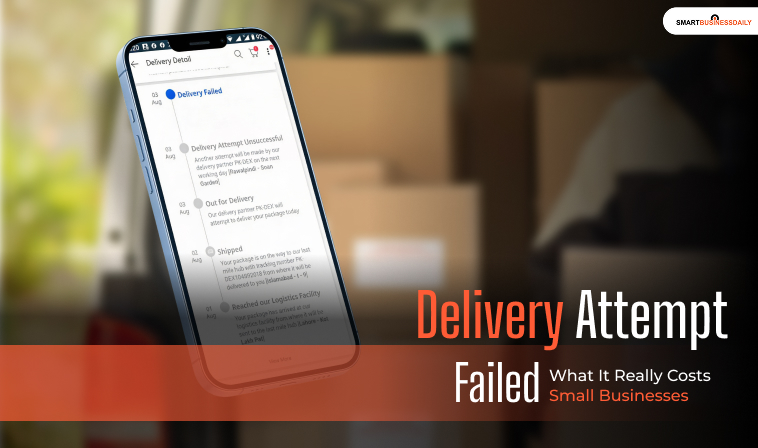
What Does “Delivery Attempt Failed” Actually Mean?
When a carrier marks a shipment as a failed attempt, it means the driver showed up but could not deliver the package. Maybe nobody was home.
Or maybe the address had a typo. Often, the apartment gate code is missing, or the business is closed. In that case, the driver leaves a notice, updates the tracking, and the package goes back to the truck.
For customers using ecommerce tracking, this status can be confusing and alarming. Most people assume their order is lost.
That panic makes them raise customer service tickets. Again, if you are running a small operation, it often means you are answering emails at 11 pm. Just to keep your customer base satisfied
Across the US, studies suggest roughly 1 in 5 first delivery attempts fail. For small businesses without the logistics muscle of Amazon or Walmart, that number can run even higher.
Why This Keeps Happening?
The causes are pretty predictable, but that does not make them easy to fix.
Wrong Or Incomplete Addresses: The Biggest Culprit
Customers rush through checkout. They forget apartment numbers, mistype zip codes, or use an old address saved in their browser.
No amount of ecommerce fulfillment optimization on the seller’s end can fix a bad address after the fact.
Nobody Home Is The Second Big Reason.
Most deliveries are attempted during the daytime. As a result, there is a high chance that people might be out for work, with the home locked.
Often, they forget they ordered something. If you offer expedited shipping and the package arrives faster than expected, the customer might not even be looking for it yet. Either ebay that means the customer is not home, and they will receive a “delivery attempt failed” notice.
Access Problems Hit Businesses Hard
The biggest problems that result in failed deliveries in the US are:
- gated communities
- apartment buildings
- Commercial addresses with limited hours.
As a result of these restrictions, the driver cannot reach the door.
Then There Are Carrier-Side Issues:
Often, vendors make route planning errors. One of the main reasons behind that remains driver shortcuts, or false attempt scans.
Maybe you sent the item. However, the last mile delivery vendor made a false delivery attempt. After all, that is not in your hands to control.
The Real Impact On Small Business Operations
Here is a quick breakdown of what a single failed delivery actually costs:
| Cost Type | Estimated Impact |
| Redelivery labor & fuel surcharge | $3–$8 per attempt |
| Customer service time (avg 15 min/case) | $5–$12, depending on your hourly rate |
| Reshipping if returned to the sender | $8–$25 depending on carrier and weight |
| Lost customer (if they chargeback or abandon) | $30–$150+ in lifetime value |
The consequences add up fast. A small shop processing 150 orders a month with a 15% failure rate has to handle as many as 22+ problem packages.
Even at the low end, that is over $200/month in pure waste. So the fix you need here isn’t magical. It is a process.
What Happens After The Failed Attempt?
Most carriers in the US, like UPS, FedEx, USPS, and regional options like Sendle USA follow a fairly standard sequence after a failed delivery. They try again, usually within 1–2 business days.
If that attempt also fails, they hold the package at a nearby facility for pickup. Typically, for 5–15 days, depending on the carrier.
After that window closes, it comes back to you as a return.
Some carriers attempt delivery up to three times. Others only try twice before holding. Knowing this matters when setting customer expectations.
A customer comparing your delivery against how long does Amazon take to deliver is used to speed and certainty.
Eventually, all independent sellers need to communicate how fast they can deliver. Even if they cannot always match the speed.
You May Also Check: When Does Amazon Stop Delivering? A Complete Guide To Amazon Delivery Hours
Best Practices To Actually Reduce Failed Attempts
If you want to reduce the number of “delivery attempt failed” notices, here are some steps that you need to take:
Fix The Address Before It Ships
Real-time address validation at checkout is the single highest-leverage fix. Tools like EasyPost, Shippo, or even built-in Shopify address validation catch obvious errors before the label prints.
This one step can significantly reduce address-related failures. Remember that good last mile delivery optimization starts before the package ever leaves your hands.
Talk To The Customer Before The Driver Does
Send a delivery notification the day before the attempt. A simple SMS or email with the tracking link, estimated window, and a note to make sure someone is available does wonders.
It sounds obvious. Most small businesses skip it because setting it up feels like too much work. But most shipping platforms use this strategy to retain customer goodwill.
Again, this is where ai route optimization tools used by carriers actually help you, too. The reason is that they can generate more accurate delivery time windows. Sharing that window with your customer closes the loop.
Offer Flexible Options When You Can
If your product and shipping setup allow it, let customers choose a delivery date at checkout.
For time-sensitive or high-value items, signature confirmation gives you proof of delivery and creates accountability on both ends.
A Smarter Way To Handle The Aftermath
Even with prevention, some deliveries will fail. What you do next is what separates businesses that recover well from those that spiral.
When a package is flagged as failed, reach out to the customer immediately. Yes, before they contact you.
After that:
- Confirm the address
- Ask if they want to reschedule
- Give them a direct option to pick up from a carrier location if that is easier for them
Most customers appreciate the proactiveness. Many of Rachel’s bad reviews, she told me, came not from the failed delivery itself but from the silence afterward.
Keep in mind that last mile sorting and distribution center facilities hold your package temporarily. Your window for redirecting or collecting is limited. So you need to act fast.
Prevention VS. Recovery: A Comparison
| Approach | Cost | Effort | Long-Term Impact |
| Address validation at checkout | Low (often free in platform) | One-time setup | Prevents 40–60% of address errors |
| Pre-delivery SMS/email notification | Low | Minimal | Reduces “not home” failures significantly |
| Signature confirmation | Moderate (carrier fee) | Per shipment | Eliminates false attempt claims |
| Immediate post-failure outreach | Labor only | Per incident | Saves customer relationships |
| Carrier retry scheduling | Free | Per incident | Recovers the majority of failed attempts |
How Every “Delivery Attempt Failed” Message Impact Inventory Management?
Failed deliveries also create a quiet inventory problem. If packages are returned to you, you need a system to process them quickly.
That’s why using the FIFO (first-in, first-out) method makes sense here. It helps restock returned goods and ensures older inventory moves out before newer stock. This step is critical if your products have shelf lives or are seasonally relevant.
High return rates can also mask stockout problems. If customers are reordering because their first delivery failed, your demand signals get distorted.
This makes it harder to manage safety stock formula calculations. At the same time, it can push you toward out-of-stock situations right when you least expect them.
One Small Business That Got This Right
A Shopify seller in Austin, a woman named Dana who sells handmade leather goods, had a failed delivery rate of around 22% in her first year. She told me most of it was due to apartment addresses without unit numbers.
Her fix was brutally simple. She added a required “Address Line 2” field at checkout with placeholder text that said, “Apartment, suite, or unit. Don’t leave blank if applicable.”
She also turned on automated pre-delivery texts through her shipping platform. Within two months, her failure rate dropped to under 8%.
She did not hire anyone. Nor did she buy expensive software. She just made two small changes and stayed on top of her tracking data.
You can also check whether the carriers you use offer alternative pickup options. In this connection, I found some highly relevant queries online, such as “Can you buy stamps at UPS?”
Let me tell you, UPS stores offer package pickup. Again, that same network can serve as a backup delivery point for customers who are never home during the day.
Final Verdict
A delivery attempt failed message is frustrating for the customer. But for the seller, it is a signal. It means something in the chain broke down. It could be the address, the timing, the communication, or the carrier.
For large companies, high delivery volume offsets losses from failed deliveries. For small businesses, it chips away at both net profit margins and customer trust.
The good news is that most of these failures are preventable. However, you don’t need the help of expensive technology. All you need are:
- Better data collection at checkout
- Clear customer communication before the driver shows up
- Faster follow-through when things go wrong
Rachel, by the way, cut her failed delivery rate by two-thirds before the following holiday season. She said the biggest change was just sending a “your package is coming tomorrow” text.
That one message, sent the night before, saved her more money than any shipping tool she had ever paid for. Sometimes the fix is that simple.




Related Articles


Comments Are Closed For This Article