





Ecommerce Fulfillment Explained: What No One Tells You Until Your First Holiday Rush
23 May 2026
7 Mins Read
- What Is Ecommerce Fulfillment?
- How The Main Fulfillment Models Work?
- Self-Fulfillment
- Dropshipping
- Fulfillment By Amazon (FBA)
- Third-Party Logistics (3PL)
- Fulfillment Method Comparison At A Glance
- What Customers Expect And Why It's Hard For Small Sellers?
- The Gap Between Customer Expectations And Small Business Reality
- Choosing Whether To In-Source Or Outsource
- A Small Business Story Worth Knowing: Grove Collaborative's Early Days
- Returns: The Part Everyone Ignores At First
- Do You Actually Need A Software?
My cousin Marcus runs a small hardware business out of Charlotte, NC. Some time back, he started selling on Etsy. After that, he moved to Shopify. By October of his second year, he had a solid following of around 400 orders a month.
Then November hit. He got 1,100 orders in three weeks. He was packing boxes until 3 am, and ran out of bubble mailer bags twice
But what’s worse, he received a delivery attempt failed notification for a $90 gift set. But why? Simply put, he wrote the wrong zip code in a rush. After that, he ended up refunding 9 people just to avoid bad reviews.
That experience taught him more about ecommerce fulfillment than any masterclass ever could. I received some really helpful personal insights and lessons from this instance. Now I know why US small business owners are getting ecommerce fulfillment wrong.
What Is Ecommerce Fulfillment?
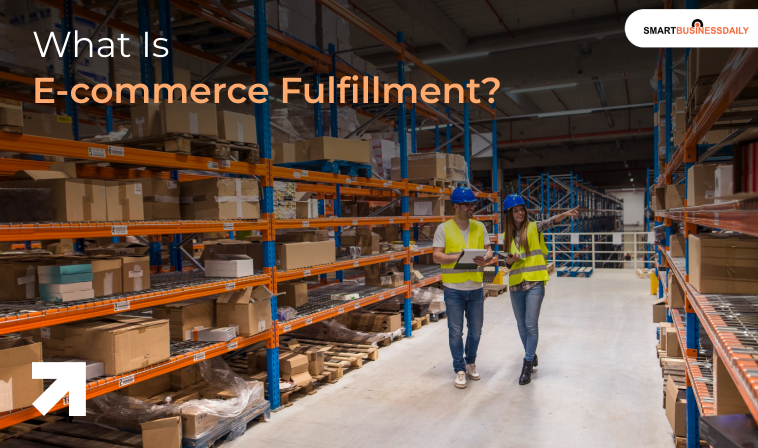
Ecommerce fulfillment is everything that happens between a customer clicking “buy” and the package landing at their door. That covers:
- storing your inventory
- processing the order
- picking the right items
- packing them
- handing them to a carrier
- handling returns if there is any dispute
Most small sellers don’t consider this system seriously. But once you cross a certain order volume, you need a proper system for ecommerce fulfillment. I’m talking about scaling around 150 to 200 orders a month.
According to a PwC consumer survey, 42% of shoppers will pay more for a fast, friendly experience. But one bad delivery is enough to lose them permanently. The bar is not low. So all small businesses should be aware of that!
How The Main Fulfillment Models Work?
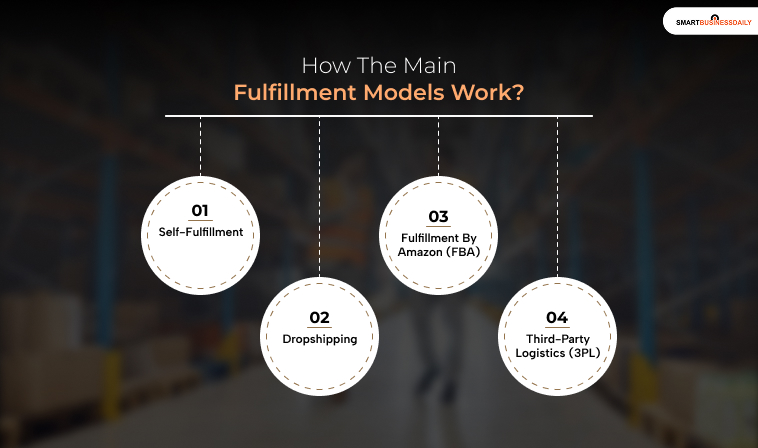
Let’s talk about the main fulfillment models that small US ecommerce brands commonly pursue. None of them is universally right, though.
Self-Fulfillment
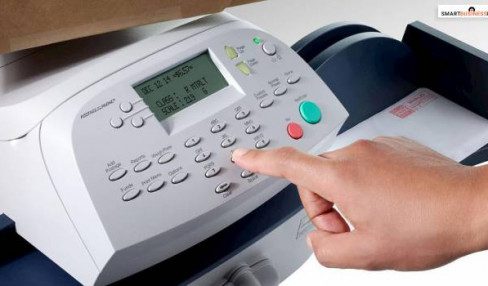
Self-fulfillment is where almost everyone starts. You pack boxes yourself, drop them at the post office or a UPS Store, and you handle everything end-to-end. And yes, you can buy stamps at UPS locations.
The upside of this approach is that you have complete control over it. On the other hand, the downside is that it doesn’t scale at all. Marcus learned this the hard way.
Dropshipping
Dropshipping removes inventory from the picture entirely. The manufacturer ships directly to your customer. It sounds appealing, but you give up quality control.
Products arrive in plain brown boxes. At the same time, the tracking is not perfect. And if the supplier messes up, you’re the one getting the 1-star review.
Fulfillment By Amazon (FBA)
Fulfillment by Amazon (FBA) is popular for its Prime badge and built-in logistics muscle.
But it’s expensive, rigid, and only works for Amazon orders. For sellers running their own Shopify store, it’s a partial solution.
Third-Party Logistics (3PL)
Third-party logistics (3PL) is where most growing small businesses eventually land. You send your inventory to a fulfillment warehouse, and they handle the rest. Sometimes, it is a micro fulfillment center if it’s a smaller, urban-focused facility.
The center handles everything, including picking, packing, shipping, and even returns. As a result, you get professional-grade logistics without having to build your own warehouse.
A friend of mine in Austin, Sarah, sells custom pet accessories. When she hit 500 orders a month, she moved to a regional 3PL.
Her shipping costs dropped because the 3PL offered carrier volume discounts. If she had negotiated with customers directly, it would have been impossible to offer such discounts.
At the same time, she now has to bear a much lighter workload. At least she does not spend her weekends packing boxes.
Fulfillment Method Comparison At A Glance
| Fulfillment Method | Best For | Avg. Cost/Order | Key Drawback |
| Self-Fulfillment | Startups / <100 orders/mo | $2–$4 | Not scalable |
| Dropshipping | Testing new products | Varies (margin cut) | Zero quality control |
| Amazon FBA | Amazon-focused sellers | $3–$6+ | Strict rules, high fees |
| 3PL Partner | Growing small brands | $3–$8 | Less hands-on control |
What Customers Expect And Why It’s Hard For Small Sellers?
Amazon has permanently reshaped what “normal” shipping looks like. We all know how long does Amazon take to deliver. But the actual problem is that we expect that every other online store would match it. That’s not fair, but it’s real.
Why do the gap exists when it comes to small US sellers? Here are some obvious reasons I found from my research.
Real-time ecommerce tracking is one. Shoppers want to see exactly where their package is.
If your fulfillment setup sends only one “shipped” email, customers will start sending inquiry emails.
Last mile delivery is the other major pressure point. Getting a package from the distribution hub to someone’s front door is where most delays happen.
It’s also where last mile delivery optimization matters most. Carriers that use AI route optimization can cut that final leg down significantly
But as a small seller using standard carriers, you’re largely at their mercy. What you can control is where your inventory is, before it ships.
This is why location matters so much. A brand shipping all orders from a single warehouse in Ohio will have very different transit times to customers in Texas or California than a brand using distributed fulfillment centers.
Simply put, the closer your stock is to your buyers, the faster and cheaper that last-mile sorting and distribution center handoff becomes.
You May Also Check: When Does Amazon Stop Delivering? A Complete Guide To Amazon Delivery Hours
The Gap Between Customer Expectations And Small Business Reality
| What Customers Expect | Reality Without Good Fulfillment | Impact on Small Business |
| 2-day or faster delivery | 3 to 7 day transit from a single location | Cart abandonment, lost repeat buyers |
| Real-time ecommerce tracking | No updates after shipping label | Support tickets spike, trust drops |
| Free or low-cost shipping | High rates from low volume | Margin squeeze on every order |
| Hassle-free returns | Manual, slow reverse logistics | Negative reviews, chargeback risk |
Choosing Whether To In-Source Or Outsource
This decision isn’t just about cost. It’s about where you invest your time and what you’re actually good at.
If you are under 200 orders a month and you like the hands-on aspect of your business, self-fulfillment is probably fine.
But ask yourself honestly: is packing boxes actually something you enjoy, or is it eating up time you could use for marketing, product development, or just sleeping?
If you’re growing fast and handling a large volume of orders every holiday and festive season, a 3PL gives you flexibility without the headaches.
To sum up, you won’t be scrambling to hire temporary packing staff every Q4.
There’s also the question of where your customers are. If 60% of your orders ship to the East Coast and your only storage is in Phoenix, you’re paying for that distance on every single order.
In other words, a good fulfillment partner places your inventory closer to where demand actually is.
For shipping alternatives outside the big carriers, some small sellers have had good experiences with regional services. Sendle USA is one option that tends to work well for small parcel volumes.
Particularly for businesses not yet meeting the minimum thresholds that qualify for better rates from FedEx or UPS.
A Small Business Story Worth Knowing: Grove Collaborative’s Early Days
Grove Collaborative, now a publicly traded company, started as a small direct-to-consumer cleaning-products subscription service out of San Francisco. In their early years, they self-fulfilled.
To clarify, founders used to pack boxes in a garage. As orders grew, they moved to a 3PL partner before building their own fulfillment infrastructure.
So what’s the main takeaway for small businesses from this example? When your order numbers are low, you can do everything hands-on. But that model is not the right solution when your orders grow exponentially.
But many small businesses make that mistake. To save costs marginally on every order, they still self-fulfill. As a result, failed deliveries increase, and the per-order shipping expense also rises.
Returns: The Part Everyone Ignores At First
Returns are expensive, annoying, and completely inevitable. Around 20% of online orders in the US get returned, according to NRF data. For apparel and accessories, that number is usually higher.
A weak return process doesn’t just cost you money on reverse logistics. It actively makes you lose customers.
Most people decide whether they’ll buy from a brand again based on how easy the return was, not just how good the product was.
If you’re on a 3PL, make sure they handle returns, not just outbound shipments. The best providers process returned items and return them to available stock. Therefore, nothing sits in limbo, making your inventory counts confusing.
Do You Actually Need A Software?
You don’t need enterprise-grade software on day one. But you need a well-connected system. Your storefront (Shopify, WooCommerce, wherever) should sync with your order management system. Again, that should feed into where your inventory actually is.
When your ecommerce fulfillment process doesn’t work, you’ve probably noticed it’s almost always a data sync problem.
For example, an order showing “processing” for three days because the warehouse never received the signal. Or a product showing “in stock” when the shelf is empty.
These aren’t logistics failures. Rather, they are the result of communication failures between systems.
If you’re handling fulfillment yourself, you need software support. Even if it is basic inventory software.
If you’re on a 3PL, make sure their platform integrates directly with your store. Therefore, you can ensure that the orders flow automatically.
Large-scale manual uploads and spreadsheet exports will definitely lead you to make handling errors someday. It happened with Marcus. It can happen to any small seller any day!




Related Articles

Comments Are Closed For This Article