








How Does Same Day Delivery Work For Small Businesses?
22 May 2026
7 Mins Read
- How Does Same Day Delivery Work?
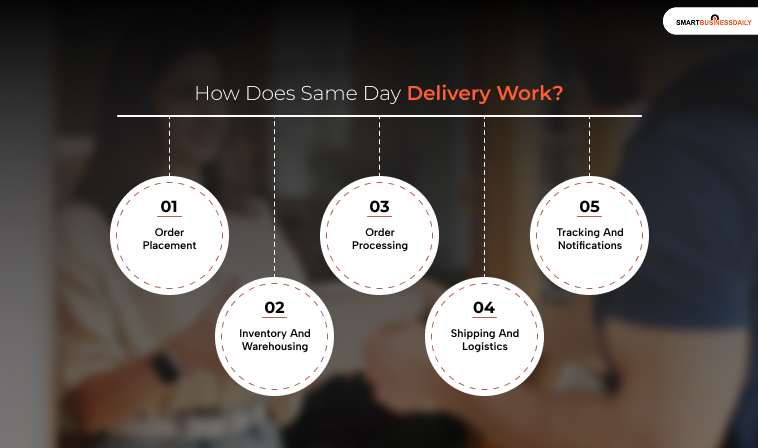
- Order Placement
- Inventory And Warehousing
- Order Processing
- Table 1: Typical Same-Day Delivery Timeline
- Shipping And Logistics
- Tracking And Notifications
- Introducing Same-Day Delivery To Your Business Model
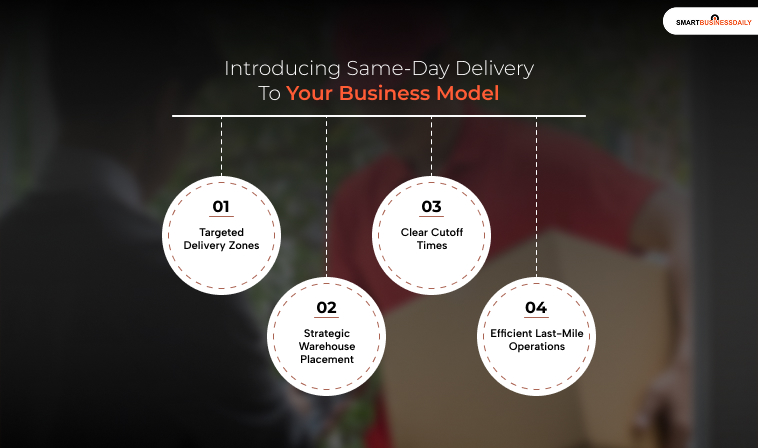
- Targeted Delivery Zones
- Strategic Warehouse Placement
- Table 2: Same-Day Delivery Options For Small Businesses
- Clear Cutoff Times
- Efficient Last-Mile Operations
- Who Can Offer Same Day Delivery?
Remember my neighbor who runs a small candle business out of her garage in Austin? I have learned a lot about how small businesses work from her.
I have seen her face many classic challenges and overcome them. Her journey has matured me as a marketer. For years, she used a regional carrier, keeping things simple.
Then, during one holiday season, a customer placed an order at 10 a.m. and called by 3 p.m. to ask about its status. She had no answer. The customer mentioned that, at first, he would pay whatever was needed to expedite logistics.
That week, she lost three repeat customers. But the problem wasn’t her candles. It was her delivery setup that cost her the customers. That’s when she accepted that same-day delivery has become an industry norm.
Again, her second thought was how does same day delivery work for small businesses? In fact, it’s a survival question for small ecommerce sellers in 2026.
How Does Same Day Delivery Work?
At its core, same day delivery is a race against the clock. A customer places an order before the cutoff time. In the US, that time is usually between 10 a.m. and noon.
After that, the item lands at their door before midnight. Sounds simple, right? For small businesses like my neighbor’s, that’s incredibly hard to pull off.
Here’s what actually happens behind the scenes.
Order Placement
The clock starts the moment someone checks out. In the same vein, all small business owners must note that most same day services set a hard cutoff.
Even if you miss it by five minutes, the order flips to the next day. But customers rarely read fine prints. As a result, you need to have clear communication at checkout as the seller.
Have you ever wondered how long does Amazon take to deliver compared to a small seller offering the same service? Simply put, the gap is massive. Again, it is the better infrastructure and proximity of big players that allows them to do so.
But small companies can also leverage the same advantage. So how does same-day delivery work for them? All they need to do is sign up with the local micro fulfillment centers.
But that’s where the trick is. You have to contract a center that’s located where most of your orders come from.
Inventory And Warehousing
This is where things get interesting. A product needs to be physically close to the buyer. That’s why large retailers have invested heavily in the micro fulfillment center model.
As I discussed before, these centers are small, hyper-local warehouses located inside or near dense urban zip codes rather than a single giant distribution hub three states away.
For small businesses, this is the hardest part. You probably can’t afford your own micro fulfillment setup. But third-party options exist, as I said.
Companies like Sendle USA have made it easier for small sellers to tap into distributed fulfillment networks without signing a five-year warehouse lease.
There is another practical note on inventory that all small business owners must know. Most businesses that do same-day deliveries use the FIFO method (first-in, first-out) method to rotate stock. That’s how does same-day delivery work for small businesses.
It keeps older inventory moving before the latest stocks move out. As a result, you can now ensure inventory optimization as a small business.
Order Processing
Once an order comes in, warehouse workers pick, pack, and label it. But you need to be really fast and agile in this part. There’s no room for delay.
This is where ecommerce fulfillment either meets success or falls apart. Bigger operations use barcode scanners and conveyor systems for fast, clinical ecommerce fulfillment.
On the other hand, a one-person shop might use a label printer and a folding table. Both can work, considering regional demands. But only if the process is tight and repeatable.
Table 1: Typical Same-Day Delivery Timeline
| Stage | Time Window | Who Handles It |
| Order placement | By 10–12 p.m. cutoff | Customer |
| Pick & pack | Within 30–60 minutes | Warehouse/seller |
| Handoff to the carrier | Within 1–2 hours | Fulfillment team |
| Last-mile transit | 2–5 hours | Delivery driver/carrier |
| Delivery confirmation | By 8–10 p.m. | Carrier |
Shipping And Logistics
After packing, the order is handed off to a carrier. This is the last mile sorting and distribution center phase. Meanwhile, this stage is often the most expensive and unpredictable leg of the whole journey.
The “last mile” is usually unpredictable, and most logistics errors happen at this stage. But what are the main problems that mark the last mile delivery of small businesses?
- Traffic.
- Apartment buildings with no buzzer access.
- Customers who aren’t home.
Last mile delivery optimization is a genuine option to save you at this point. Large carriers use AI route optimization to sequence hundreds of stops in real time, factoring in traffic, package size, and even parking availability.
For small businesses using third-party carriers, this optimization happens in the background. In simpler words, you don’t control it, but you benefit from it.
But there’s one thing that no optimization can guarantee. That is 100% successful deliveries. However, that level of optimization means you will receive fewer “delivery attempt failed” notices.
Often, someone is not at home. Or maybe the door code didn’t work. At that time, the driver had 40 stops left and ran out of time by the 36th delivery.
When this happens, clear communication with your customer becomes critical. Again, for people whom you could not reach, try sending a quick automated message:
“We tried. Here’s how to reschedule it.”
These small steps can save relationships. So, try to have a fluid communication pathway for every customer.
Tracking And Notifications
Customers want to know where their stuff is. That’s why they expect 100% real-time ecommerce tracking for every order placed.
Big players like Amazon invest in real-time updates via SMS or email, a live tracking link, and separate estimated delivery windows.
As a small business, you need to incorporate that level of professionalism in your deliveries as well. So, you must find a vendor that offers real-time tracking. But there’s another thing that you must note.
Your carrier should have an efficient customer grievance team. When there is a dispute, the customer should be able to contact the delivery team.
In this case, if there is a dispute, you will lose face. Not the carrier company. That’s why it is important to choose your carrier tactfully.
Introducing Same-Day Delivery To Your Business Model
As a small business, you can also offer same-day deliveries now. So, simply put how does same-day delivery work for them? All they need to do is follow these steps accordingly:
Targeted Delivery Zones
Don’t try to offer same day everywhere on day one. Pick your zip codes strategically. The trick is to start with the areas closest to where your inventory lives.
A small bakery in Chicago that launched same-day delivery only within a 7-mile radius grew its repeat order rate by 34% in six months, according to a case study from ShipBob.
To sum up, the business could clearly identify where the majority of deliveries came from. That’s why they offered the same day delivery there, boosting customer confidence overnight.
Strategic Warehouse Placement
This is the make-or-break factor. The closer your stock is to your customer, the more same-day delivery becomes achievable.
If you’re selling through a platform, I would recommend using a 3PL. They always have better coverage of the delivery radius.
Table 2: Same-Day Delivery Options For Small Businesses
| Option | Best For | Estimated Cost Range | Control Level |
| In-house driver | Very local, high-volume | Low per order | High |
| Local courier partner | Urban markets | $8–$15 per delivery | Medium |
| 3PL with same-day capability | Growing ecommerce brands | Varies by volume | Low–Medium |
| On-demand platforms (DoorDash Drive, etc.) | Restaurants, retail | $5–$20 per delivery | Low |
Clear Cutoff Times
Post your cutoff prominently. Preferably on your product page, at checkout. You can also flash it in your order confirmation email.
Just try to make it clear so customers don’t miss the notification. Otherwise, you will have to endure a frustrating phone call at 09:00 pm.
Efficient Last-Mile Operations
I hope you have also given serious thought to stock availability. If you’re managing inventory carefully, you’ll also need to understand concepts like the safety stock formula.
But what is that? In simpler words, it refers to how much buffer inventory you carry to handle unexpected demand spikes without running out of stock.
Again, when you run out of stock, you can still maintain customer goodwill by placing a backorder.
But what is a backorder? Instead of a canceled order, backorders let you accept an order even when the product is not in stock for you.
But you tell the customer that you are accepting a preorder for the item. Or offer a marketing gimmick that will work for that target demographic.
Meanwhile, you offer them an acceptable delivery TAT. But make sure you can fulfill the delivery within that time. Otherwise, you will definitely lose a customer here.
Who Can Offer Same Day Delivery?
Many businesses can offer same-day delivery to their customers without much hassle. If you have physical inventory and a local carrier relationship, you’re already partway there. Now you know how does same-day delivery work for small businesses also.
A florist in Denver I spoke to started offering same-day service by simply texting a local courier service and adding the cutoff time to her website.
That’s it. She had no tech stack. The best part: she made no software investment. It was just process and communication. Within 90 days, she was doing same-day on 40% of her orders.
For sellers curious about carrier options: you don’t have to use just UPS or FedEx. Many people who don’t know that ask, “Can you buy stamps at UPS, or use them for last-minute label printing?” Surely, you can do both! So, even if you don’t need these vendors now, you must be prepared for exceptional expedited shipment fulfillment to maintain goodwill.




Related Articles


Comments Are Closed For This Article