








The Real Advantages And Disadvantages Of E-Commerce: Is An Online Store Actually Worth It In 2026?
18 August 2026
9 Mins Read

- What Is Ecommerce?
- Advantages And Disadvantages Of E-Commerce: The Advantages
- 1. Saving Massive Amounts Of Money
- 2. No Limits On Time Or Space
- 3. Open Doors To The Global Market
- 4. Using Smart Data To Win Customers
- 5. Super Fast Ways To Market Your Products
- 6. Endless Room To Grow And Scale
- 7. More Ways To Talk To Your Buyers
- Advantages And Disadvantages Of E-Commerce: The Disadvantages
- 1. Privacy And Security Concerns
- 2. Sudden Downtimes And Technical Glitches
- 3. Immense Online Competition
- 4. Uncertainty About Product Quality
- 5. Tricky Shipping And Delivery Times
- 6. Complex Taxation And Legal Rules
- How To Overcome The Challenges?
- 1. Enhance Security Measures
- 2. Improve Technical Infrastructure
- 3. Personalise The Customer Experience
- 4. Optimise Logistics And Operational Efficiency
- 5. Differentiate Your Brand From Competitors
- Is It Worth Getting Into The Ecommerce Industry?
- The 3-Step Digital Readiness Check
If you have been running a physical retails shop for a while, you know your regular foot traffic like the back of your hand.
However, you might notice that the sidewalks get a bit quieter during certain hours. This is because your regulars are tapping away on their smartphones.
People love the comfort of doorstep delivery, from morning milk to evening snacks.
It is completely normal to feel a bit left behind by this sudden wave of technology.
However, instead of seeing it as a threat, you can look at it as a giant, free upgrade for your business.
In this quick guide, we will break down exactly what this digital shift means for your daily sales.
We will weigh the real-world advantages and disadvantages of e-commerce so you can easily figure out how to make the internet work for your shop.
What Is Ecommerce?
E-commerce is just a short name for electronic commerce. In simple terms, it means buying and selling things online.
So, customers view your items on a phone or laptop and pay you digitally, instead of physically walking into your shop.
Most online businesses follow these simple paths:
- Selling to Customers (B2C): Firstly, this is like a regular shop selling a shirt or a phone directly to a shopper online.
- Business-to-Business (B2B): Secondly, this occurs when a large wholesaler sells stock in bulk to local retailers via an app.
- Direct-to-Consumer (D2C): Lastly, this is when a brand makes its own goods and sells them directly to the public through its own website, skipping the middleman.
- The Hyperlocal Shift (Kirana to App): This is where everyday local businesses fit in today.
Independent neighborhood grocers can get listed on popular customer-facing apps by using decentralized open networks like India’s ONDC or simple WhatsApp catalogs.
Moreover, this allows small shops to capture local digital orders seamlessly without paying massive chunks of their revenue as commission fees to corporate delivery platforms.
Advantages And Disadvantages Of E-Commerce: The Advantages
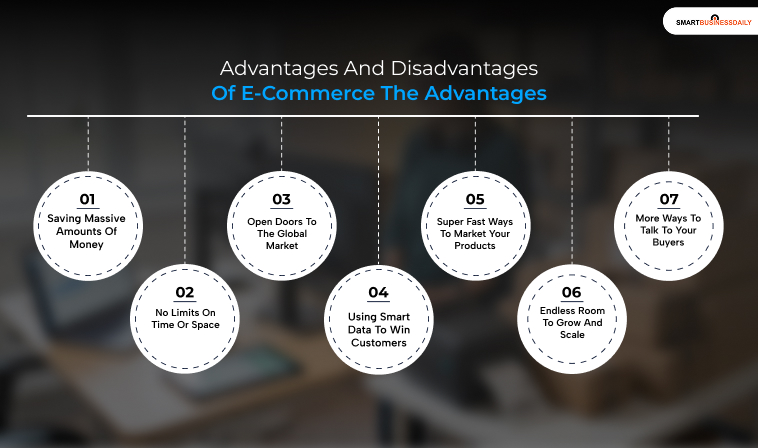
Online shopping is growing faster than ever before. In fact, back in 2020, global e-retail sales passed 4.2 trillion dollars.
Moving ahead to 2026, global ecommerce sales are now projected to soar past a staggering 7.4 trillion dollars!
But what is so attractive about this digital shift that keeps traditional retailers building online stores?
Let us dive straight into the major advantages and disadvantages of e-commerce, starting with the incredible perks of moving your business online.
1. Saving Massive Amounts Of Money
Running a physical store quickly drains your wallet with endless monthly bills.
Shifting online is highly profitable because you do not need to rent a building to sell goods.
You can completely forget about expensive commercial rent, large on-site sales teams, and high utility bills.
2. No Limits On Time Or Space
The regular rules of physics do not apply to the digital world. The number of products you want to display on your screen is unlimited.
Best of all, your website stays open 24/7. Since many consumers prefer to shop late at night, a web store lets you attract new buyers while you sleep.
3. Open Doors To The Global Market
When your store goes online, your business instantly goes global! You can meet your customers exactly where they love to spend time.
It does not matter whether that is on social media apps, Google search results, or giant marketplaces like Amazon and eBay.
More eyes on your products mean more opportunities to make a sale.
4. Using Smart Data To Win Customers
In the digital space, you do not need to guess what your buyers are thinking. You can use simple analytics tools to track their exact shopping habits.
Tracking tools like Google Analytics or Mailchimp show you exactly how a shopper moves through your store.
You can easily get clear insights into:
- Hot shopping trends and customer preferences
- Direct customer feedback and honest reviews
- Which digital ads are actually bringing in money
- Live inventory tracking to avoid running out of stock
5. Super Fast Ways To Market Your Products
Selling online gives you unmatched speed in promoting your items.
It takes just a few quick clicks to launch a rewards program, set up targeted social media ads, or blast out a new product update.
Recent retail data show that brands using an integrated multichannel strategy enjoy a purchase rate nearly 10% higher than single-channel stores.
6. Endless Room To Grow And Scale
A major advantage of digital selling is the ability to grow your business without hitting a wall.
When customer demand rises, your online store can scale up smoothly. You can quickly add new items to your digital catalog or add a wider variety of safe payment choices.
Moreover, modern cloud-based website platforms easily handle massive surges of traffic without crashing.
7. More Ways To Talk To Your Buyers
Finally, e-commerce gives you multiple sales channels to share your product’s story.
Instead of just a paper price tag on a shelf, you can use product videos, audio guides, and clever tips to show off an item.
Moreover, this captures attention quickly and builds deep customer trust.
Advantages And Disadvantages Of E-Commerce: The Disadvantages
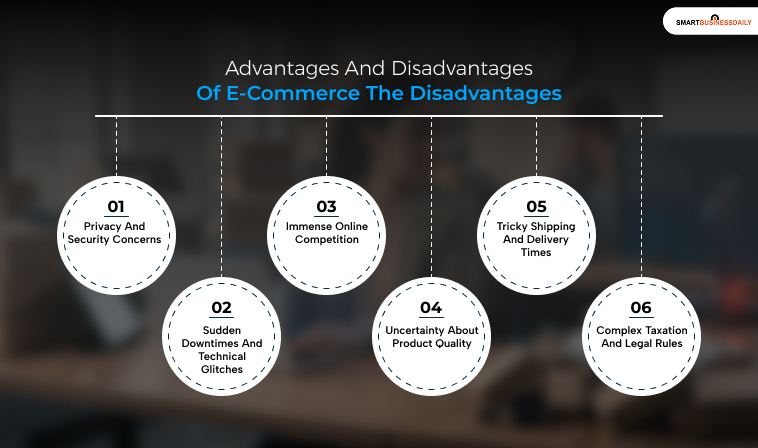
When you plan to start an online business from scratch or may be converting your physical shop can be a highly rewarding change.
However, just like the perks, it comes with a unique set of real-world challenges.
Let us look at the other side of e-commerce’s advantages and disadvantages, focusing closely on the primary hurdles you will face online through 2026.
1. Privacy And Security Concerns
Unfortunately, as the number of online shoppers hits record highs, digital crime increases as well.
Recent data indicate that reports of online identity theft, data breaches, and payment fraud continue to grow each year globally.
Thus, you need to protect customer privacy is one of the most critical challenges for any web business because of this risk:
- Data Breaches: Hackers constantly target store databases to steal credit card numbers and passwords.
- Payment Scams: Fake buyers use stolen cards, leaving you without the product and your money.
- Loss of Trust: If your site has weak safety settings, a single leak can instantly ruin the hard-earned trust of your buyers.
2. Sudden Downtimes And Technical Glitches
Moving online breaks physical limits but binds you completely to technology.
Online businesses frequently suffer from hard-to-predict errors that can instantly halt your business.
These technical setbacks generally stem from three main issues:
- System Failures: Web hosting servers crash during peak holiday traffic.
- Human Error: Small mistakes during website updates can break your checkout page completely.
- Network Outages: Payment gateways freeze up, making it impossible for customers to complete orders.
Even if a system failure lasts for just a few minutes, the downtime can cause permanent damage by stalling your sales loops and lowering your productivity.
3. Immense Online Competition
The global online market is crowded, and everyone looks for a piece of the digital pie.
Thousands of new storefronts open every day because launching a basic website is incredibly cheap.
This heavy saturation means you will have to work more hard and spend smarter on digital marketing just to stand out from the massive online crowd.
4. Uncertainty About Product Quality
Many customers still hesitate to buy online, even though digital shopping is incredibly practical.
The main reason shoppers stick to traditional physical stores is the simple inability to see, feel, or try on a product in person.
You must offer an incredibly simple, clear, and fair return policy to make them feel safe spending their money with you, since buyers cannot touch your items through a screen.
5. Tricky Shipping And Delivery Times
Ensuring your packages arrive on time is a massive logistical puzzle.
This is mostly because you have to rely heavily on third-party courier services that you cannot fully control.
Customer feedback surveys highlight three massive delivery barriers:
- Slow Shipping: 34% of consumers refuse to shop online since it takes a lot of time for delivery.
- Hidden Costs: 25% of shoppers drop out at the final page because delivery fees are too high.
- Rigid Rules: 14% of people find complicated, messy return shipping processes a total dealbreaker.
6. Complex Taxation And Legal Rules
While reaching a global audience is fantastic, it introduces major legal headaches.
When you sell across state lines or international borders, you are strictly required to keep track of varying tax structures and local laws.
For example, selling specialised items like wine or health goods requires wildly different permits along with the licenses depending on where your customer lives.
Overcoming this hurdle simply requires a bit more preparation, time, and solid accounting help.
You May Also Love To Read: Last Mile Delivery: The Final 50 Feet That Make or Break Your Business.
How To Overcome The Challenges?
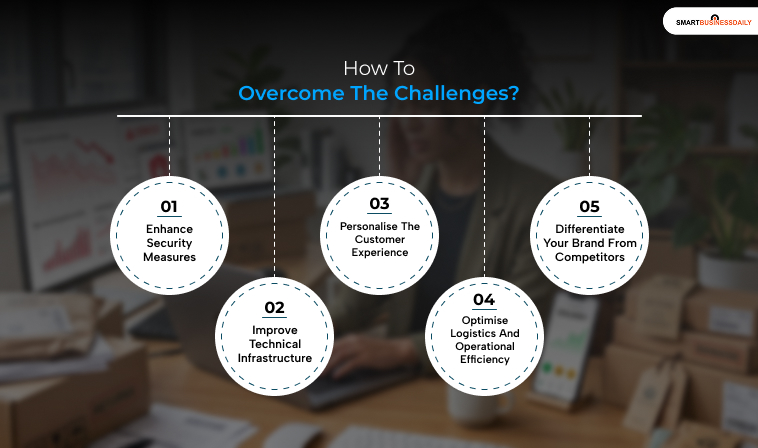
Running an online store comes with its own set of challenges, but choosing the right e-commerce platform can make things much easier.
By using a dedicated system, you can easily smooth out the rough spots of digital retail and focus on growing your sales.
1. Enhance Security Measures
Security concerns can drive customers away faster than high prices.
So, you need to look for solutions that can provide enterprise-grade, secure payment options and advanced encryption protocols to automatically protect customer data.
- Built-in Trust: It keeps your store compliant with global security standards and prevents fraud before it happens.
- Risk Reduction: Securing the payment gateway reduces the risk of chargebacks and fraudulent orders that drain small businesses’ profits.
2. Improve Technical Infrastructure
If your website takes more than three seconds to load, most visitors will click away and buy from a competitor instead.
You have to ensure that your digital store runs smoothly, with fast load times and a mobile-friendly design.
- Mobile-First Shopping: Since over 70% of online orders occur on smartphones, a glitch-free mobile layout helps keep your checkout completion rates high.
- Server Stability: The platform is built to handle sudden traffic spikes, meaning your store stays awake and open even during heavy holiday sales.
3. Personalise The Customer Experience
Online shoppers love feeling like a store was built just for them.
You can easily customise your store layout, set up automated product recommendation engines, and create a tailored shopping journey for each visitor.
- Smart Cross-Selling: The system tracks user interests to suggest matching items at checkout, effortlessly increasing your average order value.
- Targeted Discounts: You can launch exclusive coupon codes for your loyal customers or nudge people who left items behind in their shopping carts.
4. Optimise Logistics And Operational Efficiency
Managing deliveries shouldn’t feel like a second full-time job. From automatic order management to live delivery tracking, everything stays organised in one central dashboard.
- Less Manual Effort: By automating your invoices and shipping labels, you save hours of paperwork every single week.
- Happier Customers: Sharing automated, real-time tracking links keeps your buyers informed from the second they pay until the package lands on their doorstep.
5. Differentiate Your Brand From Competitors
Selling on generic online marketplaces forces you to compete strictly on price, which erodes your profit margins.
Zopping lets you build a unique storefront that reflects your true brand identity.
- Own Your Audience: Instead of looking like every other seller on a crowded marketplace, you build a direct relationship with your buyers.
- Brand Loyalty: Having your own clean, distinct design turns one-time shoppers into repeat customers who trust your specific logo.
Is It Worth Getting Into The Ecommerce Industry?
Numbers never lie. After closely analyzing all the advantages and disadvantages of e-commerce, the final verdict is crystal clear.
The explosive growth of the digital marketplace is undeniable, making it one of the most rewarding business moves you can make today.
The massive cost savings, effortless access to a global audience, and smart use of customer data make online selling incredibly attractive.
On top of that, creative digital marketing tools let you connect with buyers in fun, new ways that traditional stores can only dream of.
However, always remember that knowledge is power. So, you must keep these key factors in mind to build a highly profitable business:
- Plan Your Costs Carefully: First, make sure your shipping fees, packaging costs, and marketing expenses leave you with healthy profit margins.
- Prioritize Website Security: Secondly, use trusted e-commerce platforms to protect your customers’ data and keep your digital storefront safe from online scams.
- Focus on a Unique Product: Also, avoid generic items that force you to compete on price. Instead, sell unique or specialized goods that make your brand stand out.
- Keep Learning and Adapting: Lastly, the online world moves fast, so stay open to learning about new digital tools, automated delivery options, and customer trends.
The 3-Step Digital Readiness Check
Before you launch, take 30 seconds to answer these vital operational questions:
1. Margin Check: Do your product price points have enough breathing room to comfortably absorb basic packaging and shipping costs?
2. Tech Comfort: Are you ready to manage a simple smartphone app or web dashboard daily to track your orders?
3. Delivery Layout: Do you have a local delivery plan or a reliable courier partner lined up to handle shipments quickly? If you answered yes to these points, you are structurally prepared to handle the digital market safely and profitably!
Additional Resource: Ecommerce Fulfillment Explained: What No One Tells You Until Your First Holiday Rush




Related Articles



Comments Are Closed For This Article